Recursive Descent Parser in Compiler Design - Top-Down Parsing and Parse Trees
Learn recursive descent parsing, a top-down parsing technique for compiler design. Explore parse trees and their role in syntax analysis for programming languages.

Building a JIT Compiler for CPython
Explore CPython's JIT compiler development using "copy-and-patch" technique, addressing challenges and tradeoffs in performance optimization for diverse platforms and user bases.

Unexpected Monad - Safe Error Handling in JavaScript and TypeScript
Explore safe error handling in JS/TS beyond try/catch, featuring typed errors, documentation, and logging without disrupting flow. Learn implementation techniques for robust code.
LLVM Improvements for Better Verification
Explore LLVM enhancements that facilitate improved code verification, focusing on techniques and strategies for more robust software development.
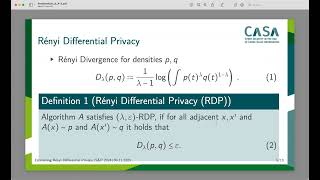
Lower Bounds for Randomized Decision Procedures
Explore efficient algorithms for computing lower bounds in Recursive Dynamic Programming, enhancing problem-solving skills in computer science and optimization.

Java Language Futures - Fall 2024 Edition
Discover the latest Java language developments and upcoming features, exploring recent changes and future directions in Java's evolution through insights from Oracle's technical staff.
Large Language Models for Compiler Optimization
Explore how large language models can enhance compiler optimization, focusing on a custom 7B parameter Transformer model that generates optimal compiler options for minimizing code size.
Rust as a Support Language
Explore Rust as a safe, high-performance alternative to C/C++ for low-level development. Learn techniques for integrating Rust into existing projects and leveraging its benefits.
Writing a Compiler with LLVM
Explore LLVM's bytecode ecosystem for compiling high-level languages into a common representation. Learn its basics, inner workings, and application in MethodScript, with code examples.
SPy: Static Python Language - Fast as C, Pythonic as Python
SPy: A statically typed Python variant aiming for C-like performance while preserving Pythonic feel. Leverages modern Python practices and typing for compile-time optimizations without sacrificing dynamic features.
Improving Bpftrace Reliability - A Guide to System Tracing Optimization
Discover how to enhance bpftrace's reliability through systematic fixes, preventive measures, and cross-disciplinary techniques for Linux system tracing and observability.
EBC - A New Backend Compiler for Etnaviv
Discover the development journey of a new backend compiler for etnaviv, exploring its architecture, implementation challenges, and performance optimization techniques using Mesa infrastructure and Rust.
Kernel Function Tracing in the Face of Compiler Optimization
Explore advanced kernel function tracing techniques and overcome challenges posed by compiler optimizations in Linux systems.
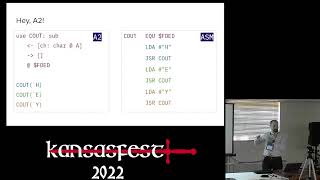
A2: A Programming Language for the Apple II
Explore A2, a new programming language for Apple II, its motivations, and compiler development challenges. Learn about this MIT-licensed project from its creator.
The Principles of the Flix Programming Language
Explore the design values and principles of Flix, a multi-paradigm programming language, and their impact on its syntax, semantics, type system, and standard library.

Trustworthy Runtime Verification via Bisimulation - Experience Report
Explore trustworthy runtime verification using bisimulation in the Copilot framework. Learn how CopilotVerifier generates correctness proofs for compiled monitors, enhancing safety-critical system assurance.
Stretching the Glasgow Haskell Compiler: Nourishing GHC with Domain-Driven Design
Explore Domain-Driven Design principles for enhancing Glasgow Haskell Compiler's architecture, addressing immutability, modularity, and composability in large-scale functional systems.
Is Wasm Becoming Garbage? - WebAssembly and Garbage Collection
Explore WebAssembly's new garbage collection feature, its design rationale, and implications for compilers targeting object-oriented and functional languages.
A Monadic Framework for Name Resolution in Multi-Phased Type Checkers
Explore a monadic framework for name resolution in multi-phased type checkers, bridging the gap between abstract typing rules and practical implementations using compositional mappings and monadic combinators.
Strongly-Typed Multi-View Stack-Based Computations
Explore a Domain-Specific Language for stack-based computations, ensuring type correctness and supporting multiple views and mutually recursive functions of arbitrary arities.
asai: A Library for Compiler Diagnostics
Explore asai, an OCaml library for enhancing compiler diagnostics in proof assistants, improving error messages for end users.