
The State of Julia in 2021 - JuliaCon Keynote
Comprehensive overview of Julia's progress in 2021, covering threading, compiler improvements, linear algebra advancements, package updates, and future development plans.
Developing Audio Products with Cortex-M3, NuttX, and C++11
Explore Sony's use of NuttX RTOS for Cortex-M3 audio products, covering modifications, porting, debugging, and development strategies for efficient embedded systems.
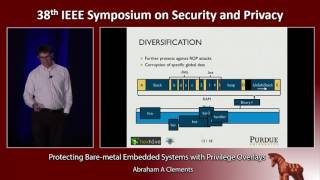
Protecting Bare-metal Embedded Systems with Privilege Overlays
Innovative technique for securing bare-metal embedded systems using privilege overlaying, code integrity, and randomization to prevent attacks while minimizing performance impact.
Secure Calling Conventions for CHERI Capability Machines in Practice - Work in Progress
Explore secure calling conventions for CHERI capability machines, focusing on temporal memory safety and stack frame encapsulation. Evaluate performance impact and compatibility.
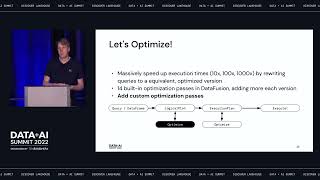
DataFusion and Apache Arrow: Supercharging Data Analytics with a Rust-Based Query Engine
Explore Rust, Apache Arrow, and DataFusion to accelerate modern data stacks. Learn implementation timelines, optimization techniques, and key features for efficient data analysis and querying.
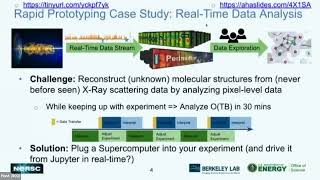
Data Science with Julia - Hands-on Tutorial
Hands-on tutorial exploring Julia for data science, covering interactive analysis, visualization, and machine learning algorithms. Equips participants to apply Julia in their own projects.
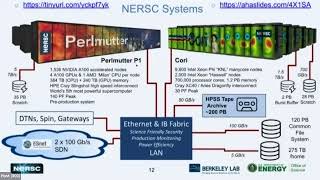
Julia for Python Programmers
Hands-on introduction to Julia for scientific computing and data science, focusing on its efficiency and interactive capabilities for technical applications and scalable computing.
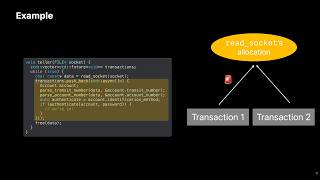
Security in C++ - Hardening Techniques From the Trenches
Discover practical memory safety mitigation techniques for C++ applications, including Standard Library hardening and typed memory allocation, with insights on implementing these security measures in production environments.
Clang as a Viable Static Compiler for Embedded Linux
Explore Clang as a viable static compiler for Embedded Linux, its modern design, sophisticated tools, and integration with Yocto Project. Learn about its advantages and use cases in embedded development.

Interaction with Real-World JavaScript from Compiled Rust
Explore Rust's interaction with JavaScript, including DOM API and libraries. Learn low-level techniques, API wrapping, and object interaction without native GC support in Rust.
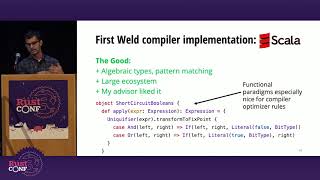
Rust for Weld: High Performance Parallel JIT Compiler - RustConf 2019
Explore Weld: an open-source Rust project accelerating data-intensive libraries through JIT compilation and optimization, enhancing performance without compromising modularity.
Navigating Strategies for Debugging WebAssembly
Explore effective strategies for debugging WebAssembly, including current tools, open-source solutions, and compile-time approaches. Learn to leverage LLVM Intermediate Representation for valuable insights.

Compiling for Verified Targets: BPF Optimization Challenges
Exploring strategies for compiling BPF programs that meet strict kernel verifier requirements. Discusses challenges, potential solutions, and future implications for optimizing compilers targeting verified environments.

Project Sulong: LLVM Bitcode Interpreter on Graal VM - Executing Low-Level Languages
Explore Sulong, an LLVM bitcode interpreter on Graal VM, enabling efficient execution of low-level languages like C and Fortran on the JVM. Learn about its architecture, native interfaces, and memory-safe C/C++ execution.
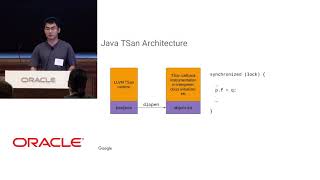
Thread Sanitizing for Java - Implementation and Initial Findings
Explore Thread Sanitizer for Java: implementation details, data race detection in libraries, and JVM insights. Learn about project goals and provide feedback on this emerging tool.

Navigating Strategies for Debugging WebAssembly
Explore effective strategies for debugging WebAssembly applications, including open-source tools and compile-time approaches, with insights into LLVM Intermediate Representation for improved development.
Beyond Kubernetes: Exploring Lightweight Orchestration Systems for Edge Computing
Explore the future of container orchestration beyond Kubernetes, examining lightweight alternatives for edge computing and emerging workloads like Wasm, eBPF, and AI using Python-based DSLs.
Weak Memory Demands Model-based Compiler Testing
Explore compiler bugs arising from relaxed hardware memory models and their implications for testing, using an LLVM toolchain bug as a case study.
Compilers - Jared Shumway
Explore compiler internals, optimization techniques, and security enhancements to improve code efficiency and write better programs.
Feedback Driven Optimization: Improving Program Performance Through Compilation
Explore Feedback Driven Optimization (FDO) techniques for code performance enhancement, including AutoFDO, its benefits, challenges, and real-world applications in embedded Linux systems.

Explaining Different Coroutine Flavors Using Scala Native
Explore coroutines in modern languages, their types, and implementation. Learn about stackless and stackfull variants, LLVM backend optimizations, and green threads in operating systems.