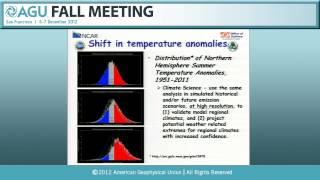
The Transformation of Climate Models to Earth System Models - Schneider Lecture 2012
Evolution of climate models to Earth system models, incorporating interactive cycles and components. Discusses future research challenges and Steve Schneider's vision for interdisciplinary collaboration in global change science.
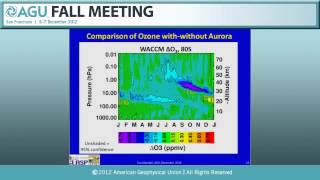
New Atmospheric Sciences Fellows Presentations - Session II
Presentations by new Atmospheric Sciences Fellows on climate change, Earth system models, particle precipitation, stratospheric aerosols, and precipitation processes in climate models.
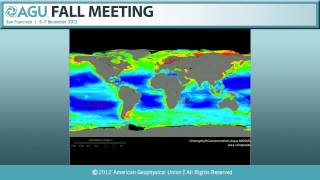
The Race to Understand a Changing Planet - Sagan Lecture 2012
Exploring Earth's rapidly changing climate, the lecture discusses advancements in climate modeling, satellite observations, and field experiments to improve future climate projections for informed decision-making.
Advancing Drought Monitoring and Prediction - Part II
Explore cutting-edge drought monitoring and prediction techniques, including global information systems, seasonal forecasting, and climate change impacts, with applications for decision-making in water resource management.
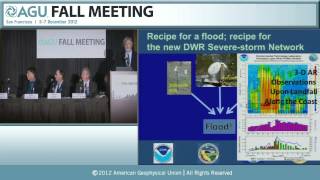
Improving Forecasts of Pineapple Express Storms - Fall Meeting 2012
Scientists discuss installation of atmospheric river observatories in California to enhance monitoring and prediction of powerful winter storms, aiding forecasters and resource managers in decision-making.
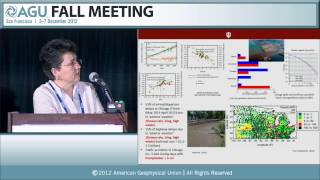
The National Climate Assessment - Key Findings and Regional Impacts
Comprehensive overview of the U.S. National Climate Assessment, covering engagement strategies, scientific findings, regional trends, and sector-specific impacts across the country.
Decreasing the Economic Toll of Disasters - Science Policy Conference 2012
Experts discuss strategies to mitigate the rising economic impact of natural disasters, emphasizing risk understanding, data analysis, and protective measures for people and property.
The Importance of Studying Clouds - NASA Cloud Science and Classroom Inquiry
Explore cloud science with NASA experts, covering topics like the water cycle, phase changes, and radiant energy. Engage in hands-on activities and learn to use NASA data for classroom projects.
Using Scientific Field Campaigns to Learn About Climate Science
Explore climate science through scientific field campaigns. Analyze atmospheric data, understand climate models, and engage in hands-on activities to enhance understanding of Earth's climate system.
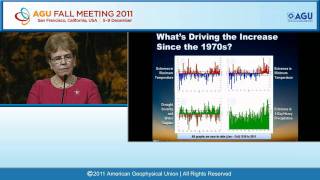
Predicting and Managing Extreme Weather and Climate Events - Fall 2011
Explore extreme weather prediction and management with NOAA's Jane Lubchenco. Learn about challenges in forecasting, monitoring, and mitigating impacts of various environmental events to enhance community resilience.
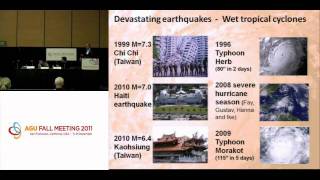
Weather's Influence on Earthquakes and Volcanoes
Exploring connections between weather patterns and seismic/volcanic activity, revealing how surface phenomena can influence underground events and potentially impact eruption timing.
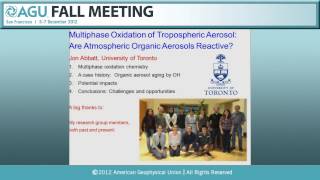
New Atmospheric Sciences Fellows Presentations - Fall Meeting 2012
Presentations by new Atmospheric Sciences Fellows covering topics like cumulus convection modeling, organic nitrates, aerosol oxidation, and extreme convective storms using satellite data.
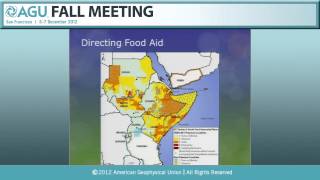
Advancing Drought Monitoring and Prediction - 2012 AGU Fall Meeting
Explore cutting-edge research on drought monitoring and prediction, including remote sensing, soil moisture analysis, and early warning systems for improved decision-making and humanitarian response.
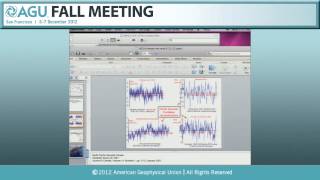
Nonlinear and Scaling Processes in the Atmosphere and Ocean at All Scales
Explore cutting-edge research on nonlinear and scaling processes in atmospheric and oceanic systems, covering climate reconstructions, sensitivity, long-range memory, megadroughts, turbulence, and micro-scale phenomena.
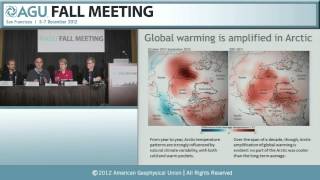
What's Going On in the Arctic - Fall 2012 Arctic Report Card Update
Experts discuss alarming Arctic changes: record sea ice loss, declining snow extent, rising permafrost temperatures, and extensive Greenland ice sheet melting, despite unremarkable air temperatures.
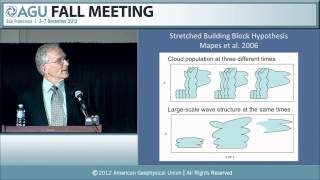
Tropical Convection: A Half Century Quest for Understanding
Exploring tropical convection's role in global climate, from field expeditions to satellite observations, revealing advances in understanding cloud-circulation interactions and their impact on weather patterns.
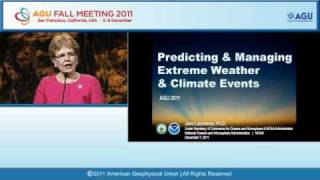
Predicting and Managing Extreme Weather and Climate Events
Explore strategies for predicting and managing extreme weather and climate events with insights from Dr. Jane Lubchenco's lecture at the AGU Fall Meeting 2011.
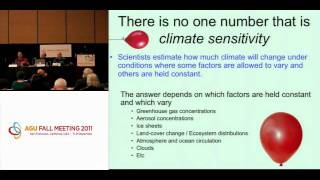
Paleoclimate Record Points to Potential Rapid Climate Changes - 2011 AGU Fall Meeting
Paleoclimate data suggests Earth may face rapid climate changes, with sea levels potentially rising several meters, even if global warming is limited to two degrees Celsius above pre-industrial levels.

2012 American Geophysical Union Honors Tribute
Honoring excellence in geophysical sciences: AGU's 2012 award ceremony recognizes outstanding contributions in research, education, journalism, and climate communication across various disciplines.
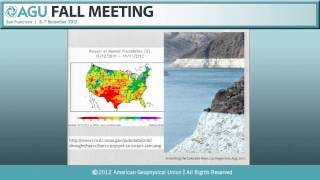
Mechanisms of Past and Future Droughts in the Southwest United States
Explore past and future drought mechanisms in the Southwest US, covering precipitation patterns, climate proxies, water availability projections, and global climate factors influencing regional hydrology.
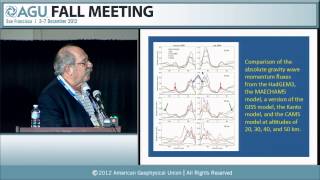
Gravity Waves in the Atmosphere and Ocean - Part 1
Explore cutting-edge research on gravity waves in atmosphere and oceans. Topics include aviation turbulence, internal wave dynamics, predictability, observations, and climate model comparisons.