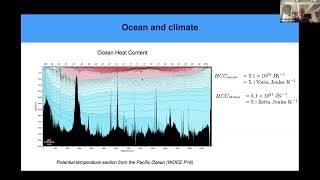
The Abyssal Ocean: Its Dynamics and Role in Climate
Explore the dynamics and climate impact of the abyssal ocean with Prof. Raffaele Ferrari, delving into deep-sea processes and their global significance.

Magnitude and Drivers of Short-Term Sea Level Fluctuations in the Cretaceous - A Review
Explore Cretaceous sea level changes, their magnitudes, and driving forces. Discover the impact of aquifer eustasy and the role of glacio-eustasy in shaping Earth's ancient oceans.
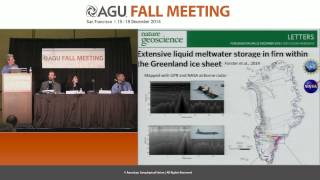
Surprising Findings in Greenland's Melt Dynamics
Explore surprising discoveries about Greenland's ice melt dynamics, uncovering new insights into climate change impacts and global sea level rise implications.
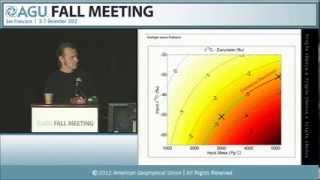
Emiliani Lecture - Triple Choice: Past, Present, and Future Climate
Explore paleoclimate insights, isotope fractionation, and climate sensitivity in this AGU lecture. Gain valuable perspectives on Earth's past to understand its future.
Melting Sea Ice in the Arctic - Five Myths and Current Research
Explore Arctic sea ice myths, current data, climate models, and societal impacts. Learn about unprecedented ice loss and the potential for a seasonal ice-free Arctic from expert speakers.
The Arctic System: From Critical Process Studies to Global Perspectives - 2012
Explore cutting-edge research on Arctic climate systems, from regional modeling to global impacts. Gain insights into processes driving Arctic change and implications for climate predictions.
Cryospheric Contribution to Sea Level Rise - Current Estimates and Projections - Part 1
Explore current research on ice sheet mass balance, glacier melt, and sea level rise projections. Gain insights into cryospheric changes and their global impacts from leading climate scientists.
Successful Predictions in Climate Science - Tyndall Lecture
Explores climate science predictions, from early CO2 warming theories to modern planetary studies. Highlights key successes in forecasting global climate patterns and their implications for Earth and exoplanets.
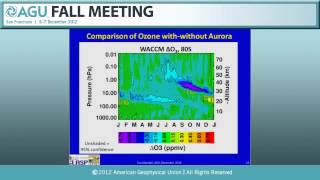
New Atmospheric Sciences Fellows Presentations - Session II
Presentations by new Atmospheric Sciences Fellows on climate change, Earth system models, particle precipitation, stratospheric aerosols, and precipitation processes in climate models.
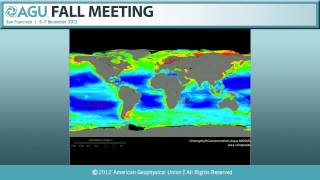
The Race to Understand a Changing Planet - Sagan Lecture 2012
Exploring Earth's rapidly changing climate, the lecture discusses advancements in climate modeling, satellite observations, and field experiments to improve future climate projections for informed decision-making.
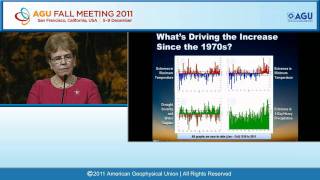
Predicting and Managing Extreme Weather and Climate Events - Fall 2011
Explore extreme weather prediction and management with NOAA's Jane Lubchenco. Learn about challenges in forecasting, monitoring, and mitigating impacts of various environmental events to enhance community resilience.
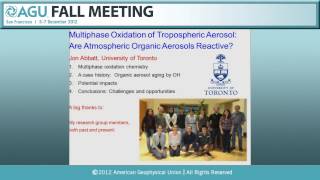
New Atmospheric Sciences Fellows Presentations - Fall Meeting 2012
Presentations by new Atmospheric Sciences Fellows covering topics like cumulus convection modeling, organic nitrates, aerosol oxidation, and extreme convective storms using satellite data.
Nonlinear and Scaling Processes in the Atmosphere and Ocean at All Scales
Explore cutting-edge research on nonlinear and scaling processes in atmospheric and oceanic systems, covering climate reconstructions, sensitivity, long-range memory, megadroughts, turbulence, and micro-scale phenomena.
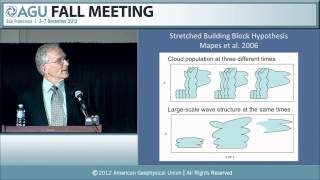
Tropical Convection: A Half Century Quest for Understanding
Exploring tropical convection's role in global climate, from field expeditions to satellite observations, revealing advances in understanding cloud-circulation interactions and their impact on weather patterns.
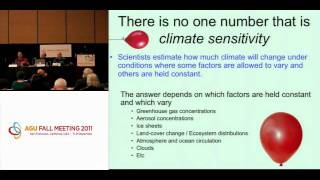
Paleoclimate Record Points to Potential Rapid Climate Changes - 2011 AGU Fall Meeting
Paleoclimate data suggests Earth may face rapid climate changes, with sea levels potentially rising several meters, even if global warming is limited to two degrees Celsius above pre-industrial levels.
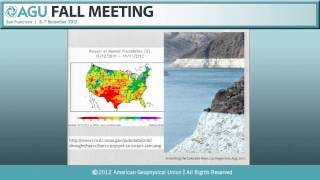
Mechanisms of Past and Future Droughts in the Southwest United States
Explore past and future drought mechanisms in the Southwest US, covering precipitation patterns, climate proxies, water availability projections, and global climate factors influencing regional hydrology.
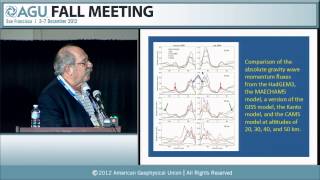
Gravity Waves in the Atmosphere and Ocean - Part 1
Explore cutting-edge research on gravity waves in atmosphere and oceans. Topics include aviation turbulence, internal wave dynamics, predictability, observations, and climate model comparisons.
Climate of the Common Era II - 2017 Fall Meeting
Explore climate changes during the Common Era through diverse research presentations, covering topics from ice cores to tree rings, offering insights into past climate patterns and their implications.
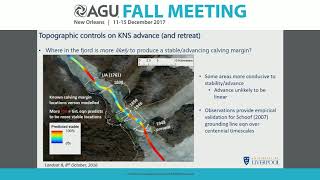
Ice Sheet and Glacier Change: Integrating Methods to Understand Evolution - 2017
Integrating instrumental, geological, and modeling methods to understand ice sheet and glacier evolution, focusing on various locations and their implications for climate change.
Computer Simulations in Cosmology: Understanding the Universe
Explore how computer simulations revolutionize our understanding of the cosmos, from galaxies and black holes to dark matter, guided by Professor Andrew Pontzen's insights into cutting-edge cosmological research.
Instabilities, Tipping Points and Projections of Sea Level Rise - Coastal Resilience in an Uncertain World
Explore instabilities, tipping points, and sea level rise projections to understand coastal resilience in an uncertain world with Prof. Jeremy Bassis.