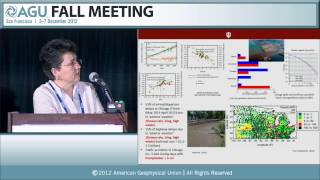
The National Climate Assessment - Key Findings and Regional Impacts
Comprehensive overview of the U.S. National Climate Assessment, covering engagement strategies, scientific findings, regional trends, and sector-specific impacts across the country.
Sustainable Oceans - Fall Meeting 2012
Explore sustainable ocean management strategies addressing climate impacts, human health, pollution, and resource use. Gain insights on coastal ecosystem resilience and policy approaches for a changing Arctic environment.
Ocean Acidification - Impacts, Challenges, and Policy Responses
Experts discuss ocean acidification's impacts on ecosystems, economy, and society, exploring mitigation strategies and policy implications for addressing this critical environmental challenge.
The Climate Canary: Measuring Change on Antarctica's Pine Island Glacier
Explore Antarctica's Pine Island Glacier, its role as a climate indicator, and methods for measuring glacial change. Learn about ice dynamics, mass balance, and global implications through expert insights and hands-on activities.
Weather's Influence on Earthquakes - Press Conference
Explore the intriguing connection between weather patterns and seismic activity, featuring insights from experts on monsoons, icecap retreat, and their potential impact on earthquake occurrence.
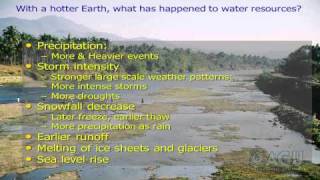
Climate Change: What's Going On and How Will It Affect Us
Explore the science behind climate change, its impacts on Earth systems, and potential future scenarios. Learn about evidence, models, and strategies for addressing this global challenge.
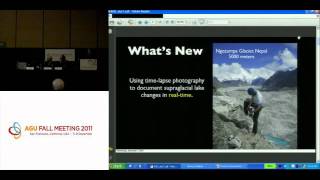
Mountain Glaciers - Dramatic Changes Caught on Film
Time-lapse photography reveals rapid changes in Nepalese glacier lakes, while studies show peak water reached for Western Hemisphere glaciers and concerning predictions for Canadian glaciers.
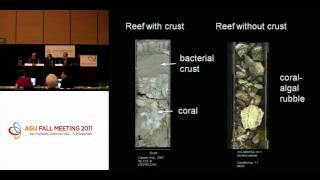
Ocean Acidification Impact on Coral Reefs - Press Conference
Experts discuss ocean acidification's impact on coral reefs, examining natural occurrences, lab simulations, and historical data to understand mechanisms and ecosystem vulnerability.

The Great Mississippi Flood of 2011 - Scientific Findings and Impacts
Explore the impacts of the 2011 Mississippi River flood on sediment distribution and ecosystem restoration efforts, with insights from researchers tracking nutrient movements and assessing restoration strategies.
Nonlinear and Scaling Processes in the Atmosphere and Ocean at All Scales
Explore cutting-edge research on nonlinear and scaling processes in atmospheric and oceanic systems, covering climate reconstructions, sensitivity, long-range memory, megadroughts, turbulence, and micro-scale phenomena.
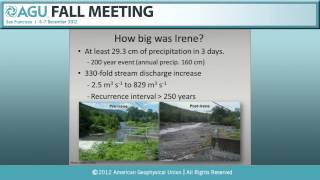
Impacts of Extreme Climate Events and Disturbances on Carbon Dynamics - Part 2
Explore how extreme climate events and disturbances affect carbon dynamics in ecosystems. Analyze impacts of droughts, fires, and other environmental factors on carbon fluxes and forest health across various regions.
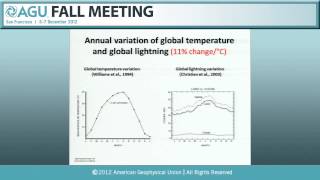
Lightning and Climate - Franklin Lecture 2012
Exploring lightning's role in climate change, its correlation with temperature and water vapor, and its potential as a climate indicator. Discusses challenges in long-term monitoring and the impact of aerosols on lightning activity.
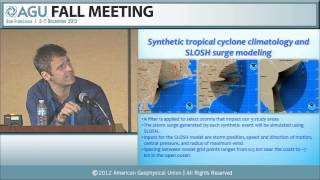
Living on the Edge: Societies on the Front Line of Coastal Change - 2012
Explore coastal resilience strategies, storm surge simulations, and socioeconomic impacts of sea-level rise. Experts discuss innovative approaches to address challenges facing coastal communities worldwide.
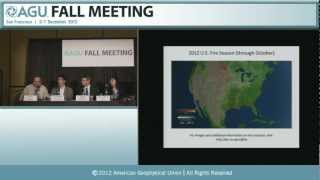
Fire in a Changing Climate and What We Can Do About It
Experts discuss recent trends in U.S. fire activity, climate projections, and potential changes in fire seasons across regions, offering insights into the relationship between climate change and wildfires.
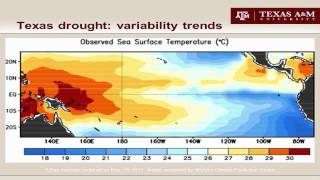
Drowning and Drought - Extreme Weather Impacts on Economy and Society
Experts examine extreme weather hazards, climate change impacts, and preparedness strategies. Case study on Texas drought. Discussion on economic losses, climate risks, and disaster risk reduction principles.
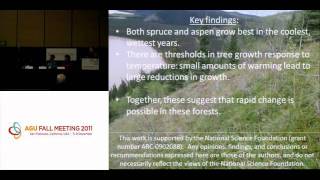
Small Climate Changes, Big Ecological Impacts - Fall Meeting 2011
Exploring how small climate changes can trigger rapid ecosystem shifts, including potential impacts on boreal forests and arctic tundra, and historical examples of regime shifts affecting megafauna.
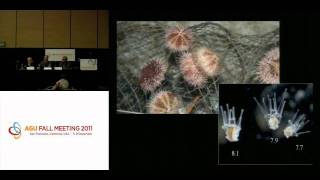
Ocean Acidification: Physiological Tipping Points for Marine Species - Press Conference
Experts discuss new research on ocean acidification's impact on marine species beyond corals, revealing stunted growth and development in fish, crustaceans, and sea urchins due to lower pH levels.
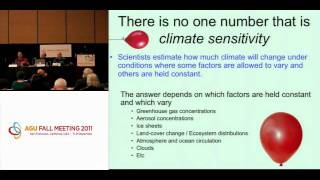
Paleoclimate Record Points to Potential Rapid Climate Changes - 2011 AGU Fall Meeting
Paleoclimate data suggests Earth may face rapid climate changes, with sea levels potentially rising several meters, even if global warming is limited to two degrees Celsius above pre-industrial levels.
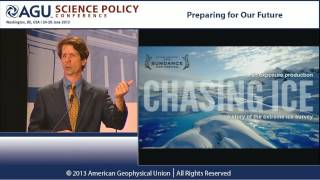
Preparing for Our Future - Climate Change Impacts and Expectations
Explore climate change impacts through a conversation with award-winning experts, featuring stunning glacier retreat footage and insights on future environmental challenges.
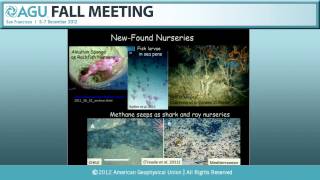
Deep Margins Under Pressure - Climate Change and Human Impacts on Continental Slopes
Exploring deep continental margins: their ecological importance, vulnerability to climate change, and challenges from human exploitation. Calls for improved stewardship of these crucial deep-ocean ecosystems.
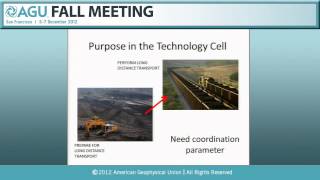
The Anthropocene: Confronting the Prospects of a +4°C World - Part 1
Explore the Anthropocene era and its implications for a +4°C world through expert discussions on paleontology, land cover changes, international law, climate impacts, and science communication.