Transforming Carbon into Concrete: Blue Planet's Revolutionary Approach
Explore Blue Planet's innovative "Geomimetic" technology converting CO2 emissions into building materials, revolutionizing construction and carbon sequestration for a sustainable, carbon-neutral future.
Cómo LATAM Airlines Creó un Programa de Data Science y MLOps Durante la Crisis del Sector Aéreo
Descubre cómo LATAM Airlines implementó MLOps para optimizar el uso de combustible y mejorar la gestión de ingresos durante la crisis del COVID-19, creando valor real con IA.
Advancing Sustainability: A New Environmental Agenda for a Changing World
Dr. William Winner explores sustainability challenges, focusing on energy, climate change, and environmental responsibility. He emphasizes the need for a new environmental agenda and emerging technologies to address global issues.
Bridging Creativity and Rationality - CO2 Emissions During Construction
Explore the impact of construction on CO2 emissions and learn how integrating local culture and traditional wisdom can lead to more sustainable development practices.
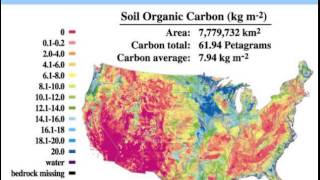
The Global Carbon Cycle and Human Impact - AGU Fall Meeting 2001
Explore the global carbon cycle, human impacts, and key processes affecting atmospheric CO2 levels in this comprehensive overview of Earth's carbon budget and climate change dynamics.
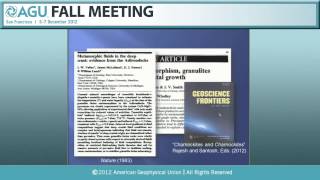
Deep Crustal Metamorphic Carbon Cycling in Collisional Orogens - Daly Lecture
Explore deep crustal metamorphic carbon cycling in mountain belts, examining CO2 release processes, flux rates, and potential impacts on global carbon cycles and climate change.
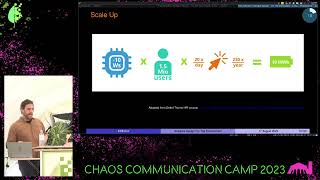
Software Design for the Environment - Free Software's Role in Sustainable Computing
Explore how Free Software aligns with sustainable software design, reducing ICT's environmental impact. Learn about KDE's eco-initiatives and the Blue Angel ecolabel for sustainable software.
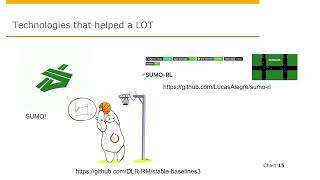
Challenges in Reward Design for Reinforcement Learning-based Traffic Signal Control - An Investigation Using CO2 Emission Objective
Explore the complexities of reward design in reinforcement learning for traffic signal control, focusing on CO2 emission reduction through Deep Q-Network implementation and reward optimization strategies.
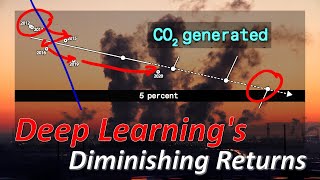
How Far Can We Scale Up? Deep Learning's Diminishing Returns
Explores the limits of scaling up deep learning, discussing computational costs, CO2 emissions, and potential solutions to overcome diminishing returns in AI model performance.
Advancing Responsible AI: Unveiling the Software Carbon Efficiency Rating for LLMs
Explore the SCER initiative for measuring and improving carbon efficiency of Large Language Models, promoting sustainable AI development and renewable energy adoption.
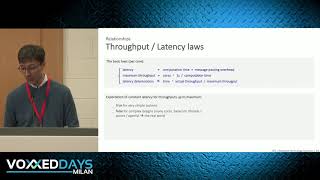
HPC Green Computing - Relationships Among Throughput and Latency
Explore modern C++ meta-programming techniques to reduce hardware requirements and power consumption in high-throughput, low-latency data processing, with a focus on message processing tasks.
Unleash the Power of Large Language Models
Explore the potential of large language models, their impact on work, and learn to interact with AI effectively. Gain insights into prompting, future skills, and real-world applications.

How Microsoft is Leading the Way to Sustainable Software
Explore Microsoft's initiatives in sustainable software development, including tools and strategies to reduce CO2 emissions, with insights from industry experts on the future of green technology.

Optimized Design of Low Emission Zones in SUMO - A Dual Focus on Emissions Reduction and Travel Time Improvement
Discover how genetic algorithms and SUMO simulation optimize Low Emission Zones (LEZ) design to reduce urban CO2 emissions while improving traffic flow and travel times in cities.
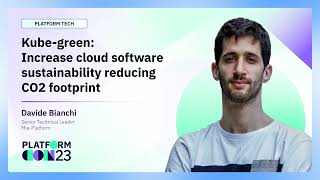
Kube-green: Increasing Cloud Software Sustainability by Reducing CO2 Footprint
Reduce cloud native carbon footprint with kube-green, an open-source Kubernetes controller. Learn about software's environmental impact and how to implement sustainable practices in your clusters.