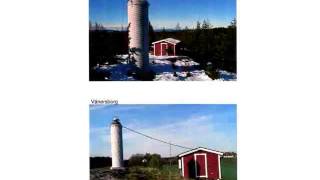
Glacial Isostatic Adjustment and Sea Level Change - Bowie Lecture 2000
Explore geophysical phenomena through James L. Davis's Bowie Lecture, covering topics like Fenno Scandia, tide gauges, GPS, sea level changes, and global ice melting patterns.
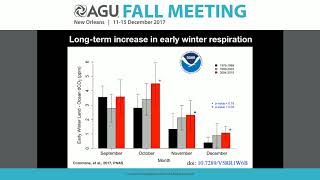
The Resilience and Vulnerability of Arctic and Boreal Ecosystems to Climate Change - 2017 Fall Meeting
Explore the impact of climate change on Arctic and boreal ecosystems through expert presentations on resilience, vulnerability, and environmental dynamics in these sensitive regions.
Why We Are Still In - 2017 Fall Meeting Special Keynote Panel
Panel discussion on climate action commitment featuring mayors and environmental leaders from the US and Mexico.
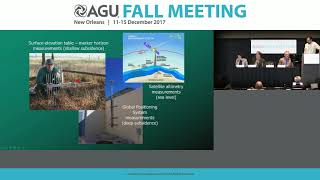
Subsidence and Land Loss in Coastal Louisiana - New Measurement Approaches
New approaches to measure and predict subsidence in coastal Louisiana, including a groundbreaking subsidence superstation in the Mississippi River Delta, providing unprecedented data resolution on land loss causes and implications.
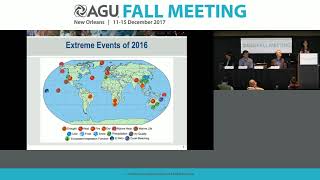
Explaining Extreme Weather Events of 2016 from a Climate Perspective
Climate scientists discuss new methods for attributing extreme weather events to natural and human causes, presenting 29 studies on various global phenomena from the Bulletin of the American Meteorological Society's annual collection.
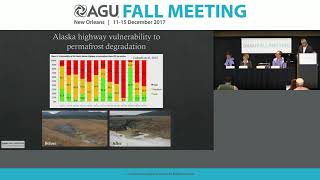
The Melting Cryosphere - Climate Change Effects on Earth's Frozen Regions
New research on shrinking glaciers, ice sheets, melting permafrost, and sea level rise due to climate change, presented by experts from various institutions.
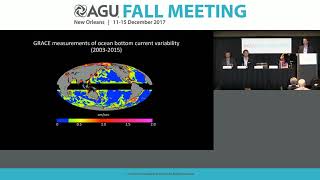
New NASA Eyes on Ice - Satellite Missions for Tracking Earth's Ice Changes
Preview of NASA's next-gen satellite missions GRACE and ICESat-2, exploring their advanced capabilities to track Earth's ice changes with unprecedented precision and diverse scientific applications.
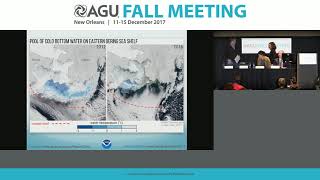
Arctic Report Card 2017 - Climate Change Impacts and Implications
Experts discuss the 2017 Arctic Report Card, highlighting rapid warming trends, environmental changes, and impacts on fisheries, wildlife, and global climate. Insights on air temperature, sea ice, and permafrost are shared.
Assessing Flood Risk in the U.S. - Climate Change Impact on Coastal and Inland Communities
Experts discuss new flood risk estimates, sea level rise impacts on infrastructure, and community relocation strategies in response to climate-driven flooding across the United States.
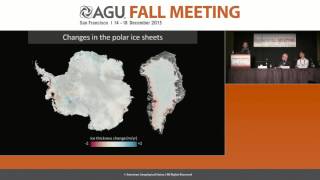
Measuring Polar Ice Sheets and Sea Level Rise - Latest Efforts
Experts discuss latest efforts to measure polar ice sheets, their impact on sea level rise, and challenges in providing accurate estimates using satellite and airborne surveys.
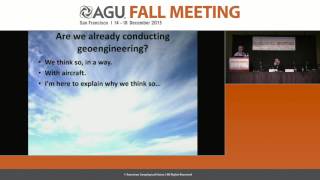
Unintentional Geoengineering: Whitening Skies and Changing Solar Radiation - Fall 2015
Explore unintentional geoengineering's impact on global cloud-free skies, solar radiation patterns, and Earth's surface through new data analysis and expert insights on atmospheric changes.
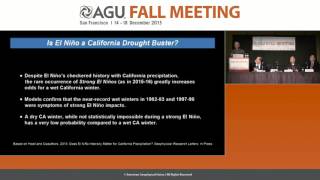
Global Impacts of the 2015-16 El Niño - NASA and NOAA Findings
Experts discuss global impacts of 2015-16 El Niño, including fire seasons, atmospheric changes, and potential drought relief, using NASA and NOAA satellite observations and research findings.
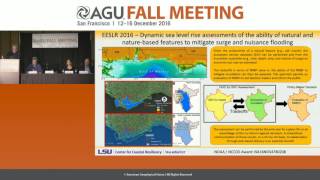
Water World: Historic Floods, Sea Level Rise, Storm Surge and Climate Change
Climate change impacts on coastal communities: Experts discuss sea level rise, flooding, and storm surge, presenting new assessments for the northern Gulf of Mexico and global coastal regions based on climate projections for 2100.
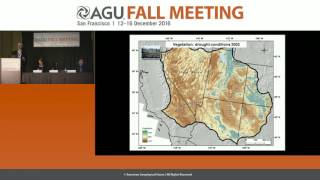
How Animals Will Fare in a Changing Climate
Satellite observations reveal ecosystem changes impacting Arctic polar bears, North American mule deer, and wild reindeer. Researchers discuss population projections and distribution shifts due to climate change.
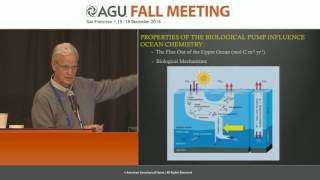
Evaluating the Ocean's Biological Carbon Pump
Explore the ocean's biological carbon pump, its role in climate regulation, and methods for evaluating its efficiency in this comprehensive lecture on marine biogeochemistry.
Cost-Effective and Scalable Measurement of On-Field Carbon Footprint for Agriculture and Forestry Applications - Panel Discussion
Experts discuss innovative approaches for measuring carbon footprints in agriculture and forestry, focusing on cost-effective, scalable solutions and the potential of open-source technologies.
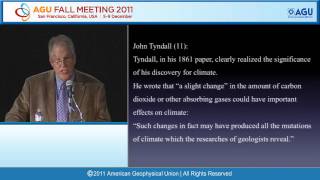
History of Global Warming - Fall Meeting 2011 Lecture
Explore the history of global warming through key figures like Tyndall, Faraday, and Keeling. Discover pivotal scientific contributions and the evolution of climate change understanding.
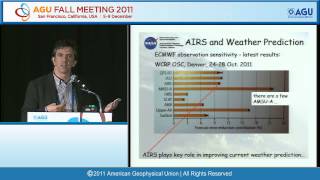
Earth Science Advances Following 10 Years of Aqua Observations - Part 2
Explore Earth science advancements from a decade of Aqua satellite observations, covering atmospheric, oceanic, and terrestrial discoveries at AGU's Fall Meeting 2011.
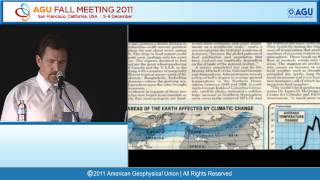
History of Global Warming - Stephen Schneider Global Environmental Change Lecture
Comprehensive exploration of global warming's historical development, examining key scientific discoveries, policy milestones, and societal impacts shaping our understanding of climate change.
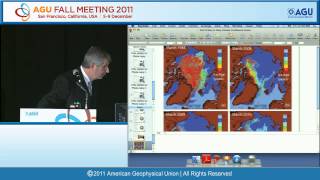
Climate Confluence Issues - Energy, Environment, Economics, and Security
Explore the interconnected challenges of climate change, energy, environment, economics, and security in this comprehensive AGU conference session.
Polydisciplinary Innovation in Water Resources Modeling and Prediction
Explore cutting-edge advancements in water resources modeling and prediction through a polydisciplinary lens, featuring innovative approaches and cross-disciplinary collaborations.