Classical Simulation of Short-Time Quantum Dynamics
Explore classical algorithms for simulating quantum dynamics, focusing on local observables and Loschmidt echo calculations in polynomial time for short-time quantum systems.
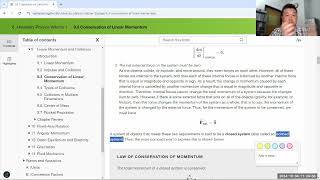
Physics 4A - Chapter 9 Overview - Fall 2024
Explore fundamental concepts of linear momentum, collisions, and conservation laws in classical mechanics. Gain insights into key principles of Newtonian physics.
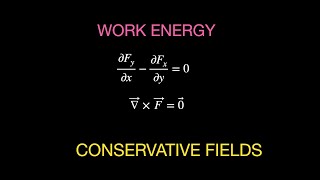
Conservative Forces: Deriving the Curl
Explore the concept of conservative forces and learn how to determine if a force is conservative by deriving the curl in classical mechanics.
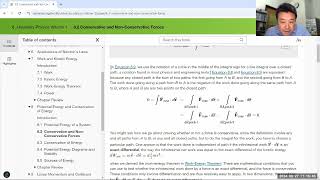
Physics 4A - Chapter 8 Overview
Explore fundamental concepts of physics in Chapter 8, covering key principles and their applications in real-world scenarios.
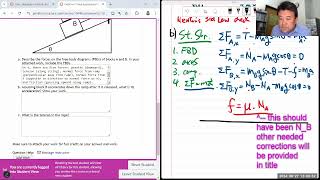
Physics 4A - Forces Freeform Timed Assessment: Inclined Plane and Two Masses
Solve complex physics problems involving inclined planes and multiple masses in a timed assessment format.
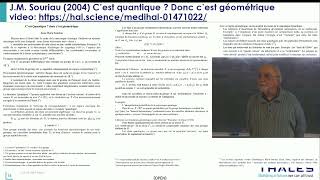
Souriau's Geometric Principles for Quantum Mechanics
Explore geometric principles bridging classical and quantum mechanics, examining symmetries, Planck's constant, and prequantization to determine quantum states through inequalities.
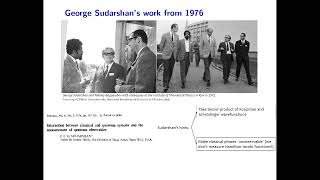
Lagrangian Trajectories and Closure Models in Quantum Classical Dynamics
Explore Lagrangian trajectories and closure models in quantum classical dynamics, gaining insights into advanced theoretical physics concepts.
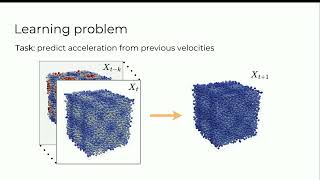
Learning Lagrangian Fluid Mechanics with E3 Equivariant Graph Neural Networks
Explore Lagrangian fluid mechanics using advanced E3 equivariant graph neural networks for innovative computational modeling approaches.
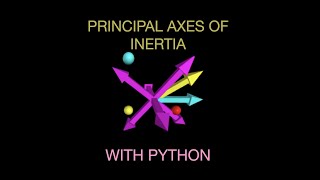
Finding the Principal Axes of Inertia With Python
Learn to calculate principal axes of inertia for mass systems using Python, applying numerical methods to solve complex physics problems efficiently.
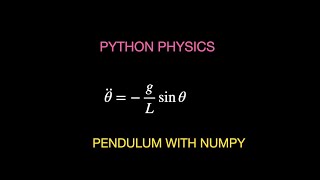
Python Physics: Modeling a Pendulum with Jupyter Notebooks
Model a pendulum's motion using Python and Jupyter Notebooks. Learn to apply Newton's second law in polar coordinates and visualize the results through practical coding exercises.
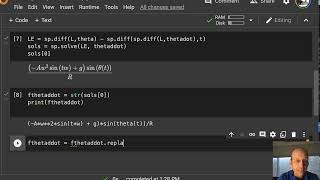
Modeling Kapitza's Inverted Pendulum with Python
Explore Kapitza's inverted pendulum through Python modeling, using Lagrangian mechanics to simulate this fascinating physics phenomenon.
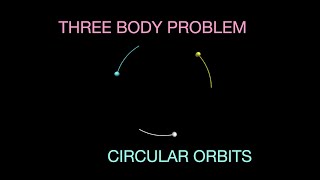
How to Achieve Circular Orbits in the Three-Body Problem
Explore stable circular orbits for three equal-mass planets using Python simulations and gravitational calculations.
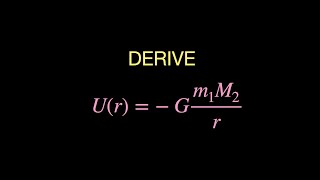
Derivation of the Gravitational Potential Energy - Plus Numerical Integrals with Python
Derive gravitational potential energy through work calculations and explore numerical integration using Python for practical applications.
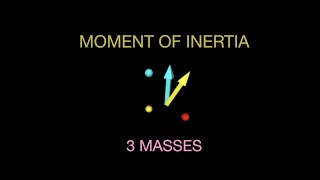
Angular Momentum and Moment of Inertia Tensor for 3 Masses - Python Tutorial
Calculate center of mass, moment of inertia tensor, and angular velocity vector for three masses using Python. Includes code implementation and mathematical concepts.
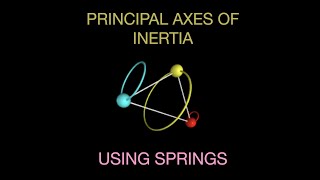
Principal Axes of Inertia Without the Inertia Tensor
Explore principal axes of inertia using a three-mass model, with Python code and visual demonstrations. Builds on previous concepts of moment of inertia and angular momentum.
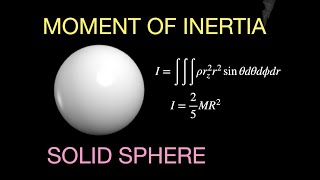
Moment of Inertia for a Sphere About a Fixed Axis
Derive the moment of inertia for a sphere and explore a Monte Carlo simulation using Python, enhancing understanding of rotational dynamics.
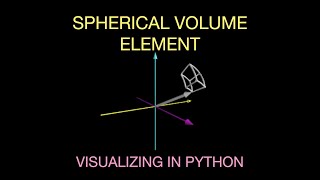
Drawing the Spherical Volume Element in Python
Visualize spherical volume elements using Python and VPython, enhancing understanding of sphere geometry and moment of inertia calculations.
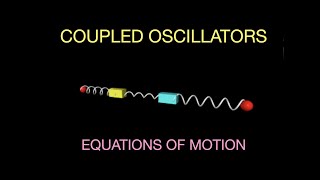
Equations of Motion for Coupled Oscillators
Explore equations of motion for coupled oscillators, focusing on systems with equal masses and springs. Learn to derive and analyze these fundamental physics concepts.
Matter and Interactions Physics - Translation, Rotational, and Vibrational Energy - Chapter 9
Explore center of mass, momentum, kinetic energy types, angular velocity, and moment of inertia in particle systems. Gain insights into translational, rotational, and vibrational energy concepts.
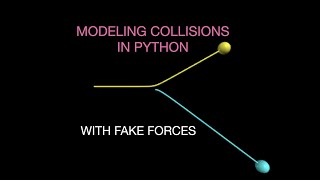
Modeling 2D Collisions in Python with Fake Forces
Simulate 2D collisions using Python and fake forces. Learn a simplified approach to modeling object interactions in programming.
Angular Momentum in Physics - Lecture Chapter 11
Explore angular momentum principles, torque, cross products, and related concepts in physics through clear explanations and examples.