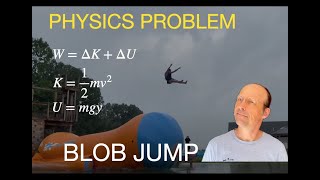
Work-Energy and the Blob Jump - Physics Problem
Explore work-energy principles through an exciting blob jump scenario, calculating launch heights using conservation laws.
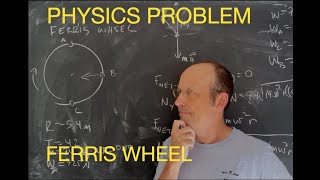
Physics Problem: Apparent Weight on a Ferris Wheel
Solve a physics problem involving apparent weight on a Ferris wheel, applying concepts of circular motion and forces.
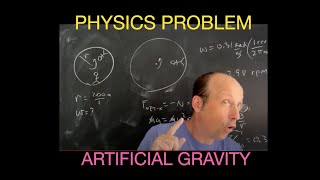
Physics Problem: Angular Velocity for Artificial Gravity
Calculate angular velocity for artificial gravity in a rotating space station, exploring centripetal acceleration and its application in space environments.
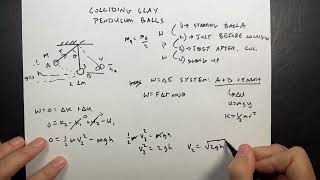
Physics Problem: Colliding Clay Pendulum Balls
Solve a physics problem involving colliding clay pendulum balls using conservation of energy and momentum principles.
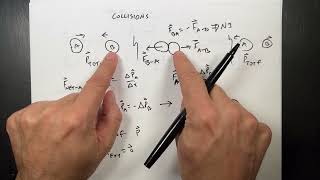
College Physics: Linear Momentum - Chapter 7 Summary
Explore linear momentum, impulse, and collisions in physics. Master key concepts like conservation of momentum and center of mass for a solid foundation.
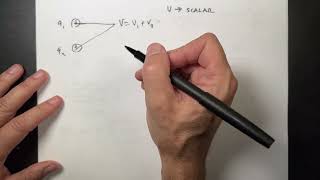
College Physics Chapter 17 Summary - Electric Potential
Explore electric potential, from work-energy concepts to capacitors and energy density in electric fields. Gain insights into fundamental electrostatics principles.
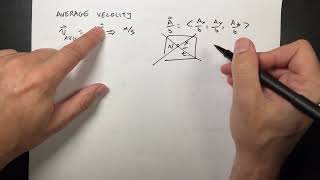
College Physics: Acceleration and Newton's Second Law - Chapter 3 Summary
Explore acceleration and Newton's laws through key physics concepts, including position, velocity, and graphical representations of motion.
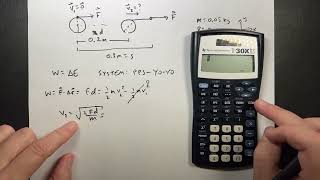
Velocity and Rotational Speed of a Sliding Yo-Yo
Explore the physics of a sliding yo-yo, calculating its velocity and angular velocity using concepts of force, motion, and rotational dynamics.
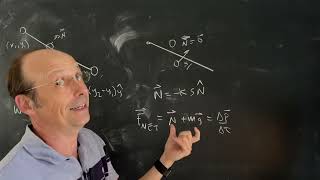
Physics: Three Ways to Calculate the Work Done by the Normal Force
Explore three methods to calculate work done by normal force: constant forces, line integral, and spring-based modeling. Enhance understanding of classical mechanics.
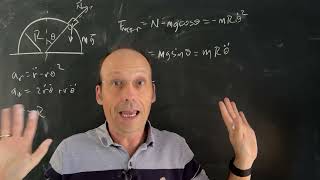
Physics Problem: When Does a Block of Ice Lose Contact with an Inverted Bowl
Solve a physics problem involving a block of ice sliding on an inverted spherical bowl using the work-energy principle to determine the point of detachment.
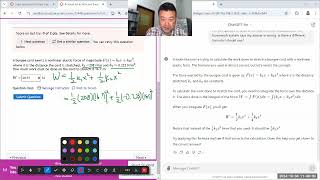
Physics 4A - Problem Solving with ChatGPT - Set 6
Enhance problem-solving skills in physics using ChatGPT 4o, focusing on Set 6 exercises from PHYS 4A curriculum.
斜面を下る粒入り筒 - チャプター4
斜面を下る粒入り筒の物理現象について、スタンフォード大学の時枝教授による詳細な解説と実験デモンストレーションを通じて学ぶ
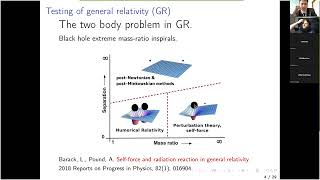
Пертурбаційні рівняння для Шварцшильдівської геодезії
Дослідіть пертурбаційні рівняння для геодезії Шварцшильда та їх застосування в теоретичній фізиці через поглиблений аналіз математичних основ.
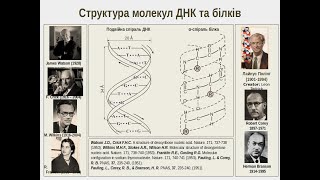
Метод класичної молекулярної динаміки в моделюванні властивостей молекули подвійної спіралі ДНК
Dive into classical molecular dynamics methods and their application in modeling DNA double helix properties, exploring computational approaches in modern biophysics research.
Computational Complexity of Quantum Systems - From Theory to Ground State Analysis
Delve into quantum systems' computational complexity, exploring ground states, quantum computing challenges, and algorithmic approaches for simulating quantum phenomena.
Quantum 2-SAT on Low Dimensional Systems is QMA_1-Complete
Delve into groundbreaking research exploring quantum satisfiability problems, examining complexity transitions in low-dimensional quantum systems and their computational implications for quantum information theory.
Local Random Quantum Circuits Form Approximate Designs
Delve into the mathematical foundations of random quantum circuits on arbitrary graphs, exploring how they form approximate unitary designs with polynomial-size circuits and bounded spectral gaps.

Hamiltonian Property Testing - Testing Locality and Structural Properties
Explore groundbreaking research in Hamiltonian property testing, examining efficient algorithms for quantum systems and the fundamental differences between testing and learning approaches.
An SU(2)-symmetric Semidefinite Programming Hierarchy for Quantum Max Cut
Explore advanced quantum physics through SU(2)-symmetric semidefinite programming hierarchies, focusing on Quantum Max Cut problem and its applications in approximating extremal energy states of local Hamiltonians.
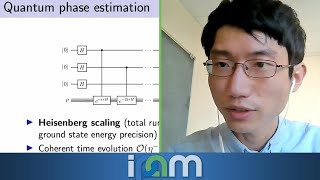
Heisenberg-Limited Ground State Energy Estimation for Early Fault-Tolerant Quantum Computers
Explore Heisenberg-limited ground state energy estimation for early fault-tolerant quantum computers, featuring a simplified circuit and classical post-processing for improved efficiency.
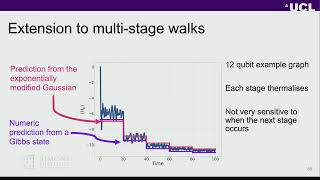
Continuous-Time Quantum Walks for MAX-CUT Optimization
Explore quantum walks for MAX-CUT optimization, linking Hamiltonians to thermalization. Discover novel insights into unitary dynamics for combinatorial problems using multi-stage walks and Floquet systems.