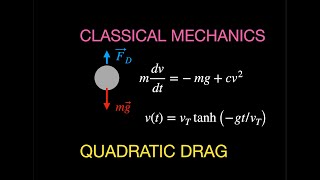
Classical Mechanics: Falling Object with Quadratic Drag
Explore falling objects with quadratic drag in classical mechanics, including velocity analysis and Python code implementation.
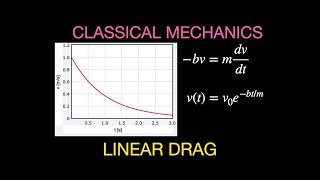
Classical Mechanics: Linear Drag without the Gravitational Force
Derive motion equations for objects with velocity-proportional drag, excluding gravity. Includes numerical modeling and Python code for practical application.
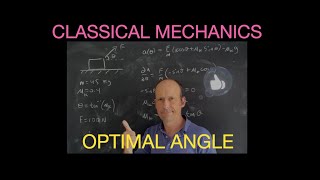
Classical Mechanics: Pulling a Block with Friction - Angle for Max Acceleration
Discover the optimal angle for maximum acceleration when pulling a sled, using physics principles and Python code to solve this real-world problem.
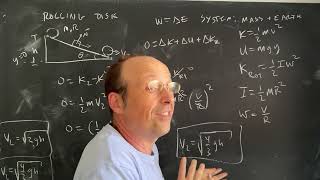
Velocity of a Disk Rolling Down an Incline Without Slipping - Physics Problem
Solve a physics problem involving a disk rolling down an incline, calculating its velocity using energy conservation and rotational motion principles.
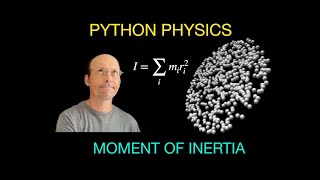
Python Physics: Understanding and Calculating Moment of Inertia
Explore the concept of moment of inertia in physics, using Python to calculate it for a disk through Monte Carlo simulation and plausibility arguments.
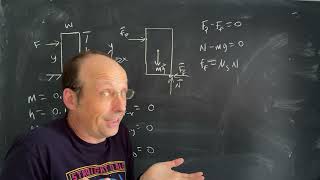
Torque and Friction for a Tipping or Sliding Block - Physics Problem
Solve a challenging physics problem involving torque and friction for a block on the verge of tipping or sliding.
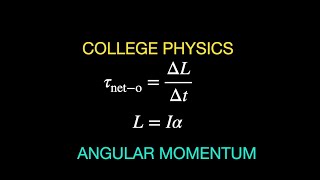
Physics Summary: Rotational Motion and Angular Momentum
Explore rotational motion concepts: kinematics, velocity, acceleration, inertia, torque, and angular momentum. Gain insights into fundamental principles of circular motion and conservation laws.
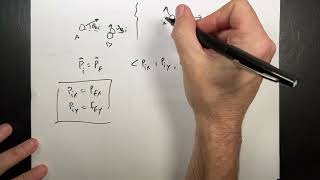
Collisions in Physics - Chapter 10
Explore key concepts in physics collisions: momentum, center of mass, elastic and inelastic collisions, 2D collisions, and reference frames.
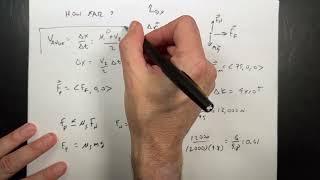
Work Energy for an Accelerating Car
Explore work-energy principles for accelerating vehicles, calculating internal energy changes, frictional forces, and static friction coefficients.
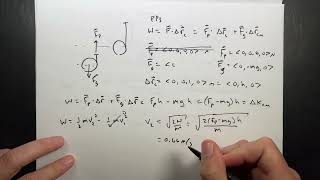
Calculating the Speed and Angular Velocity of a Yo-Yo
Explore yo-yo physics: calculate velocity, angular velocity, and motion duration using principles of mechanics and energy conservation.

Calculating the Moment of Inertia for a Rod
Learn to calculate the moment of inertia for a rod, exploring rotations about different points and using Python for numerical calculations.
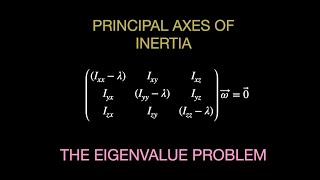
Principal Axes of Inertia and the Eigenvalue Problem
Explore principal axes of inertia and solve eigenvalue problems using Google Colab for 3x3 matrix determinants in a 3-mass system.
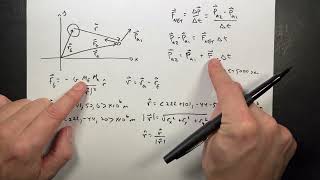
Physics Problem: Change in Momentum of an Asteroid
Explore the gravitational impact of Earth on an asteroid's momentum over time through a detailed physics problem analysis.
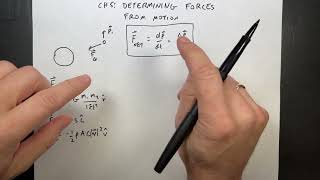
Determining Forces from Motion - Chapter 5
Explore key physics concepts like calculated forces, equilibrium, free body diagrams, circular motion, and friction in this comprehensive lecture on determining forces from motion.
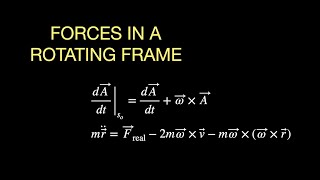
Newton's Second Law in a Rotating Reference Frame
Explore Newton's Second Law in rotating frames, uncovering Coriolis and centrifugal forces through vector derivatives.
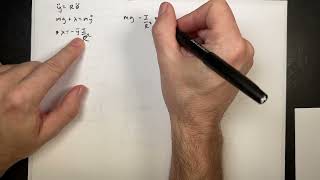
Lagrange Multipliers - Force of Constraint for a Yo-Yo
Explore Lagrange Multipliers to determine string tension in a released disk, applying principles of classical mechanics to real-world scenarios.
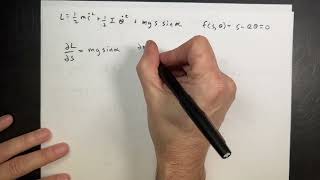
Lagrange Multipliers - Force of Constraint for a Disk Rolling Down an Incline
Explore Lagrange multipliers to determine motion equations and constraint forces for a disk rolling down an inclined plane.
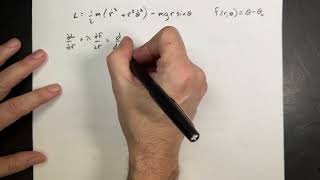
Lagrange Multipliers: Force of Constraint in Polar Coordinates for a Block on an Inclined Plane
Explore Lagrange multipliers to determine constraint forces for a block on an inclined plane using polar coordinates in classical mechanics.
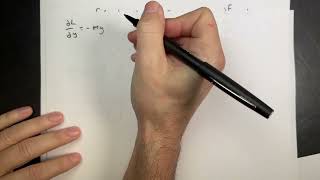
Lagrangian Multipliers - Force of Constraint for a Mass on an Incline
Explore Lagrange Multipliers to determine constraint forces for masses on inclines, enhancing understanding of classical mechanics principles.
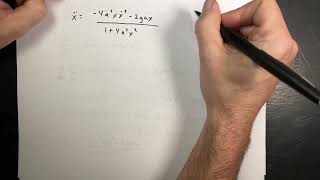
Lagrangian Mechanics: Bead on a Parabolic Wire
Explore Lagrangian mechanics through a practical problem of a bead on a parabolic wire, including Python implementation for enhanced understanding.

Physics: Rolling, Torque, and Angular Momentum - Lecture 11
Explore key concepts in physics: rolling motion, torque as a vector, angular momentum, and the angular momentum principle in this concise lecture review.