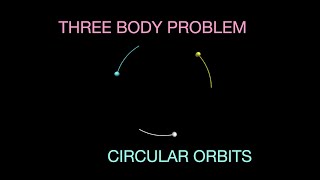
How to Achieve Circular Orbits in the Three-Body Problem
Explore stable circular orbits for three equal-mass planets using Python simulations and gravitational calculations.
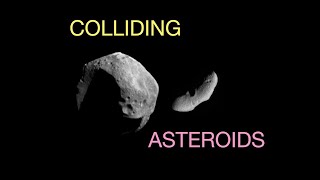
Calculating Asteroid Collision Velocities
Calculate asteroid collision velocities using gravitational potential energy and Python simulations. Explore physics concepts through practical space scenarios.
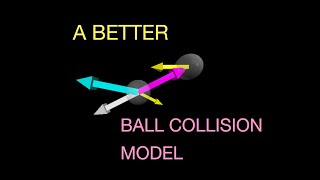
Building a Better Ball Collision Model for Solar System Simulation in Python
Improve ball collision modeling for a flat solar system simulation, focusing on conservation of momentum and angular momentum.
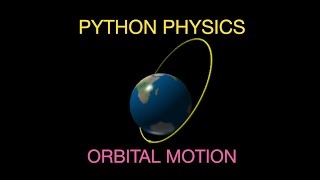
Python Physics: Building a 3D Model for Orbital Motion
Develop a 3D model for orbital motion using Python and Web VPython, breaking down complex calculations into manageable time intervals for accurate simulations.
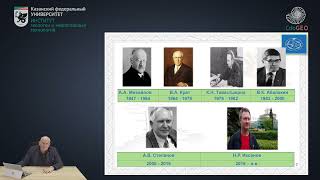
Малый Пулковский базис и его связь с градусными измерениями
Изучите связь Малого Пулковского базиса с градусными измерениями и его значение в военной топографии. Повысьте свои навыки в геодезии и картографии.
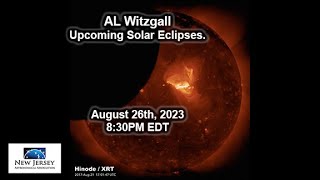
Upcoming Solar Eclipses in 2023 and 2024 - Detailed Discussion
Explore upcoming solar eclipses, their physics, types, and safe viewing methods. Learn about 2023-2024 events across North America and get photography tips.
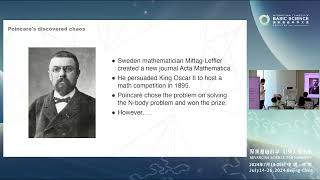
On the Painleve Conjecture in Celestial Mechanics - ICBS 2024
Explore the solution to the Painleve conjecture in celestial mechanics, focusing on noncollision singularities in the four-body problem of Newtonian mechanics.
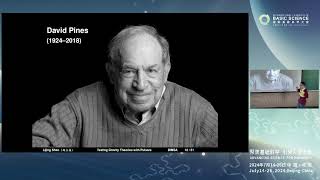
Testing Gravity Theories with Radio Pulsar Timing
Explore radio pulsar timing techniques and their application in testing alternative gravity theories using binary pulsars.
Modeling a Flat and Spinning Solar System Using Python
Model a flat, spinning solar system with 100 masses using Web VPython and Python code. Explore advanced simulation techniques for celestial mechanics.
Modeling the Tri-Solar Syzygy with Python
Explore Python modeling of the Tri-Solar Syzygy from "The 3 Body Problem," simulating stable orbits and planetary positions in a three-star system.
Calculate the Three-Body Problem Just Like the San-Ti
Explore the physics of the 3-body problem, its significance in "The Three-Body Problem" media, and learn computational methods to solve it.
Computational Habitability
Explore computational methods for assessing planetary habitability, covering atmospheric, interior, surface, and system-wide factors in exoplanet research.
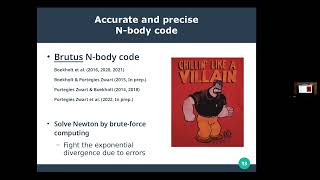
Fundamentally Unpredictable Three-Body Systems
Explore chaotic gravitational three-body systems and their unpredictability, delving into groundbreaking research on irreversibility to the Planck length.
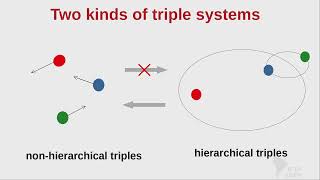
Isles of Regularity in a Sea of Chaos Amid the Gravitational Three-Body Problem
Explore the gravitational three-body problem, uncovering islands of regularity within chaotic dynamics. Gain insights into complex celestial mechanics and their implications.
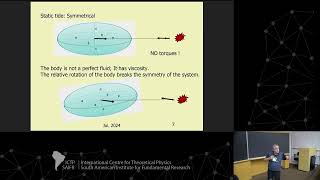
Star-Planet Tidal Interactions
Explore star-planet tidal interactions and their impact on exoplanetary systems. Gain insights into gravitational dynamics and celestial mechanics.
Explore the Total Solar Eclipse of 2024 with Wolfram Language
Predict and visualize the 2024 total solar eclipse using Wolfram Language. Calculate timings, create detailed sky and Earth maps, and understand the astro capabilities behind eclipse predictions.
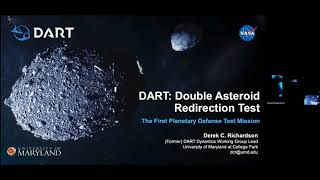
DART: Successful Deflection of an Asteroid by a Kinetic Impactor
Explore NASA's groundbreaking DART mission, its successful asteroid deflection, and the implications for planetary defense strategies. Gain insights into the mission's dynamics and future follow-up plans.
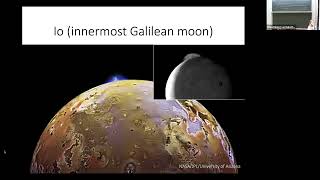
Tidal Sculpting of Short-Period Exoplanets
Explore how tidal forces shape short-period exoplanets, their orbital patterns, and interior structures, with insights from JWST observations and explanations for demographic mysteries in planetary systems.