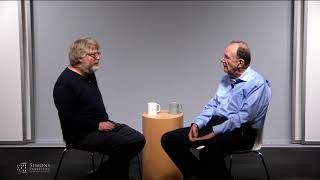
Oral History - Russell Impagliazzo in Conversation with Dick Karp
Explore key developments in theoretical computer science through an engaging conversation between Russell Impagliazzo and Dick Karp, covering topics from NP-completeness to computational biology.
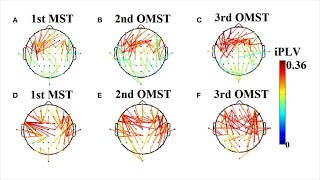
Orthogonalized Minimum Spanning Tree and Their Application for Human Brain Mapping - Paper Review
Explore Orthogonalized Minimum Spanning Trees for brain connectivity analysis. Learn about data-driven thresholding methods, their application in human brain mapping, and practical implementation through code examples.
Ran Levi- Topological Analysis of Neural Networks
Explore topological analysis of neural networks, from C. elegans to complex brain structures. Discover surprising findings and innovative approaches in computational neuroscience.
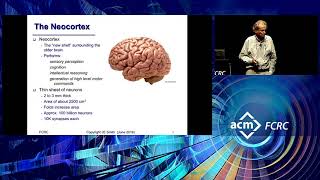
A Roadmap for Reverse-Architecting the Brain’s Neocortex
Explore a roadmap for reverse-engineering the neocortex, from biological observations to computational primitives and functional building blocks, towards developing biologically plausible neural networks for unsupervised learning.
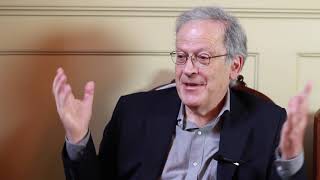
Leslie G. Valiant - Turing Award Lecture 2010
Explore computational learning theory, machine learning, and brain modeling with Leslie G. Valiant, 2010 ACM Turing Award winner, as he discusses his groundbreaking research and insights.
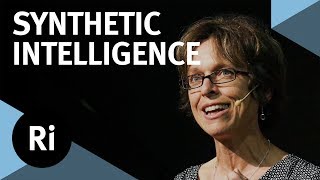
Synthetic Intelligence - With Zdenka Kuncic
Explore synthetic intelligence and its potential to replicate human-like thinking through neuromorphic technology, offering insights into the future of brain-inspired computing and its societal impact.
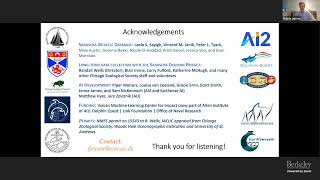
Individual Discrimination of Bottlenose Dolphin Signature Whistles Using Deep Learning
Explore deep learning techniques for identifying individual bottlenose dolphins through their unique signature whistles, advancing our understanding of cetacean communication and behavior.
Generative AI and What Is Meaningful Sperm Whale Communication
Explore the intersection of generative AI and sperm whale communication, uncovering insights into nonhuman species' language and potential AI applications in decoding animal vocalizations.
High Availability with BGP - Metal Monday
Explore high availability using BGP on Equinix Metal. Learn about bare metal challenges, BGP basics, and configure nginx, haproxy, and bird for robust load balancing and routing.
Matrix - Synapse: Open Source, Self-Hosted, Federated, End-to-End Encrypted Communication Server
Learn to set up a self-hosted Matrix/Synapse server using Docker, including installation, configuration, and administration. Gain hands-on experience with open-source communication infrastructure.
Decoding Animal Behavior Through Pose Tracking
Explore deep learning techniques for animal pose tracking and behavior analysis, from fruit flies to giraffes. Learn to apply computer vision methods to quantify and interpret animal body language across species.
The Power of Self-Learning Systems
Explore cutting-edge AI breakthroughs and their implications for scientific discovery with DeepMind's CEO. Learn about self-learning systems, game-changing algorithms, and applications beyond gaming.
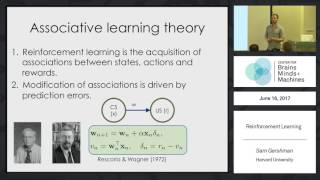
Reinforcement Learning
Explore reinforcement learning concepts and their applications in psychology and neuroscience. Hands-on exercises demonstrate how algorithms explain animal learning and dopamine neuron firing.
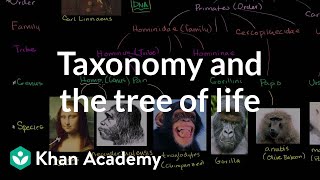
Taxonomy and the Tree of Life
Explore the science of taxonomy, classification systems, and humanity's place in the tree of life in this concise overview of biological organization.
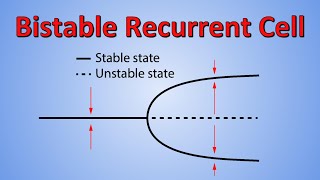
A Bio-Inspired Bistable Recurrent Cell Allows for Long-Lasting Memory
Explore a bio-inspired recurrent cell design that enhances long-term memory in neural networks, inspired by neuronal bistability and offering improved performance on time-series tasks requiring extended recall.
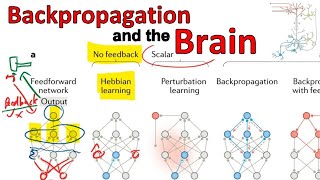
Backpropagation and the Brain
Explore a biologically plausible variant of backpropagation and its potential role in brain learning, discussing feedback connections and error signal approximation in cortical networks.
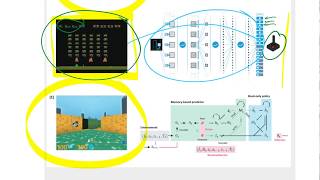
Reinforcement Learning, Fast and Slow
Explores recent advancements in deep reinforcement learning, discussing techniques for faster learning and their potential implications for cognitive science and neuroscience.
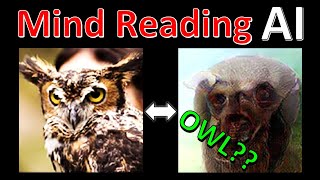
Deep Image Reconstruction from Human Brain Activity
Explores innovative technique for reconstructing visual imagery from brain activity using fMRI and deep neural networks, demonstrating potential for "mind-reading" technology and insights into neural representations.
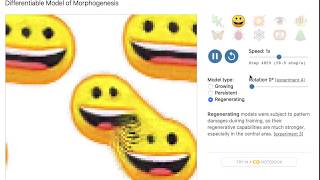
Growing Neural Cellular Automata
Explore neural cellular automata that learn to grow complex patterns through local interactions, mimicking biological morphogenesis and self-organization in a fascinating, interactive model.
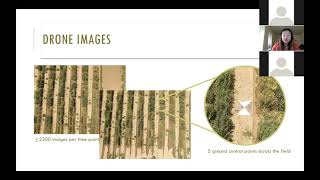
Drone Phenotyping and Machine Learning Enable Discovery
Explore drone phenotyping and machine learning techniques for studying daily floral opening in lettuce, including image processing, statistical analysis, and genetic mapping.
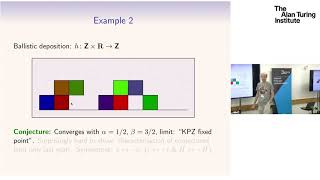
Universality Classes for 1+1 Dimensional Systems
Explore universality classes in 1+1 dimensional systems, focusing on weak universality conjecture, graphical construction, and links to Brownian web. Gain insights into complex systems modeling.