Neurosymbolic Programming - An Emerging Subarea of AI
Explore neurosymbolic programming's fusion of deep learning and program synthesis, discovering how it enhances AI robustness, interpretability, and efficiency through symbolic and neural approaches.

HDD Computational Storage Performance Analysis and Benchmarking - From System Tests to IPC
Dive into computational storage benchmarking techniques, exploring IPC analysis, SIMD programming, and inline assembler for optimizing genomics research performance on HDD systems.
Measuring Gene Expression in Tissues for Autoimmune Disease Detection - Lecture 2
Dive into advanced techniques for measuring gene expression in tissues, focusing on spatial transcriptomics and its application in inflammatory bowel disease diagnosis and cancer detection.
Enhanced EEG Data Classification with 3D SNN and Online Learning ESN
Discover a novel hierarchical neural network architecture that combines 3D spiking neurons and Echo state networks for advanced EEG data classification and real-time brain signal interpretation.
Machine Learning Techniques for Omics Data Analysis
Explore machine learning applications in Next Generation Sequencing data analysis, focusing on key techniques for processing biological data from cells, tissues, and organisms.

AI Resilience Beyond Compliance - Leveraging Diversity for Adaptive Systems
Explore how AI resilience combines regulatory compliance with diverse, adaptable solutions through a biological analogy, emphasizing standardization and specialized modifications for optimal performance.

Approximate DNA Storage with High Robustness and Density for Images
Explore groundbreaking DNA storage techniques for images, focusing on enhanced robustness and density through innovative encoding schemes and error prevention mechanisms.
Reinforcement Learning-Based Fine-Tuning of Diffusion Models for Drug Discovery
Dive into advanced reinforcement learning techniques for fine-tuning diffusion models, focusing on accelerated drug discovery, bioinformatics, and molecular compound predictions.
The Bitter Lesson of Retrieval in Generative Language Model Workflows
Discover how leveraging data and compute in RAG architectures can enhance generative AI applications, with insights from YOKOT.AI's implementation for enterprise data solutions.
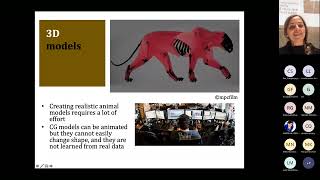
3D Computer Vision for Animals - Lecture 28
Explore cutting-edge techniques in 3D computer vision applied to animal modeling and analysis through an expert lecture on advanced AI applications for understanding animal forms and movement.
Meta Flow Matching - Integrating Vector Fields on the Wasserstein Manifold
Explore advanced flow-based modeling techniques for predicting biological system dynamics, focusing on population-level evolution and personalized medicine applications using Graph Neural Networks.
The GitHub Actions Worm - Understanding CI/CD Platform Vulnerabilities
Dive into the security vulnerabilities of GitHub Actions, exploring how malicious code can spread through Action dependencies and learning essential defense strategies against CI/CD platform attacks.
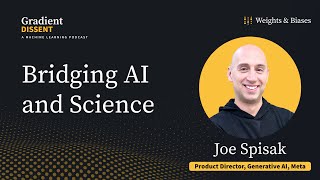
The Impact of Machine Learning on Material Innovation and Scientific Progress
Explore AI's impact on science, business, and technology with Meta's Joe Spisak. Discuss GPT, Llama2, and AI applications in biology and material science. Examine ethical considerations and the future of open-source AI development.
Violet Teaming AI in the Life Sciences
Explore AI's impact on life sciences, balancing opportunities in health and biosecurity risks. Learn about violet teaming to maximize benefits while minimizing downsides in biological engineering.
Data-Centric Approach to Machine Learning in Health Applications
Explore robust data management practices for machine learning in health applications, addressing common pitfalls and showcasing solutions from neuroscience and cell biology research.
AI on the Edge: Neuromorphic Computing - Session 2
Explore neuromorphic computing through research on brain-machine interfaces, electronic skin, hippocampal memory prostheses, and retina-inspired circuits.
Federated Learning and Integration of Biomedical Data
Explore federated learning for secure biomedical data collaboration, integrating data harmonization and imputation techniques. Discover applications in neuroimaging tasks.
Expert-Informed, User-Centric Explanations for Image Classification with Deep Learning
Explore expert-informed, user-centric explanations for image classification using deep learning. Gain insights into diagnostic feature labeling and its applications in various fields.
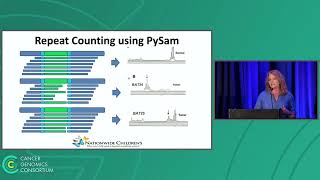
Clin-MSI: A Machine Learning-Based Approach to MSI Detection in Endometrial Cancers
Explore a machine learning approach for detecting microsatellite instability in endometrial cancers, enhancing diagnostic accuracy and treatment selection for patients.
NeuroEvolution of Augmenting Topologies and Compositional Pattern Producing Networks
Explore NEAT and CPPN algorithms for evolving neural network architectures and weights, and their applications in developmental biology modeling and image generation.
Meta-Learning Through Hebbian Plasticity in Random Networks - Paper Explained
Explores biologically-inspired Hebbian learning for adaptive AI agents. Demonstrates how random neural networks can self-organize during runtime to solve RL tasks and adapt to new situations without fixed policies.