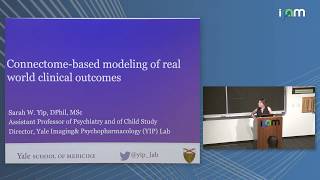
Connectome-Based Modeling of Real World Clinical Outcomes in Addictions
Exploring connectome-based modeling to predict addiction outcomes, focusing on cocaine and opioid abstinence, network stability, and brain states. Discusses potential clinical applications and theoretical models.
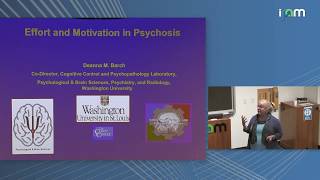
Computational Contributions to Understanding Impaired Motivation and Effort in Psychosis
Exploring computational approaches to understand impaired motivation and effort in psychosis, focusing on reinforcement learning and decision-making to aid treatment development.
Population Genetics and Evolution - I- The Mechanisms of Evolution
Explore population genetics and evolution mechanisms through key concepts like exponential growth, Galton-Watson processes, selection, and fitness measurement in long-term experiments with E. coli and RNA viruses.
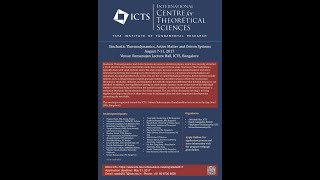
Topology in Biology by Julia Yeomans
Explore active matter systems, focusing on topology in biology, active turbulence, and cell division. Learn about liquid crystal hydrodynamics, topological defects, and confinement effects in active systems.
The Visions of Shamans and Saints - Dynamic Instabilities in Neuroscience by Bard Ermentrout
Explore neural patterns, from motor activity to brain imaging, and their connections to paleolithic art and hallucinations. Discover mechanisms behind spatial and temporal patterns in neuroscience.
Introduction to Gene Genealogies and Coalescent Processes by John Wakeley
Explore gene genealogies and coalescent processes in population genetics, covering inference of human population history from genome sequences and SNP-difference data analysis.
Understanding Tandem Running Recruitment in Indian Ants
Explores tandem running in Indian ants during colony relocation, examining recruitment strategies, decision-making flexibility, and movement dynamics to understand collective behavior in social insects.
Active Forces and Flows that Pattern Organisms by Stephan Grill
Explore how active forces and flows in biological systems drive morphogenesis, from molecular interactions to organism-wide patterning, with a focus on actomyosin dynamics and symmetry breaking.
More Perfect Than We Imagined: A Physicist's View of Life - Lecture 1
Explore how biological systems operate near physical limits, from atomic-scale hearing to bacterial decision-making, revealing life's surprising simplicity and perfection through a physicist's perspective.
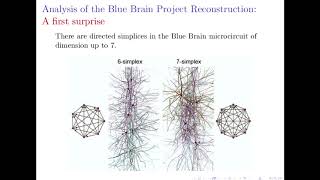
Ran Levi - Bedlewo: Topological Analysis of Neural Networks
Explore topological analysis of neural networks using algebraic topology techniques on biologically accurate digital reconstructions, revealing structural and functional insights into brain connectivity.
Elchanan Mossel: Combinatorial Statistics and the Sciences
Explore combinatorial statistics, broadcasting on trees, and their applications in biology and network analysis, with insights into phylogenetic inference and community detection.
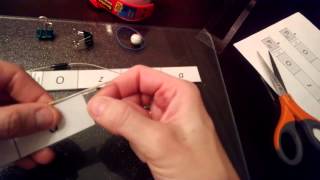
Lac Operon Gene Regulation Activity - Visualizing Cis and Trans Elements
Visualize gene regulation of the lac operon through an interactive activity, exploring cis- and trans-acting elements in single copy and partial diploid scenarios.
Sylvie Méléard- Multiscale Eco-Evolutionary Models- From Individuals to Populations
Exploring eco-evolutionary models from individual to population scales, focusing on small population effects, mutation dynamics, and long-term behaviors using stochastic processes and mathematical approximations.
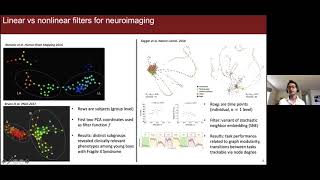
Exploring Brain Dynamics During Ongoing Cognition Using Mapper
Exploring brain dynamics using Mapper: analyzing fMRI data with geometric techniques to reveal whole-brain activity patterns and predict task performance in multitask paradigms.
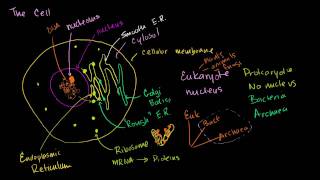
Parts of a Cell
Explore the essential components of cellular structure, including nucleus, ribosomes, organelles, and their functions in this comprehensive overview of cell biology.

Photosynthesis - Light Reactions
Explore the light-dependent reactions of photosynthesis, understanding key processes and components involved in converting light energy into chemical energy in plants.

Viruses
Explore the fascinating world of viruses, their structure, replication, and impact on living organisms in this concise introduction to viral biology.

Punnett Square Fun - Biomolecules - MCAT
Explore dihybrid crosses, independent assortment, and various inheritance patterns in this engaging video. Learn key concepts for the MCAT and deepen your understanding of Mendelian genetics.

DNA
Explore the fundamentals of DNA in this concise introduction, covering its structure, function, and significance in genetics and biology.

Introduction to the Atom - Chemistry of Life - Biology
Explore the fundamental building blocks of matter in this concise video lesson on atoms, protons, neutrons, and electrons, providing a solid foundation for understanding chemistry and biology.
Animal Movement and Emergent Patterns of Space Use - A Personal Journey With Plentiful References to Mark Lewis
Explore animal movement, territoriality, and space use patterns through mathematical models and ecological insights, featuring personal research experiences and collaborative work.