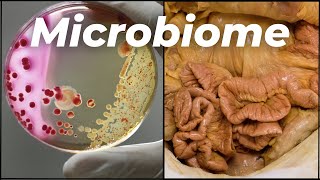
The Bacteria That Live Inside of You - The Microbiome
Explore the fascinating world of microbes living inside your body, their impact on health, and how to nurture a stronger microbiome through diet, lifestyle, and understanding their origins.

The Truth About Gluten
Explore gluten's journey through the digestive system, understand celiac disease, wheat allergies, and gluten sensitivity. Gain insights into diagnosis, treatment, and expert opinions on gluten-related issues.

Humans Have an Actual Superpower
Explore the unique anatomy of the human vocal tract and its evolutionary significance. Discover how our speech capabilities set us apart from other species and impact human development.

The Anatomy of Pain
Explore the intricate anatomy of pain, from its purpose and perception to its processing in the brain. Learn about pain thresholds, neural pathways, and the body's natural pain management systems.

Experimenting With Stomach Acid - How Strong Is It?
Explore the power of stomach acid through experiments, learning its production, function, and effects on food and body tissues in this engaging scientific demonstration.

The Most Painful Thing a Human Can Experience - Kidney Stones
Explore kidney stone formation, pain perception, treatments, and prevention strategies through an in-depth anatomical perspective, offering valuable insights for understanding and managing this painful condition.

Why Zombies Can't Happen
Explore the anatomical impossibility of zombies, examining death stages, rigor mortis, autolysis, muscle coordination, and brain decomposition to debunk the zombie myth.

Carpal Tunnel Syndrome & the Median Nerve
Explore the anatomy of the median nerve and carpal tunnel, understanding the causes and implications of carpal tunnel syndrome through detailed explanations and visual demonstrations.
An In-Depth Look at the Kenhub Anatomy Platform
Explore the Kenhub anatomy platform's features, comparing digital resources to actual cadavers for an in-depth look at effective human anatomy study methods.
Bits and Atoms - Exploring the Intersection of Machine Learning and Microscopy
Explore the intersection of machine learning and microscopy, focusing on AI models for active learning in materials discovery, automated experiments, and physics discovery through advanced microscopy techniques.
Diffusion Based Distributional Modeling of Conformers, Blind Docking and Proteins
Explore diffusion-based modeling for conformers, blind docking, and proteins. Learn about torsional diffusion, generative docking, and 3D motif scaffolding in molecular systems.
OpenFold - Lessons and Insights From Rebuilding and Retraining AlphaFold2
Insights from rebuilding AlphaFold2: OpenFold's optimized implementation, training process analysis, and implications for protein structure prediction and broader applications in structural biology.
Unbiasing Procedures for Scale-Invariant Multi-Reference Alignment - IPAM at UCLA
Explore unbiasing techniques for scale-invariant multi-reference alignment in signal processing, focusing on applications in cryo-electron microscopy and distribution learning from biased, sparse batches.
Pose Estimation, Temperature, Noise, and Biological Temperature Sensors via Cryo-EM
Explore pose estimation, temperature, noise, and heterogeneity in cryo-EM for understanding biological temperature sensors, with focus on TRP channels and advanced analytical techniques.
Detection of Objects in Cryo-Electron Micrographs Using Geometric Deep Learning
Explore geometric deep learning techniques for object detection and segmentation in cryo-electron micrographs, focusing on unsupervised methods and graph-based transformers for complex structures.
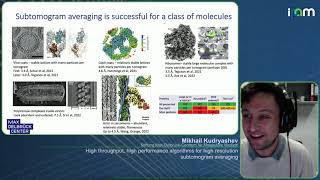
High Throughput, High Performance Algorithms for High Resolution Subtomogram Averaging
Explore high-performance algorithms for subtomogram averaging in cryo-electron microscopy, focusing on tools like TomoBEAR and SUSAN to enhance throughput and resolution in structural biology.
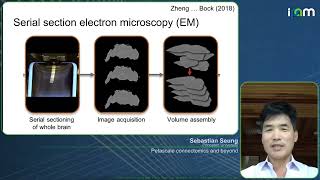
Petascale Connectomics and Beyond - IPAM at UCLA
Explore petascale connectomics, its advancements in brain mapping, and future exascale projects. Learn about automated image analysis techniques and their impact on understanding neural structures and brain function.
Inferring Coupled Oscillatory Dynamics From Data - IPAM at UCLA
Explore phase dynamics in oscillatory systems, focusing on phase demodulation techniques and network reconstruction. Learn about protophase-to-phase transformation and applications in cardiorespiratory interactions.
The Reluctant Scientist: A Nobel Laureate's Journey Through Medicine and Research
Nobel laureate Dr. Lefkowitz shares his journey from reluctant scientist to groundbreaking researcher, exploring pivotal moments and lessons learned that led to his revolutionary work on G-protein coupled receptors.
Learning to Untangle Genome Assembly Graphs - IPAM at UCLA
Explore deep learning techniques for untangling genome assembly graphs, improving accuracy and efficiency in DNA sequencing without manual intervention.
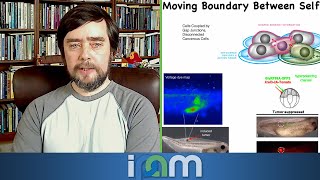
Plasticity Without Genetic Change - Bioelectric Embryos & Synthetic Proto-Organisms
Explore bioelectric embryos and synthetic organisms, delving into morphogenetic control, AI-driven tissue reconfiguration, and collective behaviors challenging traditional biological distinctions.