
The Mathematical Essence of Aging - Theoretically Speaking
Explore mathematical models of aging using large-scale medical data, revealing seasonal hormone patterns and insights into age-related diseases, with implications for optimal treatment strategies.
Your Dreams May Come True with MTP2 by Caroline Uhler
Explore multivariate totally positive distributions, their properties, and applications in various fields. Learn about density estimation, ML estimation, and practical uses in portfolio selection and gene networks.
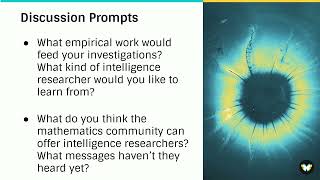
Broadening the Reach of Mathematical Approaches to the Study of Intelligences
Explore mathematical approaches to studying diverse intelligences across fields, discussing strategies for non-mathematicians to adopt these methods and potential funding opportunities for future research.
To Paint the Lily, Mathematically by L Mahadevan
Explore the mathematical beauty of nature with L Mahadevan as he uncovers the hidden patterns in everyday phenomena, blending biology, physics, and mathematics to reveal the sublime in the mundane.
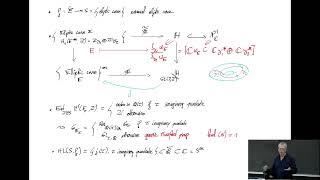
Hodge Theory, Between Algebraicity and Transcendence
Explore recent advances in Hodge theory, comparing algebraic structures and bounding transcendence using o-minimal geometry. Gain insights into complex algebraic varieties and their applications.
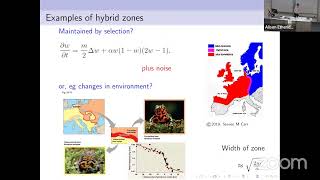
The Motion of Hybrid Zones - And How to Stop Them
Explore mathematical models of hybrid zones in population genetics, including deterministic approximations, curvature flow, and probabilistic proofs, with applications to invasions and blocking.

Convex Sunflower Theorems and Neural Codes
Explore convex sunflower theorems and neural codes, connecting neuroscience with discrete geometry to understand place cell encoding and cognitive mapping in rat hippocampus.
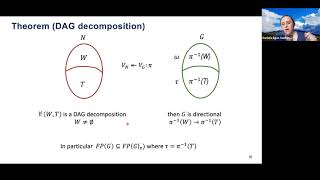
Nerve Theorems for Fixed Points of Neural Networks
Explore how network connectivity shapes neural activity using combinatorial threshold-linear networks. Learn about nerve theorems and their application in understanding fixed points of large neural networks.
Using Algebraic Geometry to Detect Robustness in Reaction Networks
Explore algebraic geometry techniques to detect robustness in reaction networks, focusing on absolute concentration robustness and its implications for biological systems.
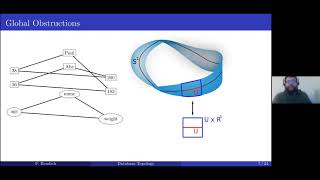
Data Complexes, Obstructions, Persistent Data Merging
Explore data complexes, topological obstructions in database JOIN operations, and persistence levels in data alignment. Learn about measure theory, homotopy, and homology in the context of data integration.
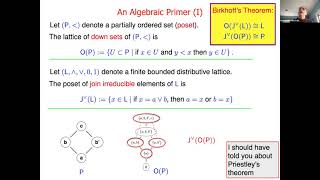
Nonlinear Dynamics in an Age of Heuristic Science
Explore nonlinear dynamics through combinatorial topology, offering efficient computational methods and new perspectives for multiscale systems and data-driven science in biology and engineering.
Pawel Dlotko - A Few Simple Stories on Topology in Action
Explore practical applications of computational topology in material science, dynamical systems, and brain research. Learn how theory and algorithms work together to solve real-world problems.
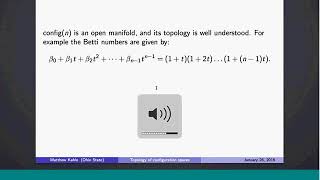
Matthew Kahle - Topology of Configuration Spaces of Hard Spheres
Explore configuration spaces, homology, and topology in hard sphere systems. Learn about critical points, computational approaches, and theoretical foundations in applied algebraic topology.
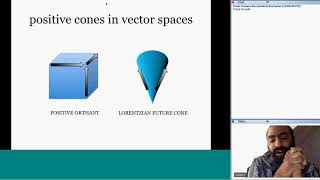
Sanjeevi Krishnan - Homological Programming
Explore algebraic topology applications in programming, covering pursuit-evasion problems, positive cones, Alexander duality, and directed topology, with insights into decomposability and computational aspects.
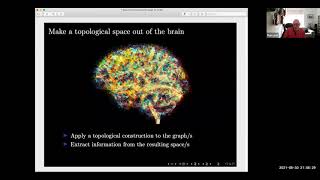
An Application of Neighborhoods in Directed Graphs in the Classification of Binary Dynamics
Explore graph theory applications in classifying binary dynamics, focusing on vertex neighborhoods and their use in analyzing neuronal network activity, with insights from the Blue Brain Project.
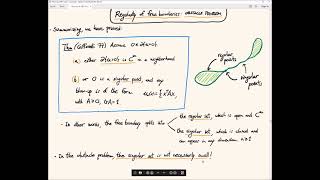
Regularity of Free Boundaries in Obstacle Problems - Lecture III
Explore free boundary problems in PDE, focusing on regularity of solutions and interfaces. Learn about Stefan and obstacle problems, key results, and current research challenges.
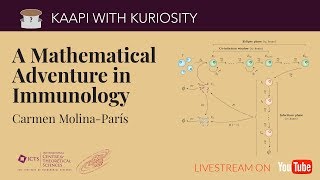
A Mathematical Adventure in Immunology by Carmen Molina-Paris
Explore the immune system's complexity through mathematical modeling, examining cell interactions, disease prevention, and quantifying pathogen infectivity.
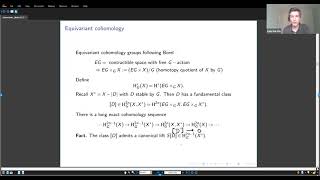
Eisenstein Cocycles and Values of L-Functions
Explore Eisenstein cocycles, equivariant cohomology, and their applications to L-functions. Gain insights into recent constructions and their connections to theta kernels and arithmetic groups.
Phylogenetic Algebraic Geometry
Explore phylogenetic algebraic geometry, its applications in species history reconstruction, and the use of algebraic and geometric perspectives to solve phylogenetic problems.
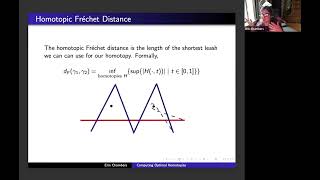
Computing Optimal Homotopies
Explore optimal curve similarity measures using homotopy-based approaches, examining structural properties, algorithms, and open questions in topology and computational geometry.
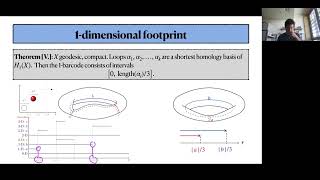
Žiga Virk - Information Encoded in Persistence Diagrams
Explore topological data analysis through persistence diagrams, uncovering spatial properties like homology, geodesics, and proximity in various mathematical contexts.