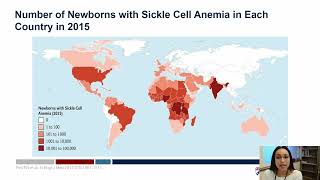
Equity in Laboratory Medicine
Explore the complex relationship between race, ethnicity, and genetics in medicine. Examine the implications of using racial categories in clinical care and laboratory practices.
Getting to the Heart of the Matter: Novel Analytical Technologies Provide a New Perspective on a Complex Organ
Explore novel analytical technologies providing new insights into the molecular landscape of the human heart, focusing on cell surface proteins and their role in cardiac physiology.
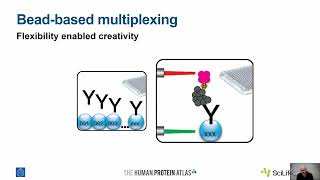
Multiplexed Mapping of the GPCR-RAMP Interactome
Explore G protein-coupled receptors and receptor activity-modifying proteins interactions through multiplexed mapping, uncovering potential therapeutic targets for various human diseases.
The Bioinformatics of Neoantigen Discovery and Vaccine Design
Explore neoantigen identification and vaccine design through bioinformatics. Learn about REAL-neo analytic framework and novel modules for tumor sequencing data analysis in immunotherapy research.
Why Networks Matter: Embracing Biological Complexity
Explore how genetic regulatory networks provide insights into health, disease, and potential therapies through examples from large-scale genomic datasets.
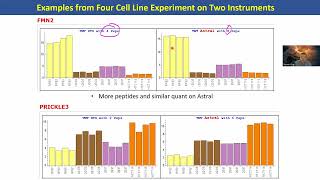
Targeted Pathway Proteomics Using TMT and Real-Time Analytics to Create GoDig Assays
Explore targeted pathway proteomics using TMT and real-time analytics for GoDig assays. Learn innovative techniques for hypothesis-driven research in systems biology.
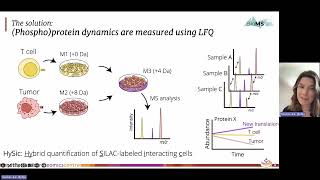
Mapping Communication Dynamics Between Physically Interacting Cells Using Hybrid Quantitative Proteomics
Explore cutting-edge proteomics techniques for mapping cell-to-cell communication in cancer immunology, focusing on immune checkpoints and their potential in immunotherapy.
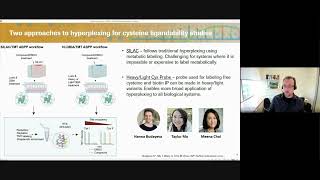
An Intelligent Data Acquisition Approach to Increase the Throughput of Multiplexed Proteome Analyses
Explore an intelligent data acquisition approach for increasing throughput in multiplexed proteome analyses, enhancing efficiency in quantitative proteomics research.
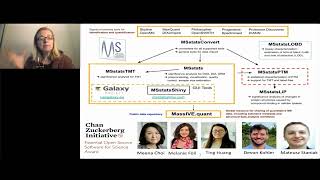
Multilevel Statistical Modeling for Proteomic Experiments With Complex Designs and Isobaric Labeling
Learn advanced statistical modeling techniques for complex proteomic experiments using isobaric labeling, focusing on multilevel designs and time-series data analysis.
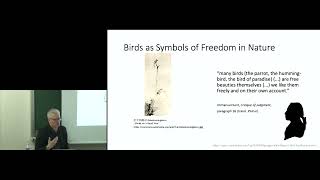
Human and Animal Wisdom: Birds of Wisdom from Aesop to Hegel - Chapter 2
Explore the philosophical perspectives on avian wisdom through history, from Aesop's fables to Hegel's interpretations, examining the relationship between human and animal intelligence.
如何健康促進,養出真實的力量?- 以促進方式讓生活更美好
探索健康生活方式,克服年齡挑戰。透過營養、愛和信仰,培養真實力量。以自身為例,學習成為健康的最大責任人,實現全面的生活改善。
From Causal Inference to Autoencoders, Memorization & Gene Regulation - Caroline Uhler, MIT
Exploring causal inference, autoencoders, and gene regulation through genomics and 3D genome organization. Integrates data modalities, analyzes overparameterized autoencoders, and links memorization to real-valued data retrieval.
Survival Analysis with TCGA Data in R - Create Kaplan-Meier Curves
Learn survival analysis using TCGA data in R, including Kaplan-Meier curves. Covers key concepts, data preparation, and practical implementation using survival and survminer packages.
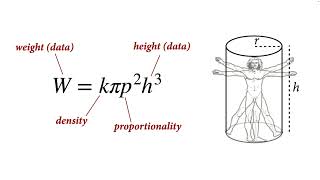
Statistical Rethinking 2023 - Generalized Linear Madness
Explore advanced statistical concepts including allometry, state space models, and ordinary differential equations through practical examples and applications in various fields.

Statistical Rethinking 2022 - Generalized Linear Madness
Explore advanced statistical concepts like geometric models, state-based analysis, and population dynamics through innovative examples and practical applications.

Perceptual Organization From a Bayesian Point of View
Explore Bayesian approach to perceptual organization, examining how the visual system groups images into distinct units through inverse inference and mixture estimation techniques.
Dynamical Systems in Neuroscience
Explore cluster computing and OpenMind for brain and cognitive sciences, covering dynamical systems, models, and observation techniques in neuroscience research.
Development of Intelligence - Josh Tenenbaum: Bayesian Inference
Explore Bayesian inference and cognitive neuroscience with Josh Tenenbaum, delving into AI challenges, scene understanding, and advanced mathematical concepts for intelligence development.
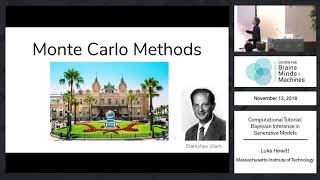
Bayesian Inference in Generative Models
Explore approximate Bayesian inference methods, including sampling-based techniques and variational inference, with hands-on exercises in implementing algorithms and using probabilistic programming languages.

Self-Study Computational Neuroscience - Coding, Textbooks, Math
Comprehensive guide to starting computational neuroscience: programming languages, coding practice, textbooks, math resources, project ideas, and datasets for self-study and skill development.

An Introduction to Homology - Algebraic Topology
Explore higher-dimensional topology through homology groups, cycles, and spanning trees. Learn to compute and characterize independent cycles in graphs using algebraic techniques.