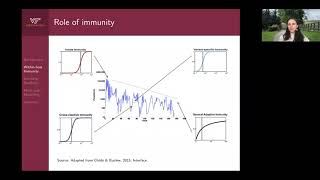
Modelling Immunity to Malaria
Explore mathematical models of malaria immunity, examining within-host dynamics, antigenic variation, and population-level impacts to enhance understanding and control strategies.
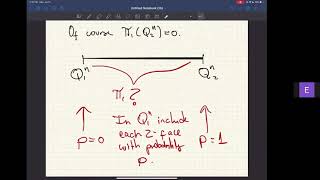
The Fundamental Group of 2-Dimensional Random Cubical Complexes
Explores fundamental groups in random 2D cubical complexes, analyzing their behavior and structure at different probability thresholds. Insights into topology and percolation theory.
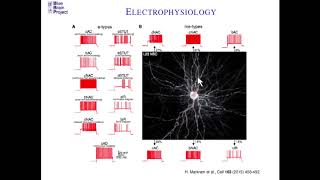
Kathryn Hess - Bedlewo: Topology Meets Neuroscience
Explore how topology applies to neuroscience across scales, from neurons to brain regions. Discover topological analysis of microconnectomes and neuron classification, with insights into brain imaging data.
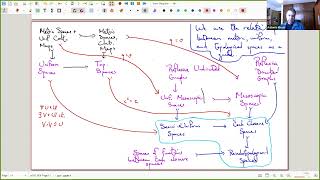
Antonio Rieser - Algebraic Topology for Graphs and Mesoscopic Spaces
Explore algebraic topology for graphs and mesoscopic spaces, covering homotopy, homology, and metric cohomology. Learn about pseudotopological spaces and their applications in various mathematical categories.

Torsion Homology Growth and Related Topics
Explore torsion homology growth in compact CW complexes, examining Betti number growth in finite covers and connections to amenable category and minimal volume entropy.
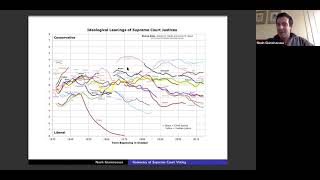
Looking for Geometry in the Supreme Court
Exploring geometric approaches to analyze U.S. Supreme Court voting behavior, discussing recent investigations using planar geometry and phylogenetic trees, and suggesting future directions in topology and geometry.
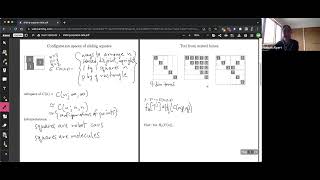
Homology of Sliding-Squares Configuration Spaces
Explore homology of sliding-squares configuration spaces, comparing point and square configurations in planes and rectangles. Discover surprising growth patterns in homology group ranks.
Introduction to Stochastic Processes by Sanjib Sabhapandit
Explore stochastic processes in this advanced lecture, covering key concepts and applications in statistical physics for graduate-level students and researchers.
Population Genetics of Multiple Loci by Nick Barton
Explore population genetics theory and its applications in evolutionary processes, covering multiple loci analysis, quantitative predictions, and integration of mathematical and biological concepts.
Dynamical Systems Applied to Biology - Part 1
Explore dynamical systems in biology, focusing on applications and mathematical approaches to understand complex biological processes and phenomena.

Deep Learning of Dynamical Systems for Mechanistic Insight and Prediction in Psychiatry
Explore deep learning techniques for analyzing dynamical systems in psychiatry, uncovering mechanisms, and predicting outcomes using neural and behavioral data from various sources.
Math and Nature
Explore mathematical patterns in nature and their applications in neuroscience. Discover how math reveals hidden structures in the world and aids in developing medical solutions for neurological disorders.
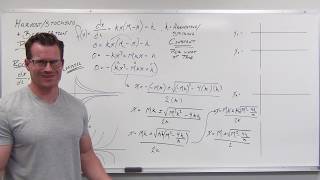
Harvesting Populations in Differential Equations
Explore the impact of harvesting and stocking on logistic and explosion/extinction differential equations in population dynamics.
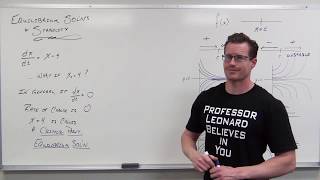
Equilibrium Solutions and Stability of Differential Equations
Explore equilibrium solutions, critical points, and their impact on population dynamics in differential equations. Gain insights into stability analysis.
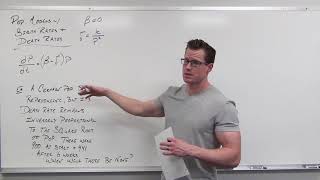
Birth Rates and Death Rates in Differential Equations
Explore how birth and death rates impact population growth through differential equation modeling, enhancing understanding of demographic dynamics.
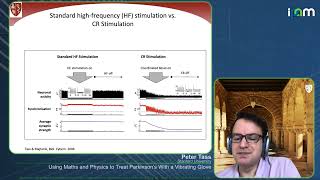
Using Maths and Physics to Treat Parkinson’s With a Vibrating Glove
Innovative vibrotactile therapy for Parkinson's disease using mathematical models to design stimulation patterns, showing promising results in reducing symptoms and abnormal brain activity through non-invasive fingertip vibrations.
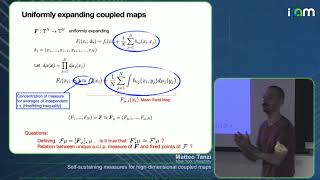
Self-Consistent Transfer Operators for High-Dimensional Expanding Coupled Maps
Explore self-consistent transfer operators in high-dimensional expanding coupled maps, examining equilibrium measures, stability, and the relationship between thermodynamic limits and finite-dimensional systems.

The Hug of the Scutoid
Explore the fascinating world of scutoids, a newly discovered geometric shape, and their role in biology and mathematics with mathematician Clara Grima Ruiz.
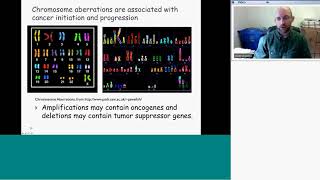
Javier Arsuaga - Applications of Computational Topology to the Analysis of Breast Cancer
Explore computational topology's role in breast cancer analysis, uncovering new insights through advanced mathematical techniques and data visualization methods.
A Xither of Xenobots - Demolishing Dichotomous Thinking With Synthetic Proto-Organisms
Explore synthetic proto-organisms and challenge dichotomous thinking in this presentation on xenobots, offering insights into collective intelligence and biological engineering.
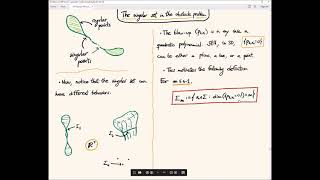
Regularity of Free Boundaries in Obstacle Problems - Lecture IV
Explore advanced concepts in free boundary problems, focusing on regularity in obstacle problems. Learn key results, current research, and open challenges in this mathematical field.