
Reverse Engineering Python Binaries - There and Back Again
Uncover Python bytecode secrets: Learn to interpret and decompile .pyc files, explore challenges in automated decompilation, and gain insights into recovering source code from bytecode.
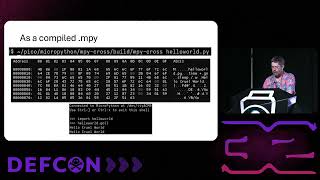
Reverse Engineering MicroPython Frozen Modules
Dive into advanced techniques for identifying and reverse engineering frozen MicroPython modules in firmware using Ghidra, focusing on bytecode analysis and module reconstruction methods.
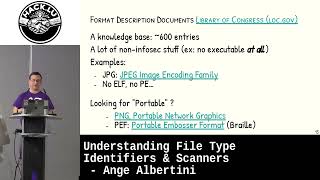
Understanding File Type Identifiers and Scanners
Dive into file type identification techniques and scanning mechanisms, exploring how different systems detect and process various file formats for enhanced digital forensics and security.

Shared Libraries in Windows and Linux - Linking and Loading Deep Dive
Dive deep into linking and loading operations, exploring binary structures, static vs dynamic linkage, and Linux vs Windows differences. Gain clarity on opaque linker error messages.

Reverse Engineering Python Binaries - There and Back Again
Uncover Python bytecode secrets: Learn to interpret and decompile .pyc files, explore challenges in automated decompilation, and gain insights into recovering source code from bytecode.
Malware Hunting in Cloud Environments - Effects and Techniques
Explore malware risks in cloud environments, focusing on PDF exploits, binary sessions, and attacker techniques. Learn to identify and mitigate threats for improved cloud security.
UEFI and the Task of the Translator: Cross-Architecture UEFI Quines for Exploit Development
Explore UEFI exploit development using cross-architecture UEFI quines as a framework, enhancing your understanding of low-level system vulnerabilities.
A Walking Tour of Wasm-Tools - Understanding WebAssembly Binary Tools
Explore the powerful wasm-tools CLI suite for manipulating, debugging, and testing WebAssembly binaries, enhancing your ability to work with and understand Wasm projects effectively.

Cities Skylines II Malware - Full Reverse Engineering Analysis
Dive into a comprehensive reverse engineering analysis of malware targeting Cities Skylines II, exploring detection methods, threat intelligence, and cybersecurity implications through detailed technical breakdown.
SymFit: Making the Common Concrete Case Fast for Binary-Code Concolic Execution
Explore optimizations in binary concolic execution, focusing on concrete instruction performance and symbolic tracing for enhanced crash deduplication efficiency in software testing.
Ahoy SAILR - A Compiler-Aware Structuring Algorithm for Binary Decompilation
Discover how SAILR, a novel structuring algorithm, revolutionizes binary decompilation by intelligently preserving necessary gotos while removing spurious ones, improving code readability and accuracy.
A Binary-level Thread Sanitizer - Why Sanitizing on the Binary Level is Hard
Explore the challenges and solutions of binary-level thread sanitization through BINTSAN, a novel approach for detecting data races in Linux x86-64 targets without source code access.
A Taxonomy of C Decompiler Fidelity Issues
Explore a comprehensive analysis of C decompiler output fidelity issues, examining defects beyond missing names and types to improve reverse engineering effectiveness in security analysis.
Introduction to Procedural Debugging through Binary Libification
Discover techniques for transforming ELF binaries into shared libraries and analyze memory corruption vulnerabilities through procedural debugging methods and direct function calls.
On the Effectiveness of Control-Flow Integrity in Practice - A Systematic Overview
Explore the real-world effectiveness of Control-Flow Integrity protection across Android and Windows systems, revealing critical gaps between research advances and actual deployment in practice.

Black Hat USA 2025
Black Hat USA 2025

Black Hat Europe 2023
Black Hat Europe 2023

Black Hat USA 2023
Black Hat USA 2023

Black Hat Asia 2025
Black Hat Asia 2025

Black Hat Europe 2022
Black Hat Europe 2022