BASHing iOS Applications - Command Line Tools for Mobile Auditors
Explore iOS application assessment using command-line tools. Learn mobile security fundamentals, binary analysis, data storage, and endpoint parsing while addressing OWASP Mobile Top 10 vulnerabilities.
Fuzz Everything, Everywhere, All at Once - Advanced QEMU-Based Fuzzing
Explore advanced QEMU-based fuzzing techniques for binary-only targets, including command and SQL injection detection, and scalable Android library testing without physical devices.
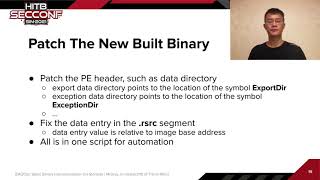
IDA2Obj - Static Binary Instrumentation on Steroids
Explore static binary instrumentation with IDA2Obj, a tool for dumping object files from executables. Learn implementation, challenges, and integration with fuzzing engines for efficient code coverage collection.
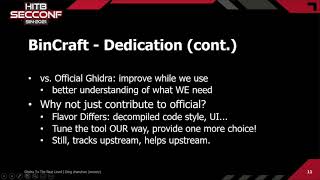
Taking Ghidra to the Next Level
Enhancing Ghidra: BinCraft's modernization efforts, improved decompilation, and integration of advanced techniques like GraalVM for a more powerful reverse engineering tool.
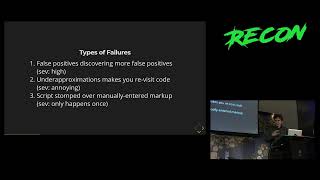
Sum Total of ISA Knowledge - Analyzing Your Binary Analysis Tools
Explore techniques to measure and verify architecture support in binary analysis tools, enhancing firmware reverse engineering through selective application of dynamic analysis methods.
Rattle - An Ethereum EVM Binary Analysis Framework
Explore Rattle, an innovative framework for analyzing Ethereum smart contracts, enhancing auditability and security in blockchain interactions through advanced binary analysis techniques.
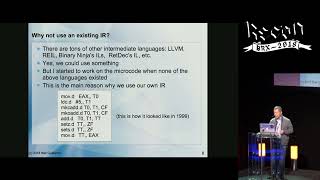
Decompiler Internals - Microcode
Explore the intermediate language used in Hex-Rays Decompiler, its simplicity and power in representing programs, and plans for publication and programmatic access.
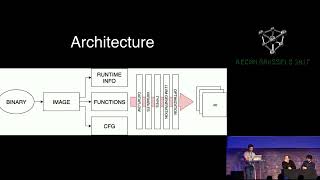
Analyzing iOS Apps - Road from AppStore to Security Analysis Report
Toolset for detecting vulnerabilities in iOS apps: download and decrypt, decompile, statically analyze, and present results. Focuses on high-level semantics reconstruction and common mobile app security flaws.
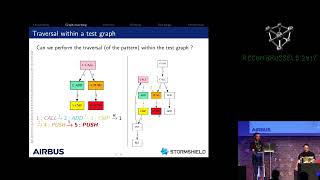
GRAP - Define and Match Graph Patterns Within Binaries
Herramienta para detectar patrones en código binario mediante coincidencia de grafos. Permite definir firmas personalizadas para identificar variantes de malware y extraer información valiosa.
The Wallstreet of Windows Binaries
Explore advanced techniques for analyzing Windows binaries, focusing on reverse engineering and vulnerability assessment in this in-depth technical presentation.
Exploiting Inter-Process Communication in SAP’s HTTP Server
Exploración de vulnerabilidades críticas en el servidor HTTP de SAP, demostrando técnicas de explotación de alto nivel para comprometer sistemas SAP sin autenticación.
IoT Processor and Binary Breakdown - The Good the Bad and the Ugly
Explore IoT processor architecture, binary analysis, and firmware vulnerabilities. Gain insights into hardware, Linux deployment, and virtualization for secure IoT development.
Automating Binary Analysis with Ghidra's P-Code
Explore automated binary analysis using Ghidra's P-Code, an intermediate language that enables architecture-independent scripting for reverse engineering and vulnerability research.
Anatomy of a Gopher - Binary Analysis of Go Binaries - Alex Useche - Ekoparty Security Conference - 2020
Explore Go binary analysis for IoT and edge computing, covering Go assembler, tools, and language constructs to enhance reverse engineering skills.
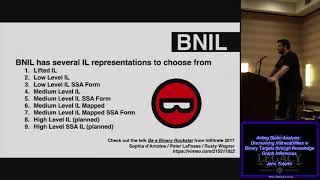
Aiding Static Analysis - Discovering Vulnerabilities in Binary Targets through Knowledge Graph
Explore advanced techniques for vulnerability detection in binary targets using knowledge graphs, static analysis, and specialized tools like Binary Ninja and Kraken.

STOCHFUZZ - Sound and Cost-effective Fuzzing of Stripped Binaries by Incremental and Stochastic Rewriting
Explore innovative techniques for efficient fuzzing of stripped binaries, including incremental and stochastic rewriting, static writing, and delta debugging.
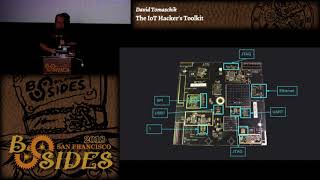
The IoT Hacker's Toolkit
Explore essential hardware and software tools for IoT security assessment, covering interfaces, analysis techniques, and skill-building for embedded device evaluation.
Hardware Security Module - Executing Unsigned Code in HSM TEE
Explore a novel attack on HSM digital signature verification, enabling execution of unsigned code in protected environments. Insights applicable to similar systems.
Container Attack Surface Reduction Beyond Name Space Isolation
Explore techniques to reduce container vulnerabilities by analyzing and removing unnecessary dependencies, binaries, and permissions, enhancing security beyond namespace isolation.
Next Generation Disassembly Framework
Explore next-gen disassembly framework for multi-architecture binary analysis. Learn about Capstone engine's features, design challenges, and potential applications in reversing, exploit development, and malware detection.
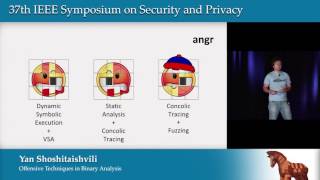
SoK - The Art of War - Offensive Techniques in Binary Analysis
Comprehensive overview of binary analysis techniques for vulnerability detection, comparing approaches and discussing their effectiveness using a standardized framework and dataset.