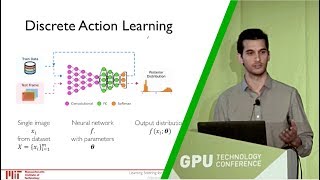
Learning Steering for Parallel Autonomy
Explores end-to-end learning for parallel autonomy in self-driving cars, focusing on handling ambiguity, uncertainty estimation, and decision-making capabilities beyond reactionary control.
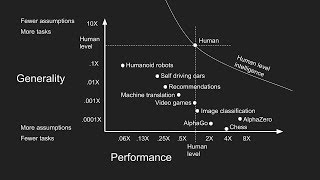
Getting Closer to Human Intelligence Through Robotics
Explore how robotics research can advance AI towards human-level intelligence by relaxing current assumptions and focusing on physical interaction and broader capabilities.
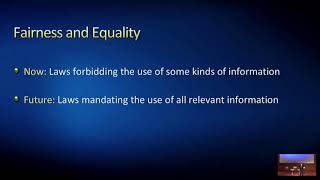
How Will Artificial Intelligence Change Ethics? - Pedro Domingos
Explore AI's impact on privacy, fairness, work, ethics, warfare, governance, and social media, examining how it challenges our understanding of human uniqueness.
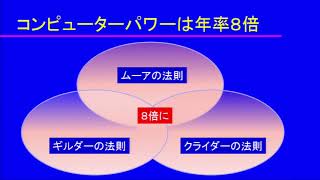
Digital Transformation Driven by AI and IoT
AIとIoTがもたらすデジタル変革の未来と課題を展望。500億以上のデバイスがネットにつながる2020年に向けて、経済や社会への影響を考察。

El punto ciego en el camino de la vida - Fractales y perseverancia en robótica espacial
Andrés Mora explora cómo los fractales y la perseverancia se aplican en robótica y navegación espacial, utilizando su experiencia en la NASA para ilustrar el manejo de desafíos en la vida y la tecnología.
Sztuczna Inteligencja - Czwarta Rewolucja Przemysłowa
Analiza wpływu sztucznej inteligencji na Czwartą Rewolucję Przemysłową, automatyzację, rynek pracy i edukację. Perspektywy rozwoju AI i jej rola w kształtowaniu przyszłości różnych branż.
Next-Generation Intelligent Cockpit Ecosystem Experience
探讨自动驾驶时代智能座舱的未来发展,介绍如何利用3A游戏引擎技术打造创新座舱体验,展望车内空间的全新可能性。

Explicando el Sistema de un Vehículo Autónomo con Python
Desmitificación del funcionamiento de vehículos autónomos usando Python. Exploración de frameworks como ROS, comunicación entre sensores y conceptos de ingeniería de software para sistemas en tiempo real.
AI for Air Traffic Management and Large Scale Urban Mobility
Explore AI applications in air traffic management and urban mobility, focusing on innovative solutions for efficient transportation systems.
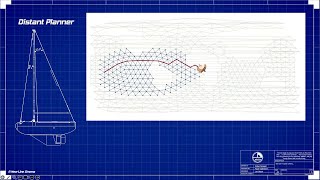
Building a Robot to Sail Across the Atlantic - Lessons from Autonomous Sailboat Development
Erfahre, wie autonome Segelboote entwickelt werden: Von Rumpf und Segelplan über Elektronik bis zur Programmierung. Lerne aus den Erfahrungen des Sailingteam Darmstadt beim Bau von Robotern für die Atlantiküberquerung.
WebTalk on PICs for LIDAR Systems
Explore coherent FMCW LiDAR technology for autonomous navigation, featuring insights on silicon photonics, advanced optics, and the Innovation Support Fund application process.
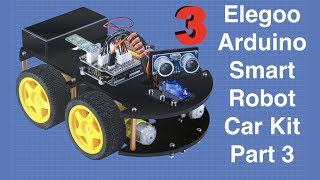
Elegoo Smart Robot Car - Collision Avoidance and Line Following
Learn to implement collision avoidance and line following capabilities for Arduino-based robot cars using ultrasonic sensors, servo motors, and optical arrays. Includes code explanations and demonstrations.
Optimizing Robot Action Around and For People
Explore strategies for optimizing robot actions in human environments, focusing on prediction, interaction, and shared utility to enhance human-robot collaboration and safety.
Autonomous Navigation of Turtlebot Using ROS - ROS Tutorials for Beginners
Learn to autonomously navigate a Turtlebot using ROS by creating an auto_nav package and writing custom code, without relying on RVIZ. Practical implementation of navigation concepts for mobile robots.

Detection Is Not Enough - Attack Recovery for Safe and Robust Autonomous Robotic Vehicles
Explore novel frameworks for safe attack response in autonomous robotic vehicles, enabling mission continuation despite malicious interventions through feed-forward control and sensor isolation techniques.
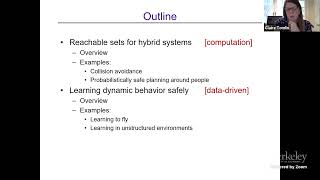
Safe Learning in Robotics
Explore safe learning in robotics, covering reachable sets, collision avoidance, fast planning, and human-robot interaction. Gain insights into cutting-edge techniques for autonomous systems.
Safety-Critical Autonomous Systems - What is Possible? What is Required?
Explore the design, challenges, and potential of safety-critical autonomous systems in aerospace, transportation, and consumer applications, focusing on verification and formal methods.
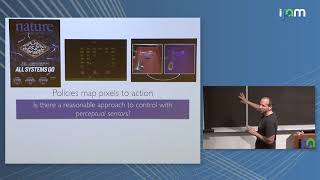
Trying to Make Sense of Control from Pixels
Explores challenges in merging machine learning with control systems, focusing on autonomous vehicles using vision. Discusses uncertainty quantification, robust controller design, and performance guarantees.
Cybersecurity Challenges and Community-Based Risk Management
Explore cybersecurity challenges, risk management, and global tech trends with insights on patents, licensing, and community-based approaches to digital security.
Using a Lidar for Robot Navigation in a Room
Explore LASER rangefinder integration for autonomous robot navigation, including Linux requirements and control software. Learn techniques for 3D mapping and obstacle avoidance on embedded Linux platforms.
Hacking is Child's Play - IoT Security Risks and Demonstrations
Explore IoT security risks with 11-year-old hacker Reuben Paul. Learn about vulnerabilities in smart toys and their real-world implications through demonstrations and insights from a young cybersecurity expert.