
Arduino Robot Car with Speed Sensors - Using Arduino Interrupts
Build a 2WD robot car with speed sensors using Arduino interrupts. Learn to assemble the chassis, integrate optical sensors, and program for speed and distance measurement. Ideal for beginners and advanced hobbyists.
Robotics Training - Measuring Distance to Obstacle Using the HC-SR04
Learn to measure obstacle distance using HC-SR04 ultrasonic sensor for robotics projects. Practical coding and hardware setup included for implementing distance measurement in robotic applications.
Building a Level 5 Autonomous Vehicle in TrackMania
Explore the development of a self-driving car in TrackMania using reinforcement learning. Learn about the AI pipeline, from feature selection to model training, and witness the impressive results in action.
The Modern Trolley Problem
Exploring ethical dilemmas in self-driving car algorithms, demonstrating object recognition, and discussing responsible AI principles and sustainable engineering practices.

The Modern Trolley Problem - Responsible AI Principles
Exploring ethical challenges in AI-driven vehicles, from object recognition to decision-making algorithms. Demonstrates model training and deployment while emphasizing responsible AI principles and sustainable engineering practices.
An Introduction to Machine Learning Using LEGO
Explore machine learning fundamentals through a hands-on approach using a LEGO car model. Learn key concepts and practical applications to inspire further investigation into this exciting field.
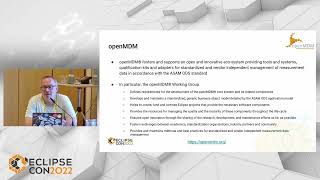
Open Source and Open Collaboration in the Automotive Industry - Eclipse Foundation Framework
Discover how open source software is transforming the automotive industry through collaborative frameworks, working groups, and projects that drive innovation in automated and connected vehicle technologies.
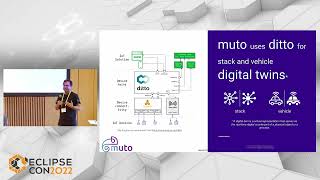
Eclipse Muto - Adaptive Framework for Model-Driven ROS Software Stacks
Discover how Eclipse Muto enables dynamic composition and management of ROS-based software stacks for autonomous vehicles through adaptive frameworks and IoT integration with Eclipse Ditto.
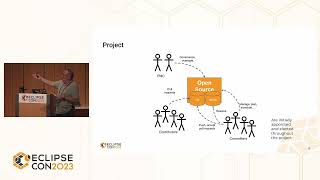
Driving the Automotive Industry Into the Future With Open Source
Explore how open source software is transforming automotive development through Eclipse Foundation's framework for collaboration, innovation, and standardization in connected cars and autonomous driving.
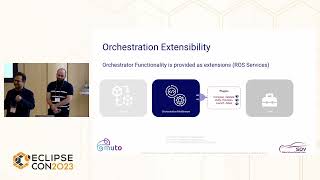
Eclipse Muto in Action - Dynamic ROS Software Stack Orchestration for Autonomous Vehicles
Discover how Eclipse Muto orchestrates ROS software stacks for autonomous vehicles, featuring ROS2 support, dynamic reconfiguration capabilities, and practical implementation in logistics vehicle management.
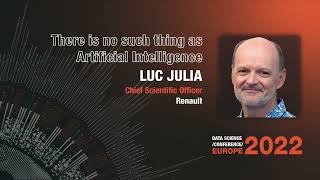
There Is No Such Thing as Artificial Intelligence - Understanding AI Myths and Realities
Explore the misconceptions about AI with Luc Julia as he debunks Hollywood myths, examines real technological advances, and discusses the future potential of machine learning and deep learning technologies.
Learning In-the-Wild Sensor Simulation for Autonomous Driving
Explore cutting-edge sensor simulation techniques for autonomous driving. Learn to create digital twins, manipulate scenarios, and generate realistic multi-sensor simulations to enhance self-driving vehicle development.
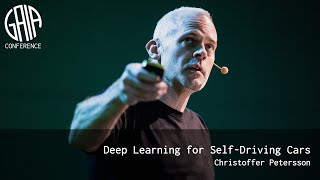
Deep Learning for Self-Driving Cars
Explore deep learning's role in autonomous driving software, addressing challenges and research in reducing traffic fatalities through AI-driven solutions.
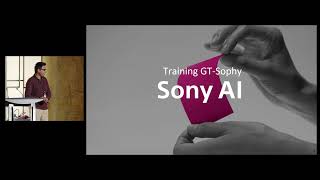
Outracing Champion Gran Turismo Drivers With Deep Reinforcement Learning
Explore deep reinforcement learning techniques used to train AI agents that outperform world-class e-sports drivers in Gran Turismo racing simulations.
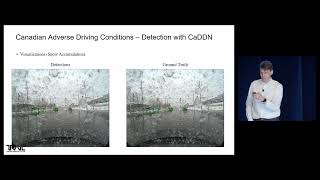
Where's the Road? The Challenge of Autonomous Driving Perception in Winter
Explore challenges and advancements in autonomous driving during harsh Canadian winters, focusing on perception tasks and all-weather autonomy solutions.

How Investors Think About Data - Trends in Data, ML, and AI Investing
Explore investor perspectives on data, AI, and ML from top venture firms. Gain insights into investment trends, criteria for early-stage teams, and future opportunities in the data infrastructure landscape.

Generic Alignment Conjecture and the Problem of Emergence of Collective Behavior
Explore compressible and incompressible flows, focusing on collision avoidance, velocity matching, and flock centering in collective behavior emergence.
Accelerating ML with Kubeflow for Autonomous Vehicles
Explore how Aurora Innovation accelerates ML model development for autonomous vehicles using Kubeflow, covering infrastructure evolution, pipeline building, and organization-wide adoption.
Ensuring Fair Behavior Among Autonomous Vehicles
Explore a novel approach to incentivize fair behavior in autonomous vehicle ecosystems using blockchain technology and fairness tokens.
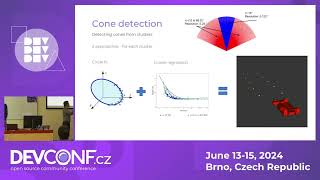
Design and Development of Autonomous Racecar
Explore autonomous racecar development: perception, localization, mapping, path planning, and vehicle control. Gain insights into creating self-driving vehicles using advanced technologies.
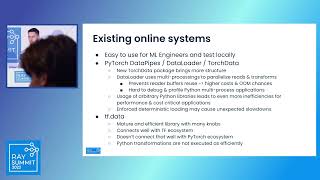
Cruise.data - A New Dataset Processing Pipeline for Cruise ML
Explore Cruise.data, a novel ML data pre-processing framework combining tf.data, PyTorch, and large-scale processing capabilities for efficient and scalable dataset handling in autonomous vehicle development.