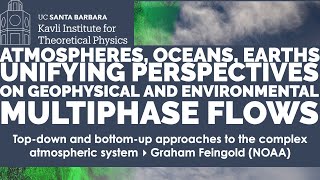
Top-Down and Bottom-Up Approaches to the Complex Atmospheric System - Graham Feingold (NOAA)
Explore top-down and bottom-up approaches to understanding complex atmospheric systems, focusing on multiphase flows in geophysical and environmental contexts.
The Inconstant Nature of Climate Feedback and Climate Sensitivity by Angshuman Modak
Explore climate feedback mechanisms and sensitivity, examining their variable nature and impact on climate modeling and predictions in this insightful lecture by Angshuman Modak.
Possible Influences of External Factors on the Indian Summer Monsoon by Suvarna Fadnavis
Explore external factors influencing the Indian Summer Monsoon, including climate dynamics, atmospheric processes, and potential impacts on regional weather patterns and precipitation.
Basics of Clouds and Convection by Vishal Dixit
Explore the fundamentals of cloud formation and atmospheric convection processes, gaining insights into their role in weather patterns and climate dynamics.

Global Overturning Circulation - How We Know About the Large-Scale
Explore the global overturning circulation and large-scale ocean dynamics with insights from Anand Gnanadesikan. Gain understanding of climate-scale processes and their impact on ocean and atmospheric systems.
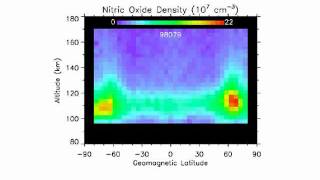
Atmospheric Science Advances in the 20th Century - Nicolet Lecture 1999
Explore atmospheric science insights from Charles A. Barth's 1999 Nicolet Lecture, offering valuable historical perspectives on research developments and findings in the field.

Atmospheric Data Assimilation and Predictability - 1999 Bjerknes Lecture
Explore atmospheric dynamics and climate prediction with renowned meteorologist Eugenia Kalnay in this historic AGU Bjerknes Lecture from 1999, offering valuable insights despite its age.

Climate Variability and Change: Historical Patterns and Future Trends - 1999 Charney Lecture
Explore historical perspectives, Walker's Pattern, and climate oscillations in this AGU lecture by J. Michael Wallace, covering zonal index cycles, Arctic Oscillation, and atmospheric trends.
Gravity Wave Dynamics in the Atmosphere - Bjerknes Lecture
Explore atmospheric gravity waves and their impact on climate in this AGU Fall Meeting lecture by M. Joan Alexander, offering insights into wave dynamics and modeling.
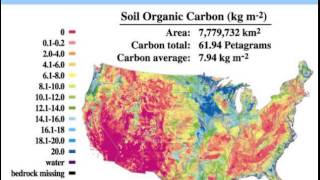
The Global Carbon Cycle and Human Impact - AGU Fall Meeting 2001
Explore the global carbon cycle, human impacts, and key processes affecting atmospheric CO2 levels in this comprehensive overview of Earth's carbon budget and climate change dynamics.
Bjerknes Lecture: Cloud System Resolving Models and Parameterization - AGU Fall Meeting 2001
Explore cloud parameterization and system-resolving models in climate science. Gain insights into innovative approaches for modeling complex atmospheric processes and their implications.
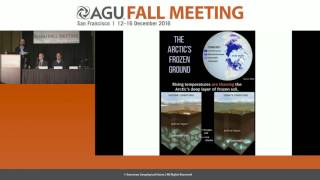
Arctic Report Card 2016 - Key Findings and Environmental Changes
Scientists present findings on rapid Arctic warming, discussing impacts on environment, wildlife, and global climate. Key measures include temperature, sea ice, snow cover, and Greenland ice sheet changes.
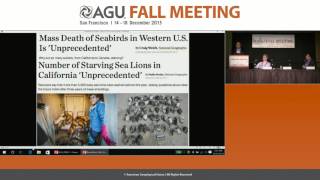
Ecosystem Impacts of Record Ocean Warming in the North Pacific - Fall 2015
Experts discuss "the blob," a warm water anomaly in the Northeast Pacific, its effects on marine ecosystems, unprecedented toxic algal blooms, and potential future impacts on ocean health and wildlife.
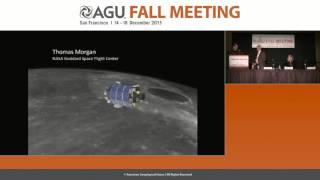
Fluctuations Within the Lunar Dust Cloud - LADEE Mission Findings
NASA researchers discuss observations from the LADEE mission, exploring the moon's exosphere and its interactions with the lunar surface, solar rays, and asteroids, providing insights for future planetary exploration.
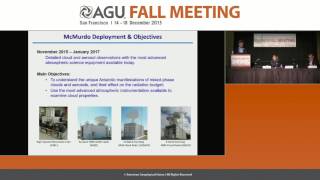
Comprehensive Meteorological Study of Antarctica - AWARE Project Overview
Comprehensive meteorological study of West Antarctica using advanced equipment to collect crucial data on climate change trends, cloud properties, and atmospheric conditions in this rapidly warming region.
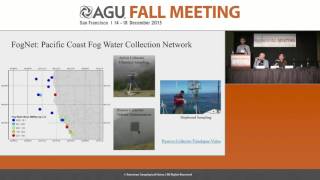
New Science of Fog - Trends and Impacts on Coastal Ecosystems
Explore new research on Pacific Coast fog, including climate change impacts and ocean-to-land compound transfer, with insights from leading experts in atmospheric and marine sciences.
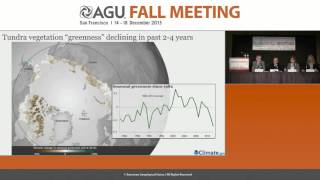
Arctic Report Card 2015 - Climate Change Impacts and Observations
Experts present the 10th Arctic Report Card, highlighting rapid warming, changes in temperatures, snow, sea ice, vegetation, and wildlife. Updates on fish, walruses, river discharge, and community monitoring included.
Plunging Below the Ionosphere - Observations from C/NOFS Satellite's Final Orbit
Groundbreaking observations from a decaying satellite reveal unexpected behavior in low-Earth orbit, advancing knowledge and improving satellite technology and re-entry predictions.
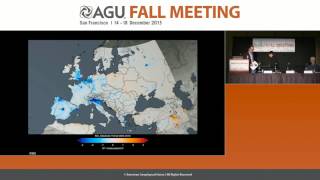
Global Air Quality - The Impacts of People and Cities
NASA scientists discuss a high-resolution global map of air quality, revealing how industrialization, economic activity, and civil unrest impact air pollution levels and their effects on human health and the environment from 2005 to 2014.
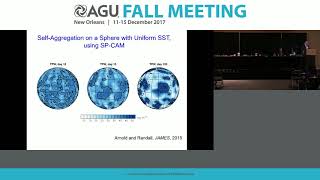
Climate Dynamics: Theory, Modeling, and Breakthroughs - 2017 Fall Meeting
Explore cutting-edge climate dynamics research with leading experts, covering theoretical advancements, modeling techniques, and breakthrough discoveries in atmospheric and oceanic sciences.
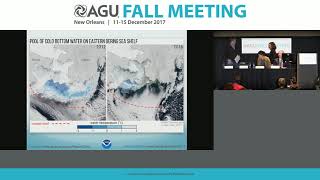
Arctic Report Card 2017 - Climate Change Impacts and Implications
Experts discuss the 2017 Arctic Report Card, highlighting rapid warming trends, environmental changes, and impacts on fisheries, wildlife, and global climate. Insights on air temperature, sea ice, and permafrost are shared.