
Eclipse 2017 - Scientific Data Collection and Initial Results
Scientists share initial results from diverse studies conducted during the 2017 North American eclipse, covering solar physics, Earth science, and space biology using ground-based telescopes, high-altitude balloons, aircraft, and satellites.
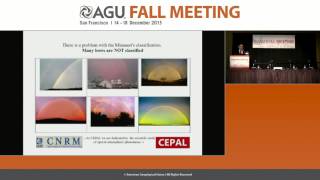
Why All Rainbows Don't Look Alike - New Classification System
Explore the science behind rainbow variations through a new classification system based on hundreds of images, offering insights into color band differences and atmospheric phenomena.
Unintentional Geoengineering: Whitening Skies and Changing Solar Radiation - Fall 2015
Explore unintentional geoengineering's impact on global cloud-free skies, solar radiation patterns, and Earth's surface through new data analysis and expert insights on atmospheric changes.
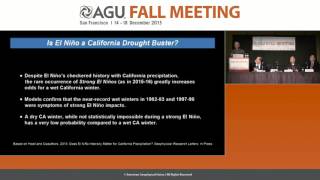
Global Impacts of the 2015-16 El Niño - NASA and NOAA Findings
Experts discuss global impacts of 2015-16 El Niño, including fire seasons, atmospheric changes, and potential drought relief, using NASA and NOAA satellite observations and research findings.
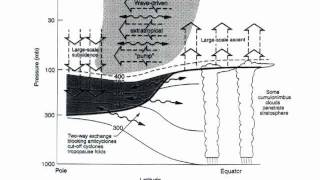
Solar-Terrestrial Coupling and Atmospheric Dynamics - 2001 Nicolet Lecture
Explore vertical motions, polar mesopause, and temperature trends in the atmosphere. Gain insights into supersaturation, plasma, and tropopause dynamics from renowned scientist George C. Reid.
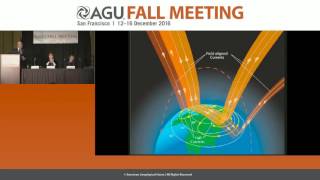
New Research on the Ionosphere - Our Interface to Space
Explore groundbreaking research on the ionosphere, its impact on Earth's communications, and upcoming NASA missions to study this crucial atmospheric region between our planet and space.
Dynamics of the Tropical Middle Atmosphere - Charney Lecture 2000
Explore atmospheric dynamics and climate research with Kevin Hamilton's insightful Charney Lecture, offering valuable perspectives despite potential video quality limitations due to age.
NOAA Lecture - Operational Forecasting and Ocean Policy
Explore NOAA's operational forecasting, research, and ocean policy with Conrad Lautenbacher in this AGU Fall Meeting lecture, offering insights into the organization's core functions and future directions.
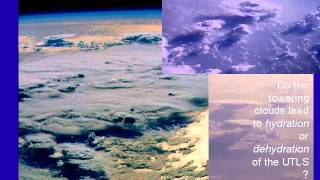
Stratospheric Cloud Formation and Microphysics - Charney Lecture 2002
Explore polar stratospheric clouds, their formation, and impact on atmospheric processes. Delve into microphysical processes, dehydration mechanisms, and implications for ozone and climate.
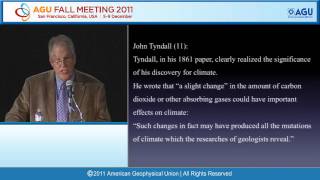
History of Global Warming - Fall Meeting 2011 Lecture
Explore the history of global warming through key figures like Tyndall, Faraday, and Keeling. Discover pivotal scientific contributions and the evolution of climate change understanding.
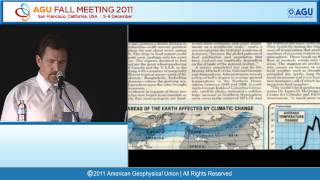
History of Global Warming - Stephen Schneider Global Environmental Change Lecture
Comprehensive exploration of global warming's historical development, examining key scientific discoveries, policy milestones, and societal impacts shaping our understanding of climate change.
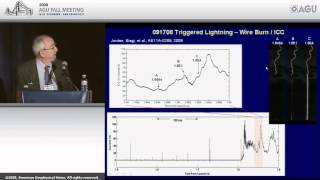
Recent Lightning Experiments - From Ball Lightning to Gamma Rays
Recent lightning experiments at the International Center for Lightning Research and Testing, exploring phenomena from ball lightning to gamma rays, presented by Martin A. Uman from the University of Florida.
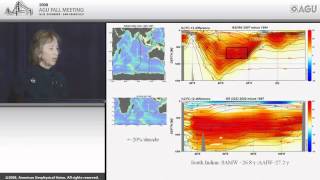
Chlorofluorocarbons - The Oceans' Inadvertent Canary
Explore the impact of chlorofluorocarbons on oceans and their role as environmental indicators in this insightful lecture by Rana A. Fine from the University of Miami.
The Story of O: Evolution of Earth's Oxygen Cycle and Its Relevance to Extraterrestrial Life
Explore Earth's oxygen cycle evolution and its implications for extraterrestrial life in this captivating lecture by Paul Falkowski, delving into planetary sciences and astrobiology.
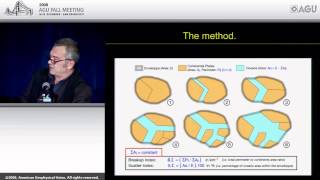
Interaction and Coevolution of Earth Reservoirs - Coupling of Mantle, Tectonic, Atmospheric, and Hydrospheric Dynamics
Explore Earth's dynamic systems and their interconnected evolution, focusing on mantle, tectonic, atmospheric, and hydrospheric interactions that shape our planet's history and future.
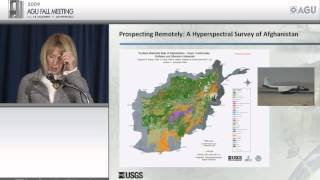
Frontiers of Geophysics - Advances in Earth Science Technologies
Explore cutting-edge geophysical technologies and their applications in earth sciences, from LiDAR to atmospheric rivers, with insights from USGS Director Marcia McNutt.
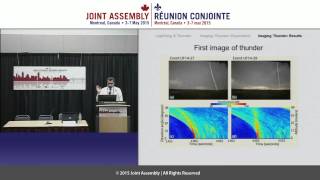
First Images of Thunder - Acoustic Signatures and Lightning Analysis
Explore groundbreaking research on capturing the first images of thunder, including acoustic beamforming techniques and triggered lightning experiments.
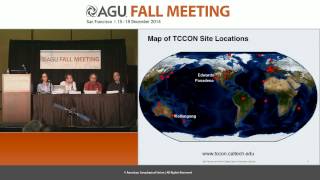
NASA's Orbiting Carbon Observatory Results - Fall Meeting 2014
Discover groundbreaking findings from NASA's Orbiting Carbon Observatory, revealing new insights into global carbon dioxide patterns and their impact on Earth's climate system.
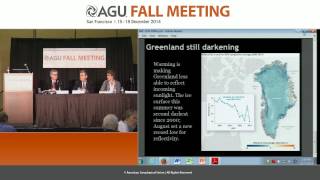
Arctic Report Card 2014 - Fall Meeting Press Conference
Comprehensive analysis of Arctic environmental changes, including sea ice, snow cover, and ecosystem impacts, based on latest scientific data and observations.
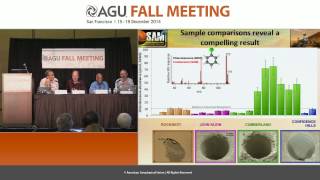
Recent Findings from Curiosity Rover - Mars Exploration Update
Recent findings from Mars Curiosity rover mission, including geological discoveries and atmospheric observations, presented by NASA scientists at AGU Fall Meeting 2014.
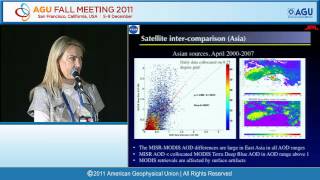
Atmospheric Dust - Interdisciplinary Studies III
Explore interdisciplinary studies on atmospheric dust, examining its impacts, sources, and interactions across various scientific domains. Gain insights into cutting-edge research and findings.