Direct Imaging of Extrasolar Planets
Explore cutting-edge techniques for directly observing planets beyond our solar system. Gain insights into the latest advancements in extrasolar planet detection and imaging.
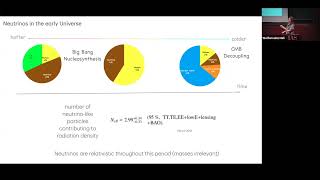
The Cosmic Quest for Neutrino Mass
Explore the cosmic impact of neutrino mass, from early Universe roles to current experiments. Uncover physical effects, dataset peculiarities, and novel astrophysical probes in the quest to detect relic neutrinos.
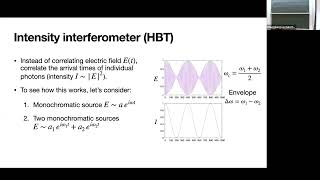
Intensity Interferometry for Sub-Microarcsecond Resolution in AGN Observations
Explore intensity interferometry for sub-microarcsecond resolution in optical telescopes, focusing on applications for active galactic nuclei observations and potential impacts on astrophysics research.
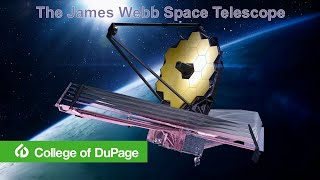
James Webb Space Telescope: Exploring the Universe with Unprecedented Clarity
Explore the groundbreaking James Webb Space Telescope through captivating videos and images, gaining insights into its revolutionary capabilities and cosmic discoveries.
Black Hole Thermodynamics - An Introduction
Explore black hole thermodynamics, from foundational concepts to contemporary developments, with insights into its challenges to fundamental physics.
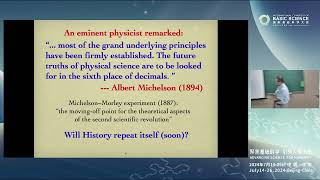
Physics Motivation for Future High Energy Colliders - ICBS 2024
Explore the physics motivation for future high-energy colliders, examining unanswered questions in particle physics and the need for new discoveries beyond the Standard Model.
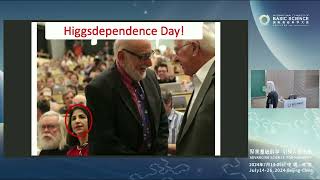
The Higgs Boson and Beyond - ICBS 2024
Explore the Higgs boson discovery, its implications, and unanswered questions in particle physics with renowned physicist John Ellis.
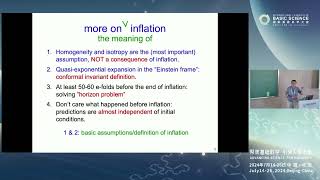
Inflation as a Tool to Explore the Physics of the Early Universe
Explore inflation's role in understanding the early Universe, including primordial black hole formation and its implications for cosmology.
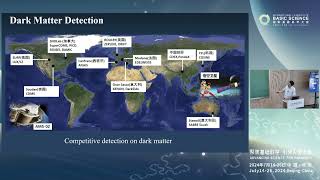
Comparative Lattice Analysis of SU(2) Dark Glueball
Explore SU(2) glueballs as dark matter using lattice simulations. Compare traditional and machine learning methods for mass calculation and scattering cross-section analysis.
Newgrange and JWST: Humanity's Enduring Quest to Understand the Universe
Explore humanity's cosmic quest through Newgrange and JWST, bridging ancient and modern astronomy to unravel our place in the universe.
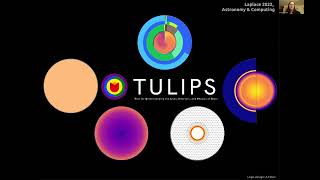
Visualizing MESA Models with TULIPS - How to Python
Learn to visualize MESA stellar evolution models using TULIPS Python package. Create plots and animations showing changes in stars over time. Enhance understanding of stellar structure and evolution.
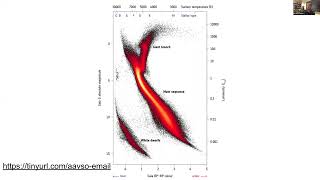
How to Model Isochrones Using Images of Star Clusters
Explore star cluster physics through image analysis. Learn to construct color images and model isochrones, revealing stellar evolution insights in this art-meets-science approach.
Understanding Photometric Transforms and Filters
Explore photometric transforms and filters with Dr. Brian Kloppenborg. Learn about light's journey, standardizing measurements, and improving photometry quality through practical insights and Q&A.
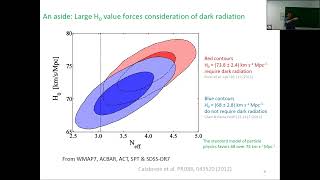
Spatial Curvature, Dark Energy Dynamics, Neither, or Both
Explore dark energy models, their predictions, and observational data constraints. Gain insights into open cosmological questions and the current understanding of the universe's energy composition.
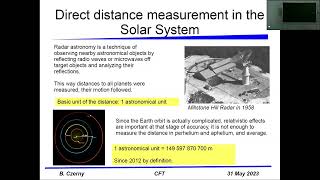
Distance Measurement in Astronomy
Explore astronomical distance measurement techniques, from direct probing to advanced methods using quasars, and understand their role in building a consistent picture of the Universe.
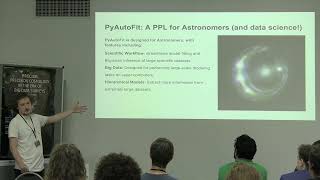
Introduction to Model Fitting - Gravitational Lensing and Graphical Modeling
Explore gravitational lensing model fitting techniques, from traditional methods to innovative graphical modeling, and learn about PyAutoFit for streamlined probabilistic programming.
Introduction to Cosmological N-Body Simulations
Explore precision cosmology through N-body simulations, understanding their history, development, and key applications in unraveling the universe's mysteries.
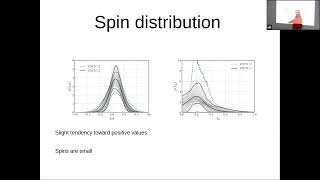
Where Do Merging Binary Black Holes Come From?
Explore the origins of merging binary black holes, examining LVK detections, formation models, and their comparison to observational data.
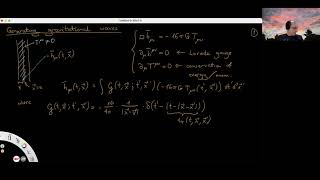
Gravitational Wave Sources, Detectors, and Schwarzschild Metric - Lecture 14
Explore gravitational wave sources, detectors, and the Schwarzschild metric in this advanced physics lecture, covering quadrupole formula and total power calculations.
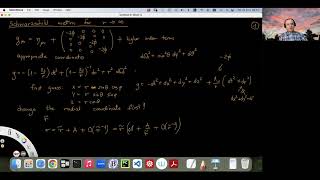
Schwarzschild Metric in General Relativity - Lecture 15
Explore the Schwarzschild metric's properties, including gravitational effects, geodesics, and orbits in this advanced graduate-level physics lecture on general relativity.
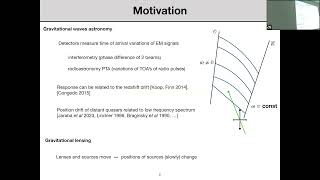
Redshift Drift, Position Drift and Caustics in General Relativity
Explore redshift and position drifts in general relativity, examining their formulas, physical consequences, and applications in gravitational lensing, astrometry, and cosmology.