Multi-messenger Astrophysics - Part 2
Explore advanced concepts in multi-messenger astrophysics, focusing on cutting-edge research and observational techniques in this rapidly evolving field.
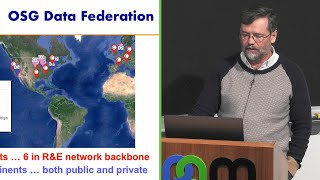
Global Cyberinfrastructure for LIGO, Virgo, Kagra, IceCube, and Others
Explore global cyberinfrastructure supporting multi-messenger astrophysics experiments, including data management, compute clusters, and modular software stacks for collaborative research.
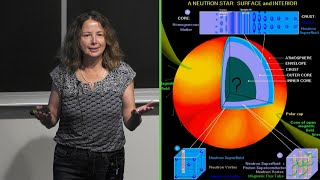
Realistic Binary Neutron Stars Collisions Simulations - Challenges and Opportunities
Explore challenges and opportunities in simulating binary neutron star collisions, focusing on realistic models, electromagnetic counterparts, and remnant properties using open-source codes and parametrized equations of state.
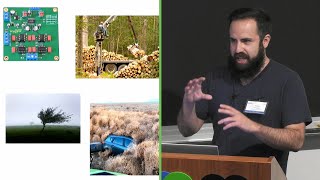
Low-Latency Noise Mitigation Techniques in Gravitational-Wave Detector Data Using Auxiliary Sensor Information
Explore low-latency noise mitigation techniques in gravitational-wave detectors, focusing on automated methods to enhance sensitivity and enable rapid multi-messenger follow-up of astrophysical events.
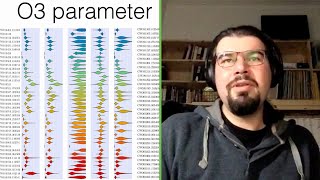
Computational Challenges in Gravitational Wave Parameter Estimation - IPAM at UCLA
Explore computational challenges in gravitational wave parameter estimation, including novel techniques and future requirements for analyzing compact binary signals in astrophysics.
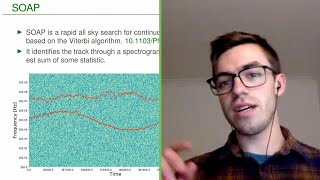
Rapidly Searching for Continuous Gravitational Waves
Explore challenges and solutions in detecting continuous gravitational waves from neutron stars, focusing on SOAP's rapid search method using neural networks for signal identification and parameter estimation.

Machine Learning in Low-Latency Electromagnetic Counterpart Inference
Explore machine learning applications in electromagnetic counterpart inference from gravitational waves, focusing on low-latency data products for efficient follow-up of gravitational wave candidates.
Multi-Messenger Aspects of Characteristic Evolution
Explore characteristic evolution in astrophysics, focusing on gravitational and electromagnetic fields, radiation extraction, and late-time effects in multi-messenger astronomy.
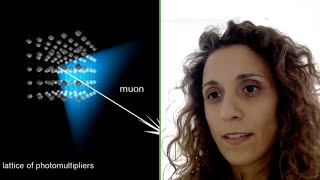
A Machine Learning Application in Multi-Messenger Astrophysics
Explore machine learning techniques for detecting gravitational waves from supernovae, connecting multiple messengers like neutrinos and electromagnetic signals for improved signal identification and classification.
Multi-messenger Astrophysics - Part 1
Explore multi-messenger astrophysics through an in-depth lecture covering fundamental concepts, observational techniques, and recent discoveries in this cutting-edge field.
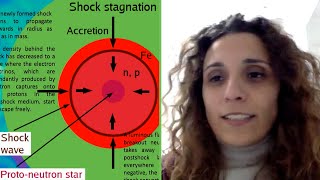
Deep Learning Algorithm for Core-Collapse Supernova Detection
Explore deep learning algorithms for detecting gravitational waves from core-collapse supernovae, enhancing multi-messenger astronomy and uncovering insights into extreme cosmic events.
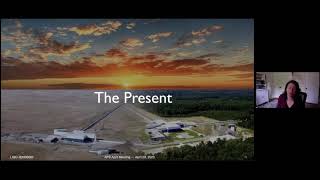
LIGO - Virgo & the Promise of Multi-Messenger Observations
Exploring multi-messenger astronomy: combining gravitational waves, photons, and neutrinos to unveil cosmic mysteries, probe celestial bodies, and challenge our understanding of the Universe's evolution.