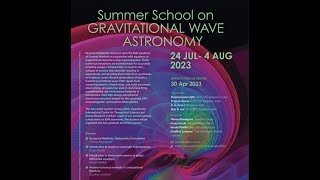
Introduction to Numerical Relativistic Hydrodynamics - Lecture 2
Explore advanced concepts in numerical relativistic hydrodynamics, focusing on mathematical formulations and computational techniques for modeling high-energy astrophysical phenomena.
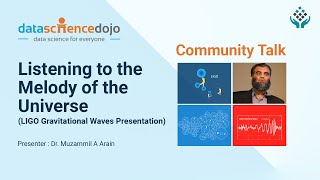
Listening to the Melody of the Universe - LIGO Gravitational Waves Presentation
Explore the groundbreaking detection of gravitational waves by LIGO, including the science, technology, and data processing techniques that made this historic discovery possible.
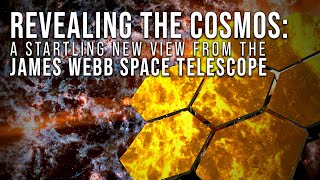
Revealing the Cosmos - A Startling New View from the James Webb Space Telescope
Explore the latest findings from the James Webb Space Telescope with Nobel Laureate John Mather and leading astronomers, discussing new clues about star and galaxy formation, and emerging cosmic mysteries.
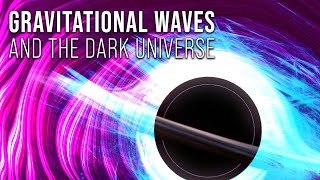
Gravitational Waves and the Dark Universe
Explore cutting-edge discoveries in gravitational waves and a new mission investigating the dark universe with experts Chiara Mingarelli and Jason Rhodes, moderated by Brian Greene.
Introduction to Numerical Relativistic Hydrodynamics - Lecture 1
Explore numerical relativistic hydrodynamics, essential for modeling high-energy astrophysical phenomena like black hole mergers and supernovae, crucial for gravitational-wave astronomy advancements.
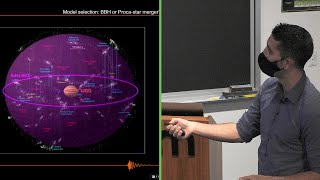
Challenge of Characterising High-Mass Compact Mergers - The Case of GW190521
Explores challenges in analyzing gravitational waves from massive binary mergers, focusing on GW190521. Discusses Bayesian inference, prior choices, and alternative interpretations like eccentric mergers or exotic objects.
Black Hole Thermodynamics - Lecture 4
Explore the intricacies of black hole thermodynamics with renowned physicist Robert Wald, delving into advanced concepts and theories in this comprehensive lecture.
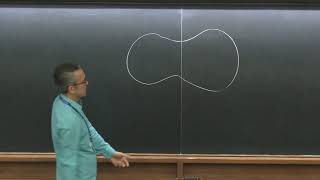
Black Hole Perturbation Theory - Lecture 4
Explore black hole perturbation theory, examining how small disturbances affect spacetime around black holes and their role in gravitational wave physics.
Black Hole Thermodynamics - Lecture 2
Explore the intricacies of black hole thermodynamics with renowned physicist Robert Wald, delving into advanced concepts and theories in this comprehensive lecture.
Black Holes, Binary Systems, and Gravitational Waves - Extreme Mass-Ratio Inspirals - Lecture 2
Explore extreme mass-ratio inspirals in binary systems, focusing on black holes and gravitational waves. Learn about cutting-edge research in astrophysics and general relativity.

Black Hole Thermodynamics - Lecture 1
Explore the fascinating realm of black hole thermodynamics with renowned physicist Robert Wald, delving into fundamental concepts and cutting-edge theories in this engaging lecture.
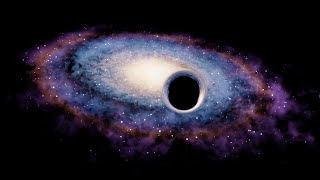
What's the Matter with Primordial Black Holes? by Ravi K. Sheth
Explore the intriguing possibility of dark matter being composed of primordial black holes. Learn about astronomical methods used to investigate this cosmic mystery and its implications for our understanding of the universe.
GW Signals from Tidal Disruption Events in the Decihertz Regime by Martina Toscani
Explore gravitational wave signals from tidal disruption events in the decihertz regime, focusing on lunar detection methods and their potential for breakthrough observations in astrophysics.
A New Approach to the Binary Inspiral Problem - IPAM at UCLA
Explore modern scattering theory applications to gravitational wave calculations, focusing on advances in quantum scattering amplitudes and their relevance to binary black hole inspiral problems.
Multi-Messenger Aspects of Characteristic Evolution
Explore characteristic evolution in astrophysics, focusing on gravitational and electromagnetic fields, radiation extraction, and late-time effects in multi-messenger astronomy.
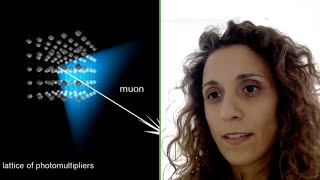
A Machine Learning Application in Multi-Messenger Astrophysics
Explore machine learning techniques for detecting gravitational waves from supernovae, connecting multiple messengers like neutrinos and electromagnetic signals for improved signal identification and classification.
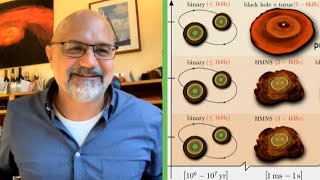
Binary Neutron Stars: From Gravitational to Particle Physics - IPAM at UCLA
Explore binary neutron stars as a rich laboratory blending gravity, astrophysics, and particle physics. Learn about recent modeling progress and insights into nuclear matter equations of state and phase transitions.
Multi-Dimensional Modeling of Core-Collapse Supernovae - IPAM at UCLA
Explore 3D modeling of core-collapse supernovae, focusing on neutrino and gravitational-wave signatures to unravel the long-standing mystery of the explosion mechanism.
The History of Gravitational Lensing in Cosmology by Nick Kaiser
Explore the evolution of gravitational lensing in cosmology, from Newton to modern weak lensing, with insights on its applications and future prospects in the era of advanced sky surveys.
The Heliosphere: Structure, Dynamics, and Interactions - 1999 Parker Lecture
Explore the heliosphere, solar wind, and interstellar phenomena in this AGU lecture by L. A. Fisk, covering key concepts and recent discoveries in space physics.
Defending the Home Planet: Assessing and Mitigating Asteroid and Comet Impacts
Researchers discuss latest advances in assessing asteroid and comet impact dangers, including land vs. sea impacts, and potential defense strategies against these cosmic threats.