Ray Train: A Production-Ready Library for Distributed Deep Learning
Explore Ray Train's architecture for efficient, cost-effective distributed deep learning. Learn about resource scheduling, API simplicity, and exclusive features for LLM training, including Distributed Checkpointing.
Scalable and Cost-Efficient AI Workloads with AWS and Anyscale
Learn to scale and productionize GenAI and LLM workloads cost-effectively using AWS compute instances and Anyscale's capabilities for ambitious AI projects.
Optimizing LLM Inference with AWS Trainium, Ray, vLLM, and Anyscale
Explore cost-effective LLM inference scaling using AWS accelerators, Ray, vLLM, and Anyscale. Learn to build a complete stack on EKS and leverage advanced cluster management for enterprise-grade GenAI workloads.

Hybrid AI for Knowledge Representation and Model-based Image Understanding
Explore hybrid AI for spatial reasoning and image understanding, combining knowledge representation with data-driven approaches in medical imaging applications.

Photographic Image Priors in the Era of Machine Learning
Explore image processing advancements using machine learning, focusing on implicit priors in neural networks for tasks like denoising, deblurring, and super-resolution.

The Quest for Adaptivity in Machine Learning - Comparing Popular Methods
Explore supervised learning algorithms' strengths and weaknesses, comparing k-nearest-neighbor, kernel methods, and neural networks for adaptivity and performance across various problems.
The New Era of Image Denoising
Explore revolutionary image denoising techniques, their applications in inverse problems, and the concept of diverse solutions in image processing.
Sketching Semidefinite Programs for Super-Resolution Problems
Explore super-resolution problems, focusing on measure recovery from Fourier coefficients. Learn about sketching approaches to reduce semidefinite program size and algorithmic developments for integral bounds.
A Path Towards Autonomous Machine Intelligence
Explore Yann LeCun's vision for autonomous machine intelligence, delving into cutting-edge AI concepts and potential future developments in the field.
Reliable AI: From Applied Harmonic Analysis to Quantum Computing
Explore reliable AI through generalization in graph neural networks and explainability using applied harmonic analysis. Delve into limitations of digital hardware and connections to quantum computing.

Rapture of the Deep: Highs and Lows of Sparsity in Neural Networks
Explore sparsity in neural networks, its role in interpretability, and innovative optimization techniques beyond gradient descent for learning fast transforms.
Advanced Computational Imaging - Chassez le Naturel, Il Revient au Galop
Explorez les avancées en imagerie computationnelle, en mettant l'accent sur la stabilité et la fiabilité des réseaux neuronaux profonds pour la reconstruction d'images biomédicales.

From Thom's Gradient Cell Decomposition to the Curvature of Milnor Fibers
Explore Thom's gradient cell decomposition and its impact on understanding complex hypersurface singularities, polar curves, and Milnor fibers through algebraic, topological, and Lipschitz-geometric perspectives.

Perception of Visual Art and Topological Data Analysis
Explore topological data analysis applications in visual art perception, comparing eye movements for abstract paintings vs. AI-generated images using algebraic topology methods.

Learning with Missing Values: Theoretical Insights and Application to Health Databases
Explore theoretical insights and practical applications of learning with missing values in health databases, focusing on regression, classification, and neural network solutions.

Synthetic Data - Friend or Foe in the Age of Scaling?
Explore synthetic data's impact on AI scaling laws, model performance, and potential degeneration. Analyze theoretical frameworks and experimental findings for future AI development challenges.

Pinecone Vector Database - Build Knowledgeable AI
Discover vector databases' advantages, explore Pinecone's innovative features, and watch a live demo on getting started with its powerful search capabilities.
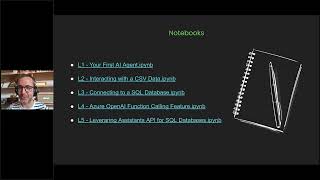
Advanced RAG Scenarios: Building Your Own Database Agents - Developing AI Agents for Natural Language Database Interaction
Develop AI agents for natural language database interactions, enabling efficient data querying and analysis without advanced SQL knowledge.
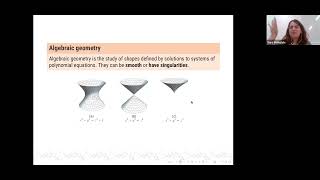
Machine Learning Detects Terminal Singularities in Q-Fano Varieties
Explore machine learning applications in algebraic geometry, focusing on Q-Fano varieties and terminal singularities detection. Gain insights into new combinatorial criteria and high-dimensional Q-Fano landscapes.
The Promise and Challenge of Harnessing Collateral Information from Medical Images Using AI
Explore AI's potential in extracting collateral information from medical images, discussing promises and challenges in this field.

Validation of AI Techniques in MRI for Clinical Studies
Explore AI validation techniques for MRI in clinical studies, focusing on enhancing accuracy and reliability in medical imaging analysis.