Germany 1919: The Birth of the Bauhaus
Explore the birth of the Bauhaus in post-WWI Germany, examining its radical approach to arts and crafts training, inspired by diverse influences from occultism to futurism.

Faulkner's As I Lay Dying - Epic Conventions and Character Analysis - Part 2
Explore Faulkner's epic techniques in "As I Lay Dying," examining human-animal connections and resurrection themes through character analysis and literary comparisons.
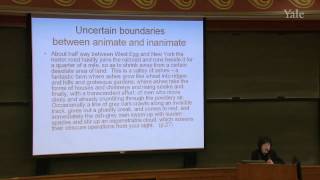
The Great Gatsby - Experimental Counter-Realism and Animated Objects
Explore Fitzgerald's experimental counter-realism in The Great Gatsby, examining the animation of inanimate objects and their human-like qualities, as well as themes of race and technology.

Faulkner's The Sound and the Fury - Quentin's Narrative and Themes - Lecture 7
Explore Faulkner's narrative techniques, character relationships, and themes of race and sexuality in The Sound and the Fury through an in-depth analysis of Quentin's and Benjy's perspectives.
Hemingway, Fitzgerald, Faulkner - American Modernism and World War I - Lecture 1
Explore Hemingway, Fitzgerald, and Faulkner's works through global geopolitics, experimental narration, and sensory detail, examining their shared preoccupation with World War I's impact on narrative irony.
Hemingway's In Our Time - Analysis of Pain and Violence in Vignettes
Explore Hemingway's "In Our Time" through critical analysis of vignettes, examining themes of pain, violence, and ethnic tensions in the American Midwest using various theoretical perspectives.
T.S. Eliot's The Waste Land: Psycho-Sexual Analysis and Structure - Lecture 12
Explore T.S. Eliot's "The Waste Land" through psycho-sexual analysis, examining key figures, dialogues, and romantic distress. Gain insights into the poem's structure and Ezra Pound's editorial contributions.
Robert Frost - Modern Poetry and Poetic Techniques
Explore Robert Frost's poetry, examining his unique style, poetic project, and use of vernacular language. Analyze "Mowing" and "Out, Out--" to understand Frost's approach to form and sound.
Langston Hughes and African-American Experience in Modern Poetry - Lecture 15
Explore Langston Hughes' poetry as a representation of African-American experience, examining his innovative use of musical forms and his place within the modernist canon.
Marianne Moore's Poetry: Quotation, Restraint, and Modernist Relationships - Lecture 18
Explore Marianne Moore's innovative poetry, focusing on her use of quotation, reticence, and restraint. Analyze key poems and examine Moore's relationships with other modernist poets.
Modern Poetry - Elizabeth Bishop and Modernist Perspectives - Lecture 25
Explore modernist poetry's role in addressing alienation and fostering community through Bishop's works and connections to other poets. Gain insights into poetry's power to renew human connection.

The American Novel Since 1945 - Introduction and Major Themes
Explore post-1945 American literature, examining reader perspectives, literary debates, and themes of truth and memory through works like "Black Boy" and "Lolita."

Flannery O'Connor's Wise Blood - Social Context and Literary Analysis - Lecture 2
Análisis profundo de "Wise Blood" de Flannery O'Connor, explorando contextos sociales sureños, raza, género y crítica literaria, con énfasis en la violencia narrativa y la estructura teológica.
Faulkner's The Sound and the Fury - Jason's Section and the Loss of Knowable Community
Explore Jason's narrative in Faulkner's novel, examining the loss of community, modern alienation, and the author's nuanced portrayal of anger and pathos in the face of societal changes.

Faulkner's The Sound and the Fury - Experimental Subjectivity and Benjy's Narrative
Explore Faulkner's experimental narrative in "The Sound and the Fury," focusing on Benjy's unique perspective, sensory experiences, and the novel's innovative approach to time and memory.
The Great Gatsby: Auditory and Visual Fields in Character Relationships - Part 2
Explore the auditory-visual interplay in The Great Gatsby, examining character relationships and themes of accountability, illusion, and disillusionment in Fitzgerald's masterpiece.
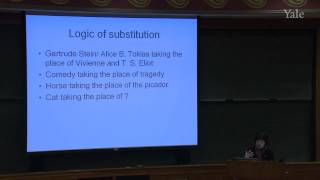
Hemingway's In Our Time: Analysis of Expressivity and Emotional Resilience - Part 2
Explore Hemingway's "In Our Time" through analytical frameworks, examining expressivity, substitution, and emotional resilience in his unique blend of tragedy and comedy.
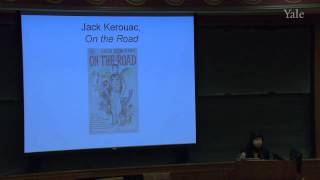
Faulkner's Light in August - Lena's Journey and Narrative Techniques
Explore Faulkner's "Light in August" through Lena's character, examining pagan elements, comedy, epic road novel aspects, and unique stylistic features in this literary analysis.
History of English Literature
Comprehensive exploration of English literature from Anglo-Saxon era to postmodernism, covering major periods, authors, and literary movements through lectures on key works and critical analysis.
Megfaragott modernség - Michelangelo Dávidjának jövőpillantása
Michelangelo Dávidjának üzenete a 21. századnak: művészettörténeti utazás, mely feltárja az 500 éves szobor modern relevanciáját és a művészet időtlen erejét a kultúrák és korok összekapcsolásában.
Ten Things to Know About the Bauhaus - Part 1
Explore key principles of the Bauhaus, its historical context, and enduring influence on modern culture with curators Barry Bergdoll and Leah Dickerman in this insightful discussion.