
How to Understand Your API Quickly by Swagger
Explore API understanding with Swagger, covering design, security, testing, and best practices. Learn about Open API specifications, microservices, and vulnerability identification.
Introducing the libblkio High-performance Block I/O API
Explore libblkio, a unified API for efficient block device access across environments. Learn its design, drivers, and roadmap for simplified high-performance I/O integration in applications.

Design More Decoupled Services with One Weird Trick
Discover a unique approach to designing decoupled services, enhancing data encapsulation and reducing coupling between components in microservice architectures.
Principles of Fluent API Design by David Beaumont
Explore principles of fluent API design, drawing from experience with Google's Core Java Libraries. Learn benefits, distinctions from similar patterns, and avoid common pitfalls in creating intuitive APIs.
.NET gRPC Deep Dive - NDC London 2024
Explore gRPC in .NET for efficient service-to-service communication. Learn about contract-based design, performance benefits, polyglot support, and advanced features like client-side load balancing and transcoding.
Dapr and Spring Boot - Solving Distributed Systems Challenges
Explore how Dapr and Spring Boot simplify distributed systems development, focusing on resilience, data consistency, and seamless service integration without compromising developer experience.

Why C++ Code Failed - Common Mistakes and Best Practices
Explore common C++ coding pitfalls and best practices, covering memory management, API design, code organization, and optimization techniques for more efficient and maintainable software development.
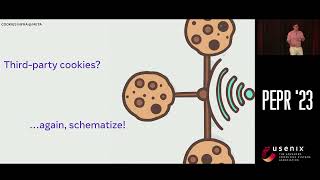
Cookie Infrastructure at Meta - Managing Consent and Compliance
Explore Meta's cookie management system, featuring a central schema, enforced API, and Content-Security-Policy headers for robust control and compliance with user preferences.
Add Some Swagger to Your Web APIs with Open API Specification
Learn to enhance web APIs using Open API Specification, improving documentation and client integration for more efficient and user-friendly API development.
gRPC and Go: Developing Efficient and Type-Safe Services
Explore gRPC with Go for efficient, type-safe services. Learn service definition, code generation, API styles, streaming, REST integration, and security in this comprehensive tutorial.

C++ Coroutines at Scale - Implementation Choices at Google
Explore Google's implementation of C++ coroutines for processing billions of requests, covering trade-offs, performance optimizations, and novel choices in library development and integration into production environments.

Distributed GraphQL APIs - Breaking Down Monoliths and Unlocking Agility
Explore GraphQL federation for building scalable, distributed APIs. Learn to break down monolithic schemas, overcome challenges, and implement best practices for maintainable GraphQL architectures.
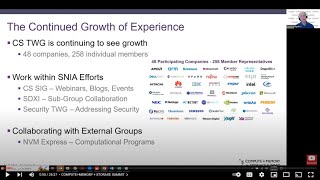
Standardizing Computational Storage - Architecture, APIs, and Standards Alignment
Delve into computational storage standards development, exploring architecture, programming models, and API alignments between SNIA and NVMe specifications, with focus on terminology and compatibility.
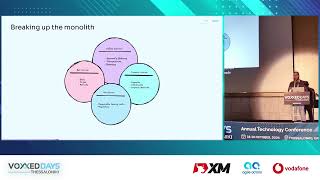
CAPtivating Architecture - Navigating Distributed Systems and Microservices
Explore distributed systems architecture, from CAP theorem fundamentals to microservices communication patterns, timeout configurations, and practical implementation strategies for robust systems.
Introduction to KERAS 3 Core for PyTorch and JAX
Explore KERAS 3's framework-agnostic capabilities for building neural networks and transformers across TensorFlow, PyTorch, and JAX platforms with advanced customization options.
SIG Architecture Introduction and Update for Kubernetes
Explore Kubernetes architecture, design principles, and community efforts in this SIG update. Learn about API conventions, conformance, and project evolution.
Contributing a Zephyr Sensor Driver: Best Practices and Common Pitfalls
Learn best practices and avoid common pitfalls when contributing your first Zephyr sensor driver to the open source community. Gain insights into maintainer expectations.

Kubernetes Deployment from Platform to API - Streamlining Application Delivery
Explore Kubernetes deployment strategies, from infrastructure-as-code to API-driven approaches. Learn best practices for efficient application delivery and platform engineering.

Fluent APIs in Functional Languages
Explore implementing fluent APIs in functional languages using parametric polymorphism and Hindley-Milner type inference. Learn to enforce API protocols and DSL syntax at compile time without relying on name overloading.

Java-Friendly Machine Learning with JSR381 - Visual Recognition API
Explore Java-friendly machine learning with JSR381, an open-source API for visual recognition. Learn its goals, architecture, and practical applications in IntelliJ IDEA.

EverCrypt - A Fast, Verified, Cross-Platform Cryptographic Provider
Comprehensive, verified cryptographic provider offering high-performance functionalities with agility and multiplexing. Demonstrates effective composition of C and assembly, outperforming unverified implementations in various algorithms.