One Analysis a Day Keeps Anomalies Away - Detecting and Analyzing Data Anomalies
Explore Python techniques for data observability, anomaly detection, and root cause analysis in multivariate time series. Learn to distinguish anomalies from data drift and turn insights into opportunities.

How to Monitor Machine Learning Stacks - Detecting and Addressing Special Issues
Discover advanced monitoring techniques for ML stacks, addressing unique challenges beyond traditional metrics to ensure robust performance and early issue detection.
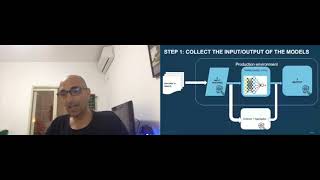
ML Monitoring ML: Scalable Monitoring of ML Models in Production Environments
Explore scalable ML model monitoring in production. Learn key performance measures, anomaly detection techniques, and an open-source agent for automated tracking and alerting of model issues.
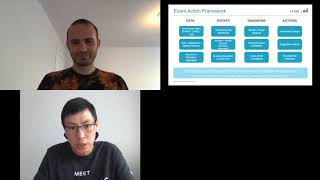
Automated Pipeline for Large-Scale Neural Network Training and Inference
Explore cloud-native ML pipeline for automated anomaly detection using BiLSTM models. Learn to manage thousands of models with data collection, training, validation, and deployment techniques.

Combatting Human Trafficking with Anomaly Detection - Part 1
Explore anomaly detection techniques to combat human trafficking through financial data analysis. Learn to leverage transaction patterns and industry indicators for effective detection.
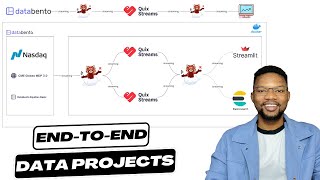
Realtime Stock Market Anomaly Detection Using Machine Learning - End-to-End Data Engineering Project
Develop an end-to-end data engineering project for real-time stock market anomaly detection using Quix Streams, Redpanda, and Docker. Learn to build a complete data pipeline and deploy an advanced ML model.
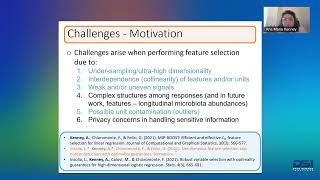
Simultaneous Feature Selection and Outlier Detection Using Mixed-Integer Programming
Explore mixed-integer programming for simultaneous feature selection and outlier detection in high-dimensional regressions, with applications to biomedical research and microbiome studies.
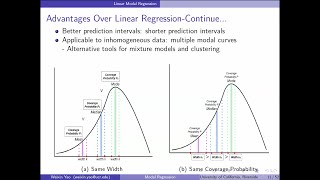
Modal Regression: A New Approach to Modeling Conditional Relationships - Lecture
Explore modal regression, a new tool revealing unique data structures and offering advantages over mean and quantile regressions for outliers, heavy-tailed, and truncated data.
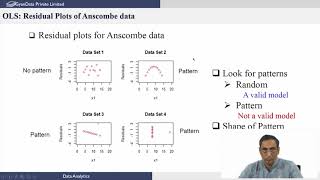
Diagnostics to Improve Linear Model Fit - OLS Analysis and Residual Plots
Explore techniques to enhance linear model fit through residual analysis, normality checks, and outlier detection in OLS regression.
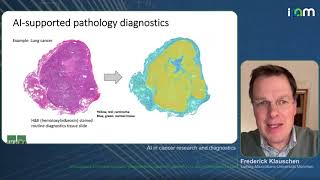
AI in Cancer Research and Diagnostics - IPAM at UCLA
Explore AI's impact on cancer diagnostics, focusing on pathology applications, explainable methods, and multi-modal data integration for research and clinical use.

Cosmology - DM Halo - Local Group - Risa Wechsler (Stanford)
Explore cosmology, dark matter halos, and the local group with Stanford researcher Risa Wechsler. Gain insights into cutting-edge astrophysical concepts and their implications for our understanding of the universe.

Modeling Dwarf Galaxy Formation with UniverseMachine - Richie Wang (Stanford)
Explore dwarf galaxy formation using UniverseMachine, a statistical tool for modeling galaxy evolution in cosmological simulations. Learn about abundance matching, multiresolution simulations, and future research directions.

Elements of Effective Crime Scene Investigation
Explore key elements of effective crime scene investigation, including evidence management and documentation, with insights from a global expert in forensic science.
Continuous Innovation: The Future of Water Delivery Data Science
Explore data science innovations transforming water management, including demand forecasting and anomaly detection. Learn how to leverage data for improved efficiency and build a data-driven culture in your organization.

AI on the Edge with Eclipse Kura - From Data Collection to Model Deployment
Discover how to build and deploy machine learning applications on edge devices using Eclipse Kura, from data collection through Kura Wires to model training and inference with Nvidia Triton Server.

How LinkedIn Navigates Streams Infrastructure Using Cruise Control - Adem Efe Gencer, PhD
Explore LinkedIn's Cruise Control for managing large-scale Kafka clusters, including architecture, operational challenges, and real-world demonstrations of dynamic load balancing and anomaly detection.
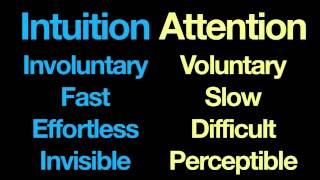
The Programming Ape: Optimizing Software Development for Human Cognition
Exploring human cognition to optimize software development tools, focusing on Yammer's experience in creating human-centric engineering solutions and addressing sociotechnical challenges.
Modeling GDPR Violations in R With Tidymodels
Explore data preprocessing and modeling for GDPR violations using tidymodels in R. Learn feature engineering, workflow creation, and prediction techniques with real-world data.
Detecting Cloud and Container Threats - Kubernetes Security
Prepare, detect, and respond to security threats in containers and Kubernetes while maintaining agility. Learn to create perimeters, assess container content, and catch anomalies in fast-paced cloud environments.

Picking the Right Cloud Cost Management System
Comparison of Finout and Kubecost for cloud cost management, highlighting features, installation, pricing, and helping users choose the best tool for their needs.

Alerting and Anomaly Detection - Best Friends Forever?
Explore the relationship between alerting and anomaly detection in monitoring systems, discussing their strengths, limitations, and optimal integration for effective system management.