Finding Simple Structures in Complex Datasets - Dalya Baron
Exploring data-driven techniques to uncover simple structures in complex astronomical datasets, focusing on galaxy formation and evolution using advanced statistical and machine learning tools.
How Supermassive Black Holes Ignite the Intergalactic Medium - Tales from the Low Redshift Lyman-alpha Forest
Explore how supermassive black holes impact the intergalactic medium through the lens of the low redshift Lyman-alpha forest, offering insights into galaxy formation and evolution.
Prospects for Detecting Gaps in GC Streams with Roman - Christian Aganze
Exploring detection of gaps in globular cluster streams using Roman Space Telescope, applying advanced statistical and machine learning techniques to enhance our understanding of galaxy formation and evolution.
Dust Properties of Galaxies from a Data-Driven Hierarchical Model - John Forbes
Explore data-driven hierarchical modeling to uncover dust properties in galaxies, revealing insights into galaxy formation and evolution through advanced statistical techniques.
Galaxy Zoo in the Deep Learning Era - Mike Walmsley
Exploring Galaxy Zoo's evolution with deep learning, focusing on self-supervised techniques and new tools for galaxy morphology analysis in the era of big astronomical data.
Galaxy Merger Reconstruction with Generative Graph Neural Networks - Yuan Sen Ting
Exploring galaxy merger reconstruction using generative graph neural networks, advancing our understanding of galaxy formation and evolution through innovative machine learning techniques.
Learning to Simulate the Universe with Deep Learning - Elena Giusarma
Explore deep learning techniques for simulating the universe, focusing on innovative approaches to model cosmic structures and enhance our understanding of galaxy formation and evolution.
Outliers - How I Learned to Love Them, and Why You Should Too
Discover the value of statistical outliers in galaxy formation studies. Learn how anomalous galaxies challenge current paradigms and drive new insights in astrophysics and cosmology.
Tracing Dark Matter with Stars - Lina Necib
Explore innovative techniques for detecting dark matter using stellar dynamics. Learn how advanced statistical methods and machine learning are revolutionizing our understanding of galactic structure and evolution.
Deep Learning for Anomaly Detection - Expanding Our Marker Vocabulary
Explore deep learning techniques for anomaly detection in medical imaging, expanding marker vocabulary to enhance diagnostic capabilities and improve patient outcomes.

Anomaly Detection Tutorials - Machine Learning and Its Types With Implementation
Comprehensive tutorial on anomaly detection techniques in machine learning, covering Isolation Forest, DBSCAN clustering, and Local Outlier Factor with practical implementations and examples.

Smarter Golden Signals - Using AIOps for Kubernetes Cluster Monitoring
Explore open-source AIOps for Kubernetes metrics, reducing alert fatigue and improving incident detection using numalogic for real-time anomaly detection without AI/ML expertise.

At Scale Anomaly Detection for Enterprise Security - Joshua Neil, Microsoft
Explore scalable anomaly detection for enterprise cybersecurity with Microsoft's Joshua Neil. Learn about real-time telemetry, unsupervised learning, and post-breach detection techniques.
Dynamic Meta-Learning for Anomaly Detection - Cole Sodja, Microsoft Defender ATP
Explore dynamic meta-learning for anomaly detection, focusing on probabilistic calibration and adaptive mixtures of models to enhance cyber threat detection in Microsoft Defender ATP.
Stream Processing and New Approaches: Edge Processing
Explore stream processing on the edge for real-time data analysis, enabling rapid anomaly detection and distributed machine learning using open-source software.
Demystifying Anomaly Detection in OpenSearch - Setup and Implementation
Explore OpenSearch's anomaly detection capabilities through a hands-on walkthrough of remote logging setup, using fluent-bit and creative techniques to spark ideas for larger-scale solutions.

Detecting Anomalies in the 2020 Election
Explore statistical methods for identifying irregularities in election data, focusing on the 2020 US presidential race and its unique challenges in data analysis and interpretation.
The Beautiful Mind of a Timeline - Data Exploration and Analysis in Digital Forensics
Explore data science techniques for anomaly detection and noise reduction in digital forensics using Timesketch, with insights from Google security experts.
How Data Science, Machine Learning, and AI are Transforming the Consumer Experience
Explore how AI and data science revolutionize consumer experiences, featuring insights from Adobe's innovative technologies and research initiatives.
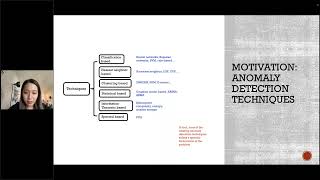
Semi-Supervised Anomaly Detection System Through Ensemble Stacking Algorithm
Explore semi-supervised anomaly detection in retail using ensemble stacking. Learn innovative techniques for fraud prevention, combining deep and traditional models to identify unknown anomalies and enhance fraud detection.
Unstable Log Sequence Anomaly Detection - Introducing Vocabulary-Free BERT
Innovative anomaly detection method for unstable log data in cybersecurity, improving on BERT models to reduce false positives and enhance SOC efficiency.