
Cardiac Amyloidosis: An Underdiagnosed, Not Rare Disease - Grand Rounds 15 Feb 2023
Explore cardiac amyloidosis, an underdiagnosed condition. Learn about clinical subtypes, diagnosis methods, treatments, and ongoing research in this comprehensive presentation.
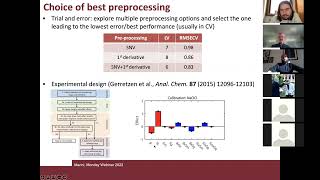
Preprocessing Revisited
Explore new developments in chemometric preprocessing, including multi-block strategies and Variable Sorting for Normalization, to reduce unwanted variability in experimental data.
Making the Most of ‘Omics Data - Manuel Mayr, King’s College London
Exploring innovative 'omics data analysis for cardiovascular research, focusing on proteomics, lipidomics, and their applications in disease prediction and understanding atherosclerosis progression.
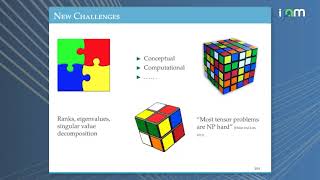
Low Rank Tensor Methods in High Dimensional Data Analysis
Explore low rank tensor methods for analyzing high-dimensional data in various fields. Learn about recent progress, challenges, and applications in extracting information from multilinear arrays.
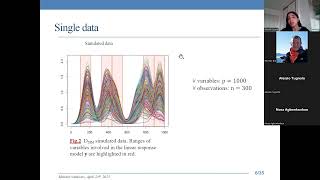
Dual-SPLS - A Versatile Approach Improving PLS with Lasso Shrinkage
Explore dual-sPLS, an innovative algorithm combining PLS and Lasso for improved variable selection and dimension reduction in high-dimensional analytical chemistry problems, offering enhanced accuracy and interpretability.
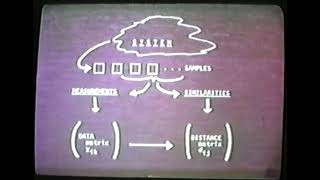
Introduction to Chemometrics - Historical Lecture by Bruce Kowalski
Explore the foundations of chemometrics with Bruce Kowalski's 1991 lecture, covering key concepts like CLS, PLS, regression, and neural networks that remain relevant in modern data science.
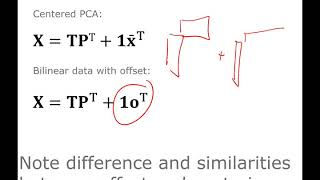
Preprocessing: Centering and Scaling in Chemometric Machine Learning
Learn techniques for centering and scaling data to enhance information in chemometric machine learning contexts like PCA and PLS models.
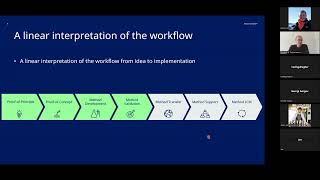
Pharmaceutical Method Development Workflow - From Ideation to Validation
Explore the analytical method development workflow in pharmaceuticals, from ideation to validation, covering key concepts and industry-specific terminology.
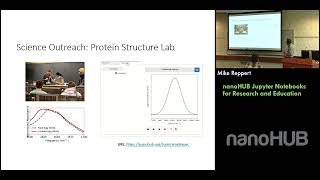
NanoHUB Jupyter Notebooks for Research and Education in Chemistry
Explore nanoHUB Jupyter Notebooks for creating chemistry teaching applications. Learn about tools for simulating proteins, analyzing lab data, and studying molecular spectroscopy. Discover how to develop and share scientific software effectively.
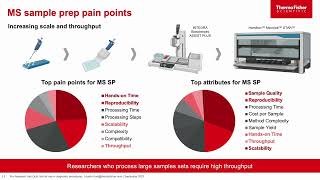
Adapting TMT and EasyPep Sample Preparation Reagents for High-Throughput, Automated Workflows
Explore high-throughput, automated workflows for TMT and EasyPep sample preparation in quantitative proteomics, focusing on efficiency and reproducibility for large-scale experiments.
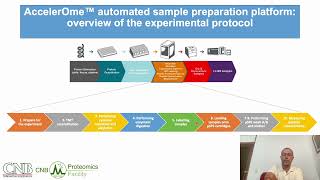
Assessing the Performance of the Automated Sample Preparation Platform AccelerOme
Explore the AccelerOme platform's performance in automating proteomics sample preparation, optimizing extraction, digestion, and labeling processes for improved experimental quality.
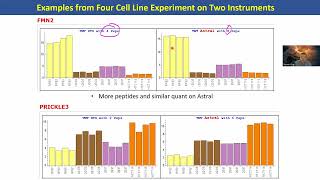
Targeted Pathway Proteomics Using TMT and Real-Time Analytics to Create GoDig Assays
Explore targeted pathway proteomics using TMT and real-time analytics for GoDig assays. Learn innovative techniques for hypothesis-driven research in systems biology.
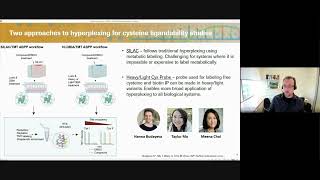
An Intelligent Data Acquisition Approach to Increase the Throughput of Multiplexed Proteome Analyses
Explore an intelligent data acquisition approach for increasing throughput in multiplexed proteome analyses, enhancing efficiency in quantitative proteomics research.
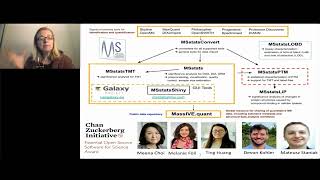
Multilevel Statistical Modeling for Proteomic Experiments With Complex Designs and Isobaric Labeling
Learn advanced statistical modeling techniques for complex proteomic experiments using isobaric labeling, focusing on multilevel designs and time-series data analysis.
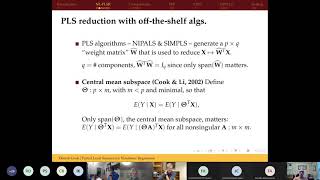
Partial Least Squares for Nonlinear Regression
Explore dimension reduction in PLS regression for nonlinear relationships, challenging traditional views and proposing new insights into PLS-like methods for predictive modeling.
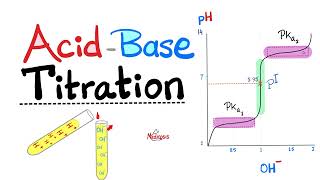
Titration of Acids and Bases - Understanding Strong and Weak Acids, Bases, and Isoelectric Points
Master fundamental acid-base titration concepts, from strong and weak acids/bases to equivalence points and isoelectric points. Explore pH calculations, dissociation constants, and practical applications in chemistry.
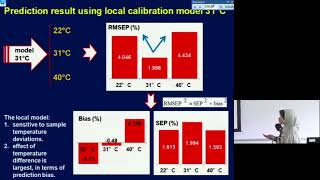
Development of Robust Calibration Model for L-Ascorbic Acid Determination Using Terahertz Spectroscopy
Explore the development of robust calibration models for L-Ascorbic acid measurement using advanced terahertz spectroscopy techniques in solution-based analysis.

A Journey Into the Study of Interactions Between Atoms, Ions, Molecules, and Light
Explore groundbreaking research on atomic, ionic, and molecular interactions with light, presented by Prof. Rangwala at the prestigious Raman Research Institute's platinum jubilee celebration.

Unveiling the Dusty Universe
Explore the mysteries of cosmic dust and its role in shaping our understanding of the Universe through advanced astronomical observations and research findings.

Outflows from Galaxies - Understanding Gas Ejection and Star Formation
Explore the physics of galactic gas ejection and its impact on star formation through multi-wavelength observations, understanding how this process shapes galaxy evolution.
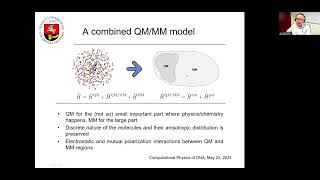
Modelling NMR Properties of Complex Molecular Materials by Means of an Integrated MD-QM/MM Approach
Dive into advanced molecular dynamics and quantum mechanics approaches for modeling NMR properties of complex materials, with focus on integrated MD-QM/MM methodology.