Mesopotamian Mathematics - MathHistory - N J Wildberger
Explore ancient Mesopotamian mathematics, including the remarkable sexagesimal system and advanced arithmetic techniques developed by Sumerians, Akkadians, and Babylonians from 3000-1600 BCE.
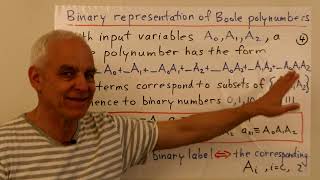
The Boole Mobius Transform - MathFoundations - N J Wildberger
Explore the Boole-Mobius transform, connecting Boolean functions and polynomials through linear algebra. Learn about binary representations and their relation to set theory in this mathematical deep dive.
Affine and Projective Geometry, and the Problem of Lines
Explore affine and projective geometry, focusing on points, vector spaces, and lines in 2D. Learn to solve geometric problems using projective coordinates and understand curve representation.
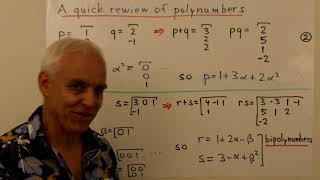
Boole Polynumbers and Equivalent Circuits - Math Foundations - N J Wildberger
Explore Boolean functions and logic circuits through polynumbers, focusing on Boole polynumbers as invariants for equivalent circuits. Learn evaluation techniques and their applications.
Geometric Graph Theory - Weyl Groups, Root Systems and Quadratic Forms
Explore geometric graph theory through the Mutation Game, examining root systems, Weyl groups, and quadratic forms. Discover how graphs generate unique geometrical structures and reflection groups.
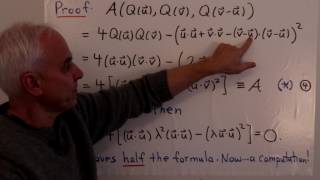
The General Rational Laws of Trigonometry - WildTrig: Intro to Rational Trigonometry
Explore general rational trigonometry laws in a planar setting, deriving elegant algebraic formulas without transcendental functions or real numbers. Learn key mathematical principles efficiently.
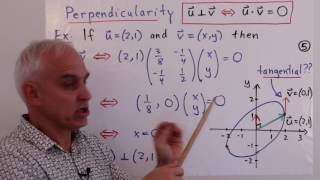
Geometry With a General Dot Product - WildTrig: Intro to Rational Trigonometry - N J Wildberger
Exploring advanced geometry using rational trigonometry and general dot products. Extends metrical geometry beyond chromogeometry, introducing new concepts of quadrance, perpendicularity, and spread.
Seminar - Some Fundamental Formulas from Metrical Algebraic Geometry
Explore fundamental formulas in metrical algebraic geometry, connecting classical theorems to modern discoveries. Gain insights into affine and projective variants applicable across various fields.
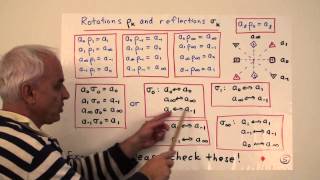
Isometry Groups of the Projective Line - Rational Geometry Math Foundations
Exploring finite field geometry: isometries, rotations, and reflections on the projective line, revealing connections to relativistic geometry and offering a new perspective on Euclidean concepts.
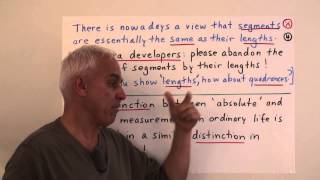
Absolute Versus Relative Measurements in Geometry - Rational Geometry Math Foundations
Explore the distinction between absolute and relative measurements in geometry, focusing on proportions and ratios. Learn about ancient Greek approaches and their relevance to modern mathematics.
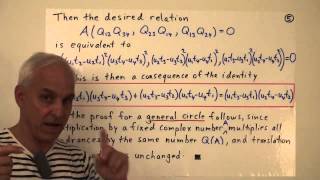
Ptolemy's Theorem and Generalizations - Rational Geometry Math Foundations
Explores Ptolemy's theorem in rational geometry, extending it to finite fields and relativistic planar geometry. Demonstrates how classical results can yield broader insights when formulated without infinite processes.
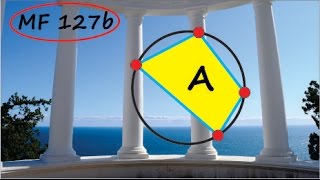
The Cyclic Quadrilateral Quadrea Theorem - Rational Geometry Math Foundations
Explore the Cyclic Quadrilateral Quadrea theorem, combining Brahmagupta's and Robbins' formulas for convex and non-convex cyclic quadrilateral areas. Includes numerical examples and algebraic analysis.
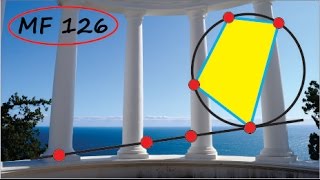
Brahmagupta's Formula and the Quadruple Quad Formula - Rational Geometry Math Foundations
Explore Brahmagupta's formula and the Quadruple Quad Formula, connecting classical geometry with modern insights. Learn about cyclic quadrilaterals, factorization, and rational number precision in geometry.

Brahmagupta's Formula and the Quadruple Quad Formula - Rational Geometry Math Foundations
Explore Brahmagupta's formula for cyclic quadrilateral areas and the Quadruple Quad Formula, delving into algebraic manipulations and rational geometry concepts for a deeper understanding of quadrilateral properties.
Spreads, Determinants and Chromogeometry - WildTrig: Intro to Rational Trigonometry
Explore spreads, dot products, and chromogeometry in linear algebra. Learn about vector operations, quadrance, perpendicularity, and the fascinating trilogy of blue, red, and green dot products.
Bases and Dimension for Integral Linear Spaces - Abstract Algebra Math Foundations
Explore spanning sets, bases, and dimensions in integral linear spaces. Learn convenient notations for vexels and discover a multiset-oriented approach to mathematical structures.

An Introduction to Abstract Algebra - Abstract Algebra Math Foundations
Explore fundamental algebraic structures like groups, rings, fields, and vector spaces through intuitive examples, providing a bird's-eye view of abstract algebra's foundational concepts.
Integral Vectors and Matrices via Vexels and Maxels II - Data Structures Math Foundations
Explores integral vectors and matrices using vexels and maxels, extending the concept to cover the entire plane and its implications for linear algebra and analysis.
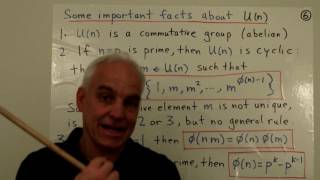
Reciprocals, Powers of 10, and Euler's Totient Function II - Data Structures Math Foundations
Explore unit groups, Euler's totient function, and number theory concepts. Learn how to calculate repeated cycles for fractions using algebraic techniques and group theory principles.
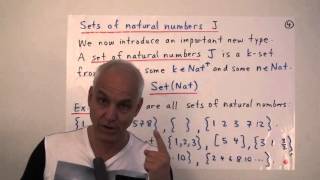
Maxel Algebra I - Data Structures in Mathematics Math Foundations
Explore maxel algebra, a new matrix theory focusing on idempotent diagonal maxels and sets of natural numbers. Learn about multiplication, identity maxels, and key propositions in this mathematical foundation.
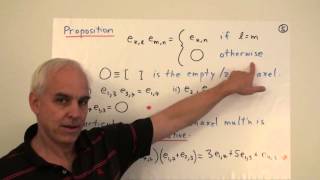
Maxel Theory - New Thinking About Matrices II - Data Structures Math Foundations
Exploring maxel theory as an extension of matrix theory, focusing on multiset views, distributive and associative laws, 1-maxels, and frames. Introduces new terminology and notation for a data structure-oriented approach.