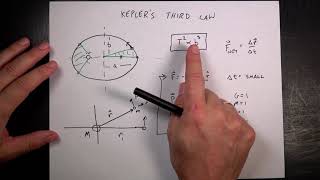
Demonstration of Kepler's Third Law Using Python
Explore Kepler's Third Law through Python modeling, calculating orbital periods and semi-major axes for various orbits to verify the law's validity.
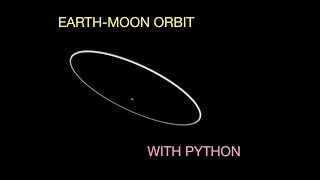
Modeling the Earth-Moon System with Python
Model the Earth-Moon system using Python to simulate orbital dynamics and explore celestial mechanics.
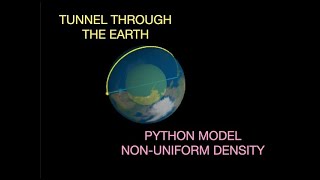
Falling Through the Center of a Non-Uniform Density Earth - Python Simulation
Explore Earth's interior through a 3D Python model, comparing orbital and tunnel travel times with varying density distributions.
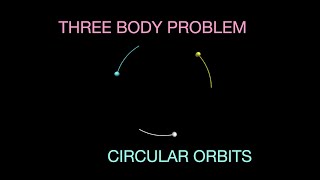
How to Achieve Circular Orbits in the Three-Body Problem
Explore stable circular orbits for three equal-mass planets using Python simulations and gravitational calculations.
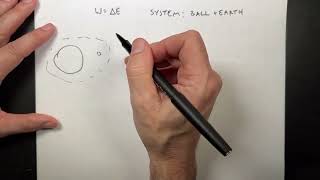
Escape Velocity Calculation and Simulation with VPython
Model Earth's gravitational influence on objects and derive escape velocity using VPython, with accompanying code and derivation resources.
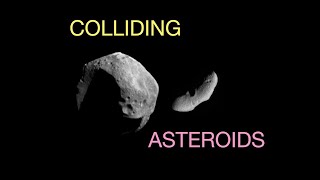
Calculating Asteroid Collision Velocities
Calculate asteroid collision velocities using gravitational potential energy and Python simulations. Explore physics concepts through practical space scenarios.
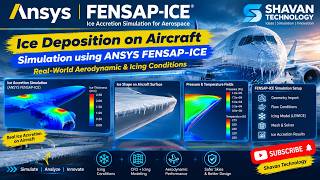
Ice Deposition on Aerodynamic Surfaces Using Ansys Icing - Subcooled Water and Freezing
Explore ice formation on aerodynamic surfaces at high altitudes using Ansys Icing, focusing on flow, water deposition, and freezing processes with subcooled water droplets.
Arabidopsis thaliana Response to the Spaceflight Environment
Explore Arabidopsis thaliana's response to spaceflight conditions in this astrobiology presentation, uncovering insights into plant adaptation and potential implications for space exploration.
JuliaSim - Bringing Julia to Industrial Modeling and Simulation
Explore JuliaSim's advanced modeling capabilities for industrial applications, featuring insights from Boeing on model-based design and digital engineering in aerospace product development.

Meet the LC-130: The Arctic Rocket Plane
Explore the engineering marvels of the LC-130, a specialized aircraft designed for Arctic missions, featuring unique adaptations for extreme conditions and innovative takeoff capabilities.

Simulating the Magnus Effect in Football Free Kicks Using SCILAB
Explore the physics behind curved football kicks through SCILAB simulation. Learn about Magnus effect, projectile motion, and programming to visualize unpredictable ball trajectories.
Automated Driving - Are We Taking the Human Factors Out of the Loop?
Explores the impact of automated driving on human factors, discussing efficiency gains, risks, levels of automation, and challenges in human-machine interaction for autonomous vehicles.
Curiosity's Entry Descent and Landing on Mars
Explore NASA's Mars Science Laboratory mission and Curiosity rover's groundbreaking landing on the Red Planet. Learn about the engineering challenges, innovative technologies, and scientific discoveries of this historic Mars exploration.
Explosive Overflow: Lessons in Software Design from Rocket Science
Explore software design lessons from the Ariane 5 rocket failure, examining testing, validation, and security principles to prevent catastrophic system failures in critical applications.
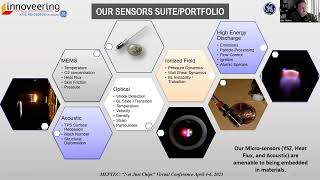
Packaging of Sensors for High Reliability, Survival and Performance in Extreme Environments
Explore sensor packaging design challenges for extreme aerospace environments, focusing on MEMS integration, material selection, and reliability testing for hypersonic applications.
Space Flight in 2024: The Future of Civilian Space Travel
Explore the future of civilian space travel, from potential orbital hotels to lunar resorts, examining costs, developments, and the transformative impact on humanity's journey beyond Earth.
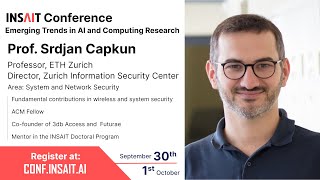
Security of Radio-Based Positioning Systems - GNSS, 5G, and UWB
Explore security challenges and solutions for positioning systems like GNSS, 5G, and UWB, focusing on physical-layer attacks, protective measures, and emerging standards in automotive and smartphone applications.

Zephyr 101 - Multi-Event Polling and Thread Control
Learn multi-event polling and thread control in Zephyr RTOS. Master efficient handling of multiple events and gain insights into advanced thread management techniques for embedded systems.
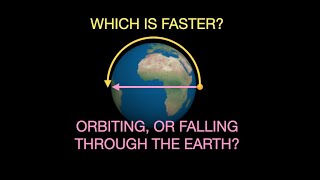
Is It Faster to Fall Through the Earth or Orbit Halfway Around?
Explore the physics behind falling through Earth vs. orbiting halfway around, comparing travel times and analyzing factors affecting motion in both scenarios.
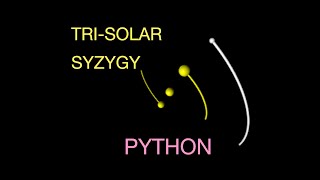
Modeling the Tri-Solar Syzygy with Python
Explore Python modeling of the Tri-Solar Syzygy from "The 3 Body Problem," simulating stable orbits and planetary positions in a three-star system.
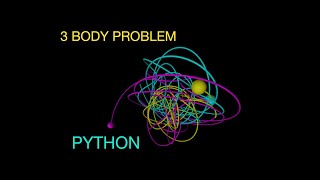
Calculate the Three-Body Problem Just Like the San-Ti
Explore the physics of the 3-body problem, its significance in "The Three-Body Problem" media, and learn computational methods to solve it.