
Crowd Your Way Out of a Paper Bag
Explore cellular automata, swarms, and agents in crowd simulations. Learn about randomness in AI, machine learning basics, and spatial navigation through engaging simulations and practical examples.
Level Up Your Debugging Workflow with CMake Presets, Disassembly View, & GitHub Actions
Enhance debugging workflow using CMake Presets, remote debugging, and CI pipelines. Learn to optimize embedded projects on Raspberry Pi with Visual Studio Code and GitHub Codespaces.
What Classes We Design and How
Explore C++ class design principles, object roles, and special member function rules. Learn to create safer, more effective classes by understanding value, relation, manager, and subject objects.
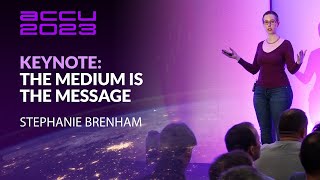
Development Environments Shape Programming Solutions
Explore how different development environments shape tech creation across research, prototyping, software products, video games, and game engines, highlighting unique challenges and methods in each field.
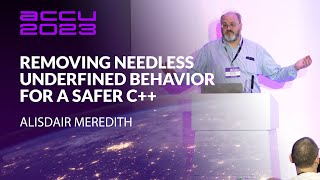
Removing Needless Undefined Behavior for a Safer C++
Explore strategies to eliminate undefined behavior in C++, enhancing safety and security. Learn about potential fixes, well-defined behavior, and the role of contracts in mitigating risks.
Design Patterns - Examples in C++
Explore essential C++ design patterns to enhance code robustness and readability. Learn practical techniques for efficient software development and improve your programming skills.
Managing External APIs in Enterprise Systems
Explore techniques for encapsulating external APIs in enterprise systems, focusing on efficient interfaces, managing changing requirements, and minimizing codebase impact through abstraction.
C++ Standard Views - The Design, the Traps, and How to Use Them and How to Use Something Better
Comprehensive exploration of C++20 views, their design challenges, pitfalls, and practical usage. Discusses alternatives and improvements for better implementation in C++ programming.

Software Development - Social, Environmental and Economic Sustainability
Explore how agile practices can reduce energy consumption and promote environmental, social, and economic sustainability in software development, with practical insights and assessment tools.

Lessons from 20 Years of Debugging C++ Code
Comprehensive guide to debugging C++ code, covering crash analysis, reproducibility, bug localization, and effective fixes. Insights from real-world examples and practical tools for efficient problem-solving.
A Tour of C++ Recognised User Type Categories
Explore C++ user type categories, their advantages, and pitfalls. Learn about trivial, standard layout, implicit-lifetime, aggregate, literal, and structural types to write better code and avoid undefined behavior.
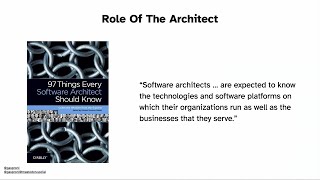
Becoming a Head of Software Architecture - You are in Charge, Now What?
Guidance for new Heads of Software Architecture: strategies to deliver value, shape legacy systems, and work effectively with teams while navigating organizational politics and decision-making processes.

Gilding the Rose - Refactoring-Driven Development
Explore refactoring as a powerful design tool for understanding, improving, and revealing new possibilities in code. Learn practical techniques through the Gilded Rose kata to simplify and enhance software development.
Standard Attributes in C and C++
In-depth exploration of standard attributes in C and C++, covering syntax, semantics, use cases, and guidelines for effective implementation across various language versions.
Test-Driven Development of C++ Embedded and System-Level Software
Learn TDD techniques for C++ embedded and system-level software, covering design principles, unit testing, dependency injection, and integration testing strategies to improve code quality and developer productivity.

Maths - The Fun Parts
Explore fun mathematical concepts through programming, including Sets, Groups, and Graphs. Discover the joy of abstract math ideas by writing code to understand their inner workings.
Improving C++ Compilation Times - Tools & Techniques
Explore practical tools and techniques to enhance C++ compilation speed, including benchmarking, precompiled headers, unity builds, and reducing dependencies between components.
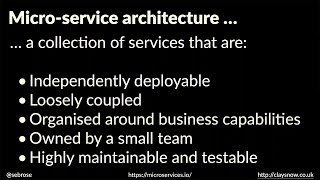
Micro-Service Delivery Without the Pitfalls
Explore strategies for effective micro-service architecture implementation, focusing on contract testing to avoid configuration issues and ensure seamless integration in distributed systems.

Breaking Enigma With the Power of Modern C++
Explore modern C++ techniques to crack the Enigma code, comparing historical methods with contemporary computing power for cryptanalysis and performance optimization.

The Practices That Make Continuous Integration
Explore practices enabling Continuous Integration for fast workflow, increased feedback, stability, and throughput. Learn to gain benefits beyond tooling for better software delivery.

A Generic Talk About Go
Explore Go's generics and recent language features through live coding, demonstrating their practical applications, benefits, and potential pitfalls in software development.