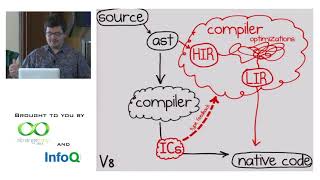
Building Optimising Compiler for Dart
Explore the development of Dart VM's new compilation pipeline, focusing on language features' impact and lessons from V8. Learn about JIT compiler design for object-oriented languages with optional static typing.
Continuum - A JS - ES6 - VM Written in JS - ES3
Explore an ECMAScript 6 VM built in ECMAScript 3, covering parsing, compilation, linking, and interpretation. Dive into Continuum's architecture, compatibility, and self-hosted standard library implementation.

Get in the Ring - Understanding Windows Drivers
Explore Windows drivers: IRPs, IRQLs, device objects, function handlers, I/O controls, and memory access. Gain practical insights for driver development and debugging.
Containers and VMs and Clouds - Oh My
Explore the coexistence of containers and VMs, learn key factors for optimal application deployment, and gain insights from real-world examples to make informed infrastructure decisions.
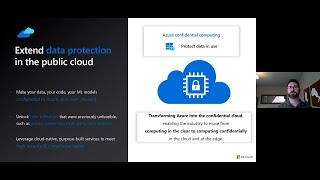
Ask the Expert Session - Enterprise Workloads on AMD Based VMs in Azure
Explore Azure VMs powered by AMD EPYC CPUs for enterprise workloads, including general purpose and confidential computing. Learn about use cases and resources to set up your environment.
Red Hat's Container Strategy
Explore Red Hat's container strategy, including benefits, runtimes, security, and management. Learn how containerization can transform enterprise IT and accelerate business agility across hybrid cloud environments.
Super Privileged Containers - Red Hat Summit
Explore super privileged containers in Red Hat Enterprise Linux Atomic Host. Learn to manipulate security settings, manage host systems, and run advanced operations like loading kernel modules and debugging processes.
VM Security and Container Workflows - A Case Study
Explore the synergy between containers and virtual machines for enhanced multi-tenant systems. Learn about CoreOS's innovative approach to building a secure and efficient container platform.
Kubevirt and the Cost of Containerizing VMs
Explore KubeVirt's impact on VM containerization, examining performance improvements and benchmarks for efficient cloud-native virtualization.
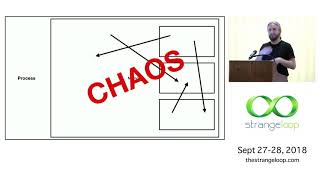
Isolation without Containers
Explore software fault isolation techniques beyond containers, focusing on sandboxing compilers for edge computing and IoT. Learn about machine code generation, optimization, and system integration.
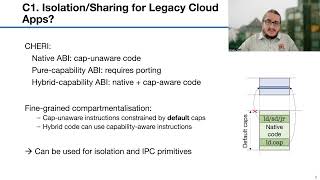
CAP-VMs - Capability-Based Isolation and Sharing in the Cloud
Explore capability-based isolation and efficient data sharing in cloud environments using cVMs, a novel VM-like abstraction leveraging memory capabilities for enhanced security and performance.
You Might Still Need Patches for Denim
Explore container patch management strategies, including image registry maintenance, continuous deployment, and Google's approach to critical vulnerability patching without downtime.
Slime - Automated Anti-Sandboxing Disarmament System
Automated system to disarm malware with anti-sandbox techniques, focusing on host-fingerprinting and general anti-sandboxing. Analyzes exit reasons and suggests suitable environments for dynamic analysis of evasive malware.
Virtual Machines and Service Mesh in the Enterprise - 5 Things You Need to Know
Explore key challenges and solutions for integrating non-Kubernetes workloads into service mesh, focusing on VM onboarding, multi-cloud setups, and certificate preservation for enterprise environments.
Virtual Machines as First Class Citizens in Service Mesh
Explore integrating virtual machines into service mesh, addressing challenges in automation, multi-cluster deployment, and canary deployments between pods and VMs. Includes practical demo.
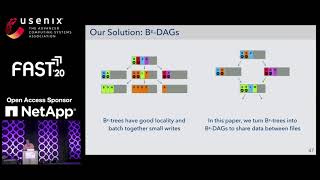
How to Copy Files
Explores efficient file cloning techniques in BetrFS, introducing "nimble clones" that optimize performance and space usage through copy-on-abundant-write policy and write-optimized key-value store.
Killer Docker Workflows for Development
Streamline development with Docker: containerize apps, manage dependencies, ensure consistency across environments, and improve workflow efficiency for developers of all operating systems.
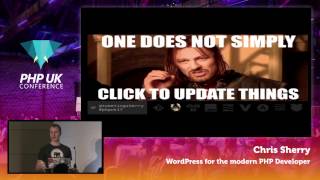
WordPress for the Modern PHP Developer
Modernize WordPress development with Git, Composer, and other tools to manage themes, plugins, databases, and environments for growing web applications.
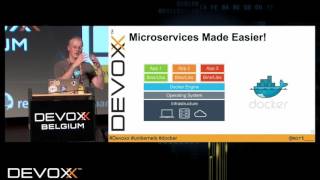
Unikernels and Docker - From Revolution to Evolution
Explore unikernels' integration with Docker, enhancing virtual machine and container deployments. Learn about Docker for Mac/Windows and MirageOS unikernels augmenting LAMP stacks using Docker toolchain.
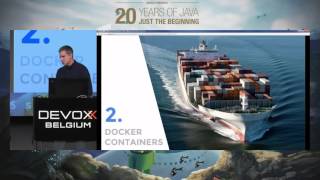
The Power of Open Source, Open Containers, and an Open Cloud
Explore open source's impact on cloud computing, focusing on Docker and IBM's contributions. Live demo showcases containerized gaming app deployment in public cloud, illustrating open cloud architecture benefits.
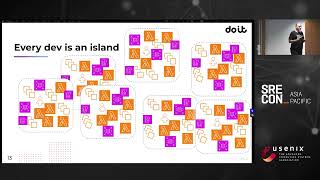
Untangling the Tangled Cloud
Strategies for organizing cloud resources into logical groups, focusing on high cohesion and low coupling. Introduces Ferent, an open-source tool for measuring inter-project dependencies in Google Cloud.