Blended Agents - Manipulation of Physical Objects within Mixed Reality Environments and Beyond
Explores blended agents in mixed reality, combining virtual and physical interactions through robotic actuators and thermochromic ink, examining their impact on perceived presence and user experience.
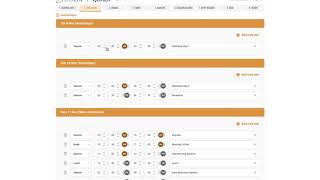
PCS to QOALA to PWA Tutorial
Learn to design conference web programs using QOALA and Progressive Web App, covering settings, scheduling, content management, and export features.
ForceRay - Extending Thumb Reach via Force Input Stabilizes Device Grip for Mobile Touch Input
Innovative thumb-based input technique for large smartphones, improving one-handed use without compromising grip stability. Demonstrates ForceRay's effectiveness in extending reach and maintaining device control.
Sensing Posture-Aware Pen+Touch Interaction on Tablets
Innovative sensing techniques for tablets adapt UI to user posture, combining capacitive touch, motion, and electric field sensors to enhance pen and touch interaction.
HapTwist - Creating Interactive Haptic Proxies in Virtual Reality Using Low-cost Twistable Artefacts
Explore innovative haptic feedback in VR using low-cost twistable artifacts. Learn about HapTwist toolkit for creating interactive proxies, improving user experience and performance in virtual environments.

Triptech - A Method for Evaluating Early Design Concepts
Explore Triptech, a method for evaluating early design concepts in UX, focusing on user needs, desirability, and usefulness. Learn its application in tech-driven innovation practices.
Pulp Friction - Exploring the Finger Pad Periphery for Subtle Haptic Feedback
Innovative haptic feedback technique using finger pad periphery for subtle, nuanced interactions. Explores design space, evaluates human factors, and presents guidelines for enhanced tactile experiences in handheld devices.
Will You Accept an Imperfect AI? Exploring Designs for Adjusting End-user Expectations of AI-powered Systems
Explore strategies for adjusting user expectations of AI systems, focusing on a Scheduling Assistant case study to improve acceptance of imperfect AI technologies.
Explaining Decision-Making Algorithms through UI - Strategies to Help Non-Expert Stakeholders
Strategies for explaining decision-making algorithms through UI to non-experts, focusing on improving comprehension and transparency while exploring the impact on trust and user experience.
Everyone Has Some Personal Stuff - Designing to Support Digital Privacy with Shared Mobile Phone Use in Bangladesh
Explores a tiered privacy model for shared mobile devices in Bangladesh, addressing digital privacy challenges through separate 'shared' and 'secret' accounts. Findings reveal benefits and remaining hurdles in protecting personal data.

An Overview of the Andrew System
Overview of Andrew System: distributed computing environment for academic users. Explores file system, toolkit, messaging, and UI. Developed at Carnegie Mellon's Information Technology Center, used campus-wide by students, faculty, and staff.
Supporting Elder Connectedness through Cognitively Sustainable Design Interactions with the Memory Music Box
Innovative design of Memory Music Box to combat isolation in older adults, enhancing connectedness through familiar interfaces and cognitively sustainable technology.
Photo-Chromeleon - Re-Programmable Multi-Color Textures Using Photochromic Dyes
Innovative method for creating re-programmable multi-color textures using photochromic dyes, enabling single-material fabrication techniques to produce high-resolution, customizable designs on physical objects.
CapstanCrunch - A Haptic VR Controller with User-supplied Force Feedback
Innovative haptic VR controller using capstan mechanism for realistic force feedback in virtual environments, offering high-force output with low power consumption and cost-effective design.
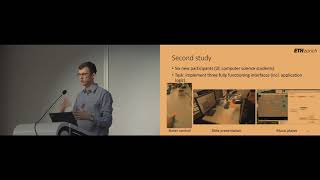
Tailored Controls - Creating Personalized Tangible User Interfaces from Paper
Innovative method for creating personalized paper-based tangible user interfaces, allowing dynamic customization and control through simple shape manipulation, backed by user studies and real-world applications.
Finding the Sweet Spot - Analyzing Unrestricted Touchscreen Interaction In-the-Wild
Explore smartphone touchscreen interaction patterns through in-the-wild studies, revealing optimal input areas and confirming previous lab-based models for improved user interface design.
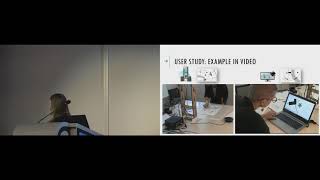
Creating Accessible Interactive Audio-Tactile Drawings Using Spatial Augmented Reality
Explore Spatial Augmented Reality for creating interactive audio-tactile drawings, enhancing accessibility for visually impaired individuals. Learn about system development, user studies, and efficiency improvements.
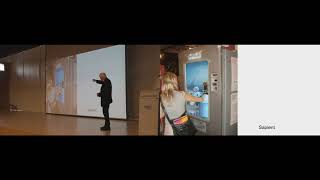
Ubiety, Mobility & Transitions - The Quest for Ecological Intelligence
Exploring the shift from device-centric to ecosystem-focused HCI, emphasizing seamless transitions, ubiety, and the importance of place in human-technology interactions for achieving flow in compound tasks.
Voicesetting - Voice Authoring UIs for Improved Expressivity in Augmentative Communication
Explores innovative user interfaces for enhancing expressivity in speech synthesis for augmentative communication, improving emotional conveyance for users with speech disabilities.
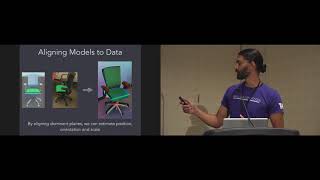
Interactive Room Capture on 3D-Aware Mobile Devices
Explore a novel system for interactive 3D room modeling using mobile devices, combining object recognition and augmented reality for quick, accurate, and effortless indoor space capture.
Stylo and Handifact - Modulating Haptic Perception through Visualisations for Posture Training in Augmented Reality
Explore Stylo-Handifact, a visuo-haptic interface for posture training in AR. Learn about its design, effectiveness, and impact on haptic perception through experimental results and practical applications.