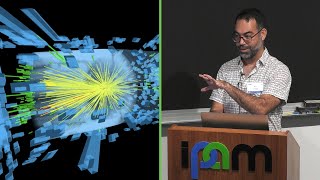
Simulation-Based Inference for Gravitational Wave Astronomy - IPAM at UCLA
Explore simulation-based inference techniques for gravitational wave astronomy, covering frequentist vs. Bayesian approaches, summary statistics, and the role of neural networks and inductive bias.
Genome-wide Prediction of Disease Variants with a Deep Protein Language Model
Explore genome-wide prediction of disease variants using deep protein language models. Learn cutting-edge techniques for identifying potential genetic causes of diseases.
Python for Machine Learning - Machine Learning Tutorial for Beginners
Comprehensive introduction to Python libraries for machine learning, covering NumPy, Pandas, and Seaborn. Includes practical implementations of algorithms and data visualization techniques.

Python for Machine Learning - Machine Learning for Beginners
Explore essential Python libraries for machine learning, including NumPy for numerical computation, Pandas for data manipulation, and Seaborn for visualization. Gain practical skills through demos and Q&A.
Python for Machine Learning - Machine Learning Tutorial - Python Tutorial
Explore Python libraries for machine learning, including NumPy, Pandas, and Seaborn. Learn data manipulation, visualization, and practical ML implementation through examples and hands-on demonstrations.
Unsupervised In-Context Learning Plus: From Few-Shot to Many-Shot Learning in Large Language Models
Explore advanced In-Context Learning techniques for Large Language Models, from few-shot to many-shot approaches, focusing on unsupervised learning and autonomous capabilities with 1M token context.
Applications of Algebraic Complexity to Unsupervised Learning
Delve into advanced algebraic complexity theory and its applications in unsupervised learning algorithms, exploring computational hardness of multivariate polynomials and efficient learning techniques.
Fair Clustering: Notations and Algorithms
Explore fair clustering algorithms and their role in preventing discriminatory outcomes in machine learning applications, focusing on group fairness and equal representation across clusters.
Latent Dirichlet Allocation with Gibbs Sampling Explained
Comprehensive explanation of Latent Dirichlet Allocation (LDA) with Gibbs Sampling, covering topic modeling, posterior inference, and implementation details. Ideal for those interested in understanding this classic machine learning technique.
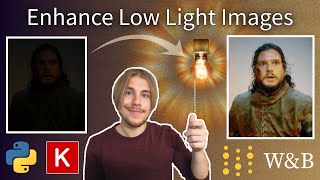
Enhance Low Light Images Using Keras, Python and Weights & Biases
Learn to enhance low-light images using Zero-DCE, an unsupervised technique implemented with Python, Keras, and Weights & Biases. Explore model training, experiment tracking, and result visualization in this hands-on tutorial.
Power of Active Sampling for Unsupervised Learning
Explore active sampling techniques for unsupervised learning, focusing on matrix completion, graphical models, and clustering. Learn about statistical tradeoffs and computational complexity.
Neural Nets for NLP 2017 - Unsupervised Learning of Structure
Explore unsupervised learning methods for NLP, covering feature and structure learning, design decisions, and practical examples. Gain insights into advanced techniques for neural network-based language processing.
Neural Nets for NLP 2020 - Unsupervised and Semi-supervised Learning of Structure
Explore unsupervised and semi-supervised learning methods for NLP, covering feature learning, structure learning, and design decisions with practical examples and applications.
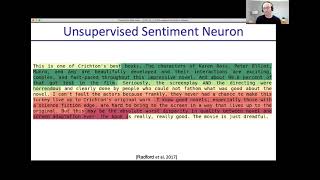
Research Directions - Full Stack Deep Learning - Spring 2021
Explore recent advances in deep learning, including unsupervised and reinforcement learning, meta-learning, and applications in science and engineering. Gain insights into research trends and staying updated.
Self-Driving Apps - Using Machine Learning and AI to Improve App Performance
Explore machine learning in apps with examples from Instacart. Learn how AI enhances performance, improves logistics, and drives growth in mobile applications.
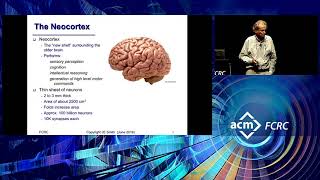
A Roadmap for Reverse-Architecting the Brain’s Neocortex
Explore a roadmap for reverse-engineering the neocortex, from biological observations to computational primitives and functional building blocks, towards developing biologically plausible neural networks for unsupervised learning.
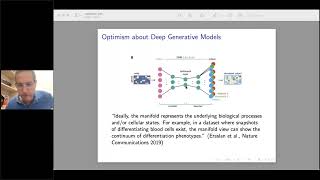
Scientific Discovery and Unsupervised Disentanglement - Yair Weiss, PhD
Explore scientific discovery and unsupervised disentanglement with Prof. Yair Weiss. Learn about ML for scientific discovery, deep generative models, and new possibility theorems in this insightful talk on machine learning advancements.
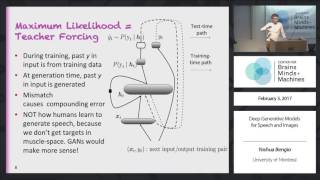
Deep Generative Models for Speech and Images
Explore deep learning's power in generating sounds and images, focusing on unsupervised learning and multiple levels of abstraction for advanced AI applications.

Unsupervised Learning of Spoken Language with Visual Context
Explores unsupervised learning of spoken language using visual context, aiming to develop ASR capabilities for more languages through audio-visual embedding and clustering techniques.
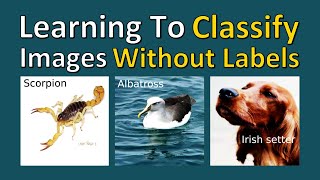
Learning to Classify Images Without Labels - Paper Explained
Explore innovative techniques for unsupervised image classification, combining representation learning, clustering, and self-labeling to group visually similar images without predefined labels.
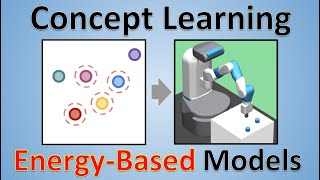
Concept Learning with Energy-Based Models
Explore energy-based models for concept learning, focusing on their ability to generalize, reason abstractly, and solve problems creatively with limited data through inference-time optimization.