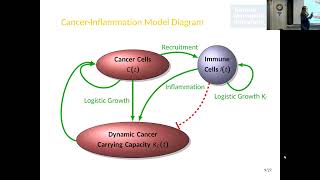
Modelling Inflammation in Cancer
Explore mathematical models of inflammation's role in cancer progression, examining key mechanisms and potential therapeutic targets.
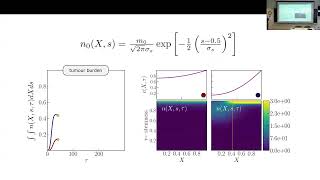
Modelling Hypoxia-Driven Cell Reprogramming in Solid Tumours
Explore mathematical models of hypoxia's impact on cell reprogramming in solid tumors, uncovering key mechanisms and potential therapeutic targets.

Maps, Molecules and Malignancies
Explore the intersection of geography, molecular biology, and cancer research to uncover innovative approaches in understanding and treating malignancies.
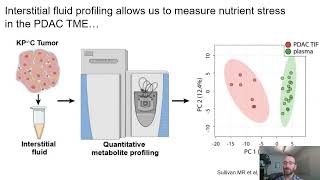
Metabolic Barriers to Tumor Immunity in Pancreatic Cancer
Explore metabolic barriers to tumor immunity in pancreatic cancer, focusing on nutrient stress impact and potential strategies to enhance immunotherapy effectiveness.
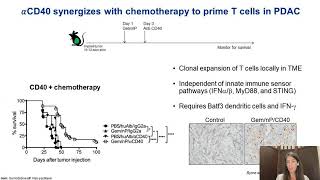
Generating T Cell Responses in the Immunosuppressive Tumor Microenvironment
Explore T cell response generation in immunosuppressive tumor environments, focusing on overcoming challenges in pancreatic cancer and enhancing dendritic cell function for effective immunotherapy.
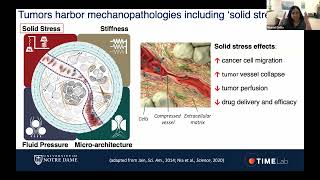
Abnormal Mechanics in Brain Tumors: Implications for Immunotherapy
Explore abnormal mechanics in brain tumors and their impact on immunotherapy efficacy, focusing on solid stress measurement, neurological effects, and potential treatment strategies.
Current Trends in Cancer Immunotherapy with a Focus on Cytokine Therapies
Explore cytokine therapies in cancer immunotherapy, including their role in tumor microenvironments, clinical trials, receptor blockade, and future directions. Gain insights into Sino Biological's research support.
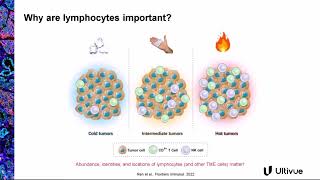
Understanding Immune Activation and Evasion in the Tumor Microenvironment - Why Lymphocyte Relationships Matter
Explore immune activation and evasion in tumors, focusing on lymphocyte relationships. Gain insights into tissue phenotyping and multiplex immunofluorescence for biomarker identification and disease understanding.
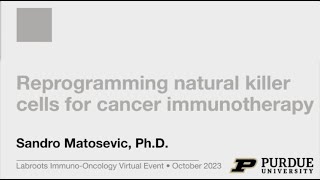
Reprogramming Natural Killer Cells for Cancer Immunotherapy
Explore genetic engineering approaches to enhance natural killer cells for cancer immunotherapy, focusing on overcoming challenges in targeting aggressive solid tumors and improving immune responses.
Multifaceted Community Analyses Uncover Novel Bacterial Species in the Colorectal Tumor Niche
Explore novel bacterial species in colorectal tumors through cutting-edge genomic techniques. Gain insights into microbial diversity and potential impacts on cancer progression and treatment.
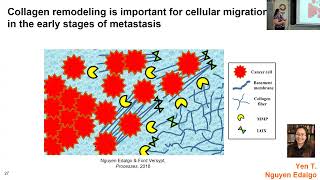
Agent-Based Modeling of Cancer Cell Migration in Response to Tumor Microenvironmental Signals
Explore computational modeling techniques for simulating cancer cell migration and interactions within tumor microenvironments, enhancing understanding of disease progression.
Computational Insights into Cancer Immunology
Explore computational approaches in cancer immunology, focusing on RNA sequencing, tumor microenvironment analysis, and immunotherapy response prediction in non-small cell lung cancer.
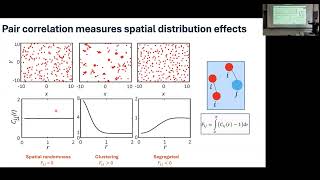
Targeting Macrophages to Improve Glioblastoma Treatment Outcomes
Explore innovative strategies for enhancing glioblastoma treatment by focusing on macrophage targeting, presented by Morgan Craig from Sainte-Justine Hospital and Université de Montréal.
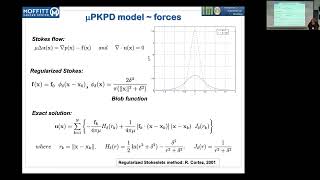
Computational Modeling of Tumor Microenvironment: A Cancer Hallmarks Perspective
Explore computational modeling of tumor microenvironments through cancer hallmarks, gaining insights into advanced oncology research techniques and their applications.
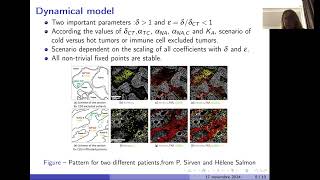
How Cancer-Associated Fibroblasts Promote T-Cell Exclusion in Human Lung Tumors: A Physical Perspective
Explore the physical mechanisms behind cancer-associated fibroblasts and their role in T-cell exclusion within lung tumors through mathematical and biological perspectives.
The Impact of Chronic Stress on Tumor Progression and Metastasis
Explore groundbreaking research on how chronic stress affects tumor growth and spread, focusing on immune system changes and their role in cancer progression.
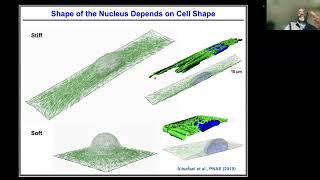
How Does the Tumor Microenvironment Regulate Genome Organization of Cancer Cells?
Explore the complex relationship between tumor microenvironments and cancer cell genome organization through mathematical modeling and cutting-edge research insights.
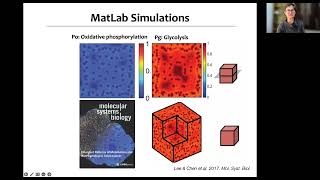
Cancer Stem Cell Heterogeneity and Tumor Microenvironments in Colorectal Cancer
Explore the complex relationship between cancer stem cells and tumor microenvironments in colorectal cancer through mathematical modeling and biological insights from leading research.
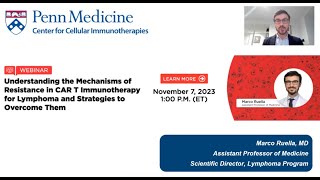
Understanding the Mechanisms of Resistance in CAR T Immunotherapy for Lymphoma and Strategies to Overcome Them
Delve into the mechanisms of CAR T cell therapy resistance in lymphoma treatment, exploring tumor evasion, T-cell dysfunction, and innovative approaches to enhance therapeutic outcomes and reduce toxicity.