Self Inductance and Mutual Inductance in General Physics - Lesson 20.3
Explore self inductance, mutual inductance, and transformers in AC circuits. Learn about Faraday's Law, Lenz's Law, and practical applications in electrical engineering.
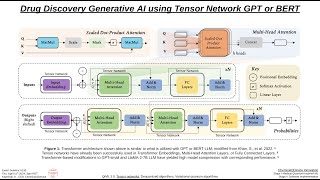
Drug Discovery Generative AI Using Tensor Network GPT or BERT
Explore generative AI applications in drug discovery using GPT and BERT models, focusing on ProtGPT2 for protein sequence generation and ProtBert for protein structure analysis.
Empowering Developers - Using LLM Models for Code Generation and Developer Productivity
Discover how to leverage open-source LLM models for enhanced developer productivity through automated code generation, testing, documentation, refactoring, and translation workflows.
BlindAI - An Open-source Solution for Privacy-friendly AI Deployment
Explore BlindAI, an open-source project leveraging Confidential Computing for privacy-friendly AI deployment. Learn about end-to-end encryption, ONNX model support, and real-world applications in document analysis and medical imaging.
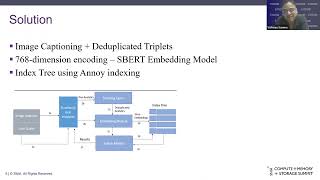
Computational SSD Framework for Unified Semantic Image Retrieval
Discover how to implement computational SSD frameworks for efficient semantic image retrieval using transformer models, unified embedding formats, and intent-based clustering techniques.
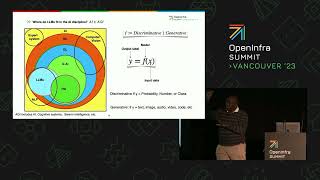
Preventing Toxicity and Unconscious Biases Using Large Language and Deep Learning Models
Discover how large language models and BERT transformers can detect and prevent unconscious biases in AI systems, achieving 98.7% accuracy across diverse data sources and cultural contexts.
From RNNs to Transformers - A Journey Through Language Modeling
Explore the evolution of language models from RNNs to Transformers, understanding attention mechanisms and investigating the minimal requirements for coherent language generation in AI systems.
Optimizing Workloads with Transformers and Diffusers
Discover how Transformers and Diffusers architectures can optimize workloads, enhance efficiency, and revolutionize both natural language processing and computer vision applications in deep learning.

Making LLMs Fully Utilize Context - A Data-Driven Approach
Discover how to enhance LLM context utilization through Microsoft's data-driven approach, exploring information-intensive training methods and practical solutions for improved context awareness and reasoning capabilities.
Meta MovieGen: Understanding Video Generation Model Architecture and Training
Dive into Meta's MovieGen AI model's architecture, training pipeline, and innovative features for revolutionary video generation, including temporal auto-encoding and superresolution techniques.
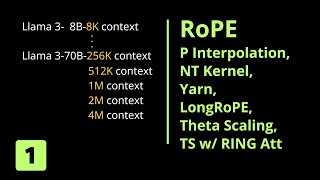
RoPE: Rotary Position Embedding for Extended Context Lengths in Transformers
Dive into Rotary Position Embedding (RoPE) and learn how this innovative technique enhances transformer models by enabling extended context lengths up to 100K tokens.

Matrix Long Short-Term Memory (mLSTM) - A New Alternative to Transformer LLMs
Explore the innovative xLSTM architecture and its matrix-based approach to neural networks, comparing its potential advantages over traditional transformer models in language processing.
Understanding Retrieval Heads in Large Language Models - From Discovery to Applications
Discover groundbreaking research on retrieval heads in transformer architecture, exploring their impact on RAG systems, long-context processing, and chain-of-thought reasoning for enhanced AI capabilities.

Understanding Snowflake Arctic 480B - A Mixture of Experts LLM Architecture
Dive into the architecture and performance analysis of Snowflake's Arctic 480B LLM, exploring how its 128x4B MoE design compares to traditional transformers for enterprise-level AI tasks.

RecurrentGemma: Moving Past Transformers with Griffin Architecture for Long Context Length
Explore Google's RecurrentGemma-2B architecture, featuring Griffin's innovative approach to language modeling that surpasses traditional transformers with enhanced efficiency and long-context processing capabilities.
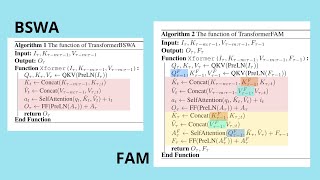
TransformerFAM and BSWA: Understanding Feedback Attention Memory and Block Sliding Window Attention
Dive into Google's revolutionary TransformerFAM architecture, exploring how feedback attention mechanisms and working memory enhance AI's ability to process indefinite sequence lengths with improved efficiency and context awareness.

INFINI Attention: Efficient Infinite Context Transformers with 1 Million Token Context Length
Explore Google's Infini-attention transformer mechanism, featuring compressive memory integration for handling million-token sequences and efficient long-term information processing.
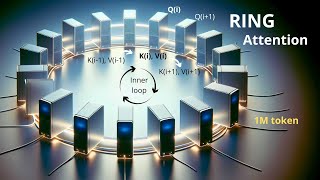
Ring Attention and Blockwise Transformers for Extended Context Length in Language Models
Dive into the technical mechanics of Ring Attention, exploring how it achieves million-token context lengths in large language models through blockwise parallel transformers and efficient implementation.
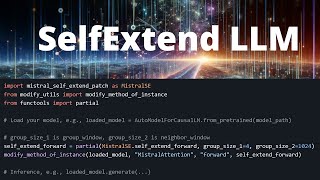
Self-Extending LLM Context Windows Using Grouped Self-Attention
Discover how to extend LLM context windows through grouped self-attention, enabling longer text processing without model retraining. Learn implementation techniques and practical applications.
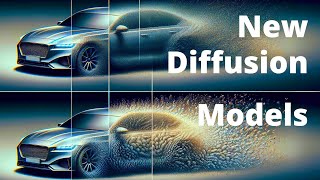
Diffusion Transformer and Rectified Flow in Stable Diffusion 3
Dive into the mechanics of Diffusion Transformers, exploring noise distribution, latent space dimensionality, and the innovative Rectified Flow technology powering next-gen AI image generation.
Seeing Through the Lens of Transformers - A New Era in Computer Vision
Explore the revolutionary impact of transformer architecture in computer vision, from its origins in language processing to groundbreaking applications in visual tasks and self-attention mechanisms.