Computer Vision to Phenotype Human Diseases Across Physical and Molecular Scales
Innovative computer vision algorithms for disease phenotyping across scales, from video-based heart function assessment to spatial transcriptomics and immune cell dynamics, with focus on robust and human-compatible AI.
Machine Learning Models for Single Cell and Regulatory Genomics - CGSI 2023
Explore machine learning models for single-cell and regulatory genomics, focusing on recent research and applications in computational biology.
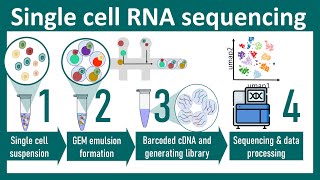
Single Cell RNA Sequencing Overview: ScRNA-seq vs Bulk Seq and Chemistry - Bio Techniques
Explore single-cell RNA sequencing: overview, comparison with bulk sequencing, chemistry, and techniques. Gain insights into this advanced genomic analysis method.
Spatial Modeling of Single-Cell Data Using Deep Learning
Explore deep learning approaches for spatial modeling of single-cell data, focusing on Hi-C reads imputation and transcriptomic data prediction through graph-based methodologies.
Multimodal Language Models for Mapping the Genotype-Phenotype Relationship
Explore multimodal language models for mapping genotype-phenotype relationships. Learn about integrated genetics frameworks and their applications in analyzing cellular heterogeneity and gene polyfunctionality.

Integrating -omic Data Across Datasets and Layers
Explore techniques for integrating -omic data across datasets and layers, focusing on redundancy, neural networks, and genetic associations in cancer research.
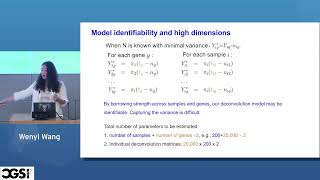
Computational Deconvolution of Cancer Genomes and Transcriptomes - CGSI 2022
Explore computational methods for deconvoluting cancer genomes and transcriptomes. Learn advanced techniques to analyze tumor heterogeneity and uncover molecular phenotypes shaping clinical outcomes in cancer research.
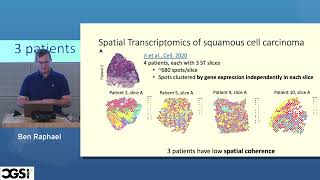
Alignment, Integration, and Modeling of Spatial Transcriptomics Data
Explore alignment, integration, and modeling techniques for spatial transcriptomics data, focusing on innovative approaches to analyze gene expression patterns in tissue samples.
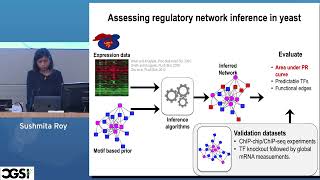
Inference of Gene Regulatory Networks from Bulk and Single Cell Omic Datasets
Explore gene regulatory network inference techniques using bulk and single-cell omic datasets. Learn about integrative approaches, predictive models, and applications in cellular reprogramming and single-cell genomics.
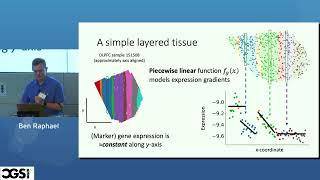
Models and Methods for Spatial Transcriptomics - CGSI 2023
Explore models and methods for spatial transcriptomics, focusing on alignment, integration, and modeling of gene expression variation in spatially resolved data.
Introduction to Tokenizing Scientific Data - Omics - Tutorial 2
Explore tokenization techniques for scientific data in omics, focusing on applications in genomics and bioinformatics.

Investigating Rapid Nuclear Mechanotransduction by Mapping Genome-wide Changes in Transcription
Explore groundbreaking research on nuclear mechanotransduction, examining how mechanical forces trigger rapid genomic changes and gene activation through advanced sequencing techniques and cellular observations.
Metabolic Division of Labor Creates Organismal Cohesion
Explore how metabolic division of labor in ant colonies creates complex superorganisms, examining social transfers, resource allocation, and evolutionary implications for collective systems and organisms.

The brain, AI, and mental health | Mariam Khayretdinova | TEDxBerlin Salon
Our brains control everything we do, yet so much about them remains unknown, largely because the data we rely on is catastrophically insufficient. Mariam Khayretdinova, CEO of Brainify.AI, shares why AI has yet to fulfill its promise for neuroscience and how a global data void is holding back our un