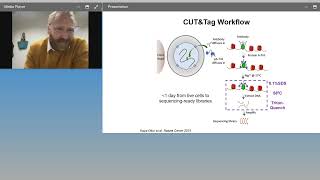
Unveiling Insights: Leveraging Single-Cell Transcriptomics and Epigenomics for Biomarker Discovery
Explore single-cell genomics techniques for identifying biomarkers in cancer research. Learn about transcriptomics, epigenomics, and their applications in understanding biological processes and tumor development.
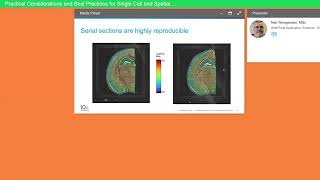
Practical Considerations and Best Practices for Single Cell and Spatial Transcriptomics
Explore best practices for single cell and spatial transcriptomics, uncovering complex biological systems with high-resolution approaches. Gain insights from an expert in genomics and earn PACE credits.
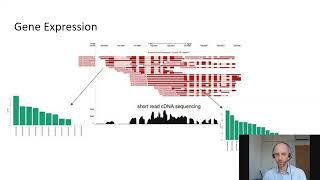
Studying Promoter and Isoform Diversity with Long-Read Transcriptome Sequencing
Explore promoter and isoform diversity in cancer transcriptomes using long-read RNA sequencing. Gain insights into alternative promoters' role in gene regulation and their impact on cancer research.

Big Science, Team Science & Open Science to Understand Neocortex
Explore the human brain's complexity through big science, team science, and open science approaches, focusing on neocortex understanding and innovative research methods.

Allen Institute Large-Scale Datasets and Modeling Tools
Explore large-scale datasets and modeling tools for brain research, covering transcriptomics, connectome mapping, visual coding, and human neuron studies to advance our understanding of brain function.

Maps, Molecules and Malignancies
Explore the intersection of geography, molecular biology, and cancer research to uncover innovative approaches in understanding and treating malignancies.

Leveraging Advancements in Genomics to Prevent Gastric Cancer
Explore genomic advancements in gastric cancer prevention, focusing on integrative cellular genomics, spatial transcriptomics, and gene mapping techniques for metaplasia and dysplasia.
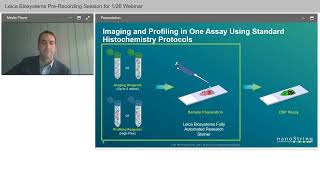
Fully Automated Workflows for High-Plex Multi-omic Profiling with GeoMx Digital Spatial Profiler
Explore automated workflows for high-plex multi-omic profiling using GeoMx® Digital Spatial Profiler and BOND RX/RXm Research Stainer, enhancing throughput and reproducibility in translational research.
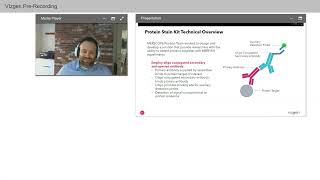
Visualizing In Situ Single-Cell Multi-Omic Gene Expression from FFPE Tissue with MERSCOPE
Explore MERSCOPE's advanced capabilities for visualizing single-cell gene expression in FFPE tissue, including protein co-detection and enhanced sample processing for deeper biological insights.
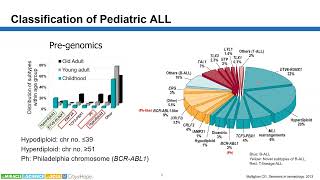
Deconvoluting the Heterogeneous Signatures of B-cell Acute Lymphoblastic Leukemia
Explore genomic signatures of B-cell acute lymphoblastic leukemia subtypes and their impact on classification, diagnosis, and treatment strategies for improved patient outcomes.

Overcoming Challenges of Somatic RNA Variant Calling in Solid Tumors
Explore techniques for accurate somatic RNA variant calling in solid tumors, addressing key challenges and improving cancer genomics analysis.
Genomics and Transcriptomics of Heart Disease
Explore genomics and transcriptomics in heart disease, focusing on regulatory elements, SNPs, and gene networks to enhance understanding of cardiovascular pathogenesis and therapy.
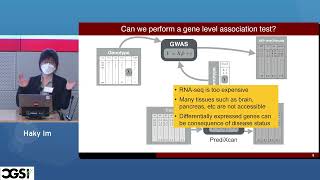
Integrating Multiple Omic Data to Improve Mechanistic Understanding and Prediction
Explore integrating multiple omic data to enhance mechanistic understanding and prediction in genomics. Learn techniques for improving data interpretation and predictive modeling in computational biology.
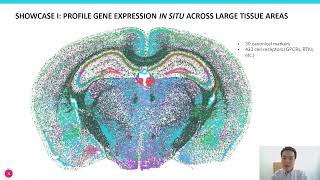
Illuminating Biology with Spatially Resolved, Single-cell Transcriptomics
Explore spatially resolved, single-cell transcriptomics to understand tissue organization and cellular heterogeneity in biological systems, presented by Vizgen co-founder Jiang He.

The Evolution of Precision Diagnostics in Advancing Treatment Strategies of Solid Tumors
Explore advancements in multi-omic approaches for comprehensive tumor analysis, accelerating precision medicine development while addressing challenges in diagnostic laboratory integration.
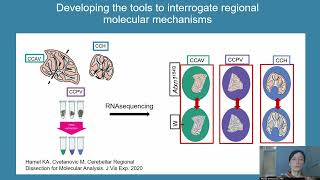
Selective Neuronal Vulnerability in Neurodegeneration
Explore selective neuronal vulnerability in neurodegeneration, focusing on Spinocerebellar Ataxia type 1. Gain insights into cerebellar degeneration patterns and potential underlying mechanisms.
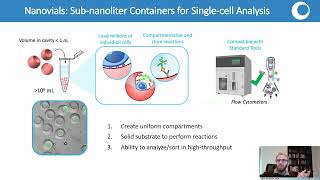
Linking Single-Cell Function to Multi-omic Analysis Using 'Lab on a Particle' Technology
Explore innovative 'Lab on a Particle' technology for single-cell analysis, linking cell function to multi-omic data. Learn about hydrogel microparticles for cell capture and secretion analysis in various applications.
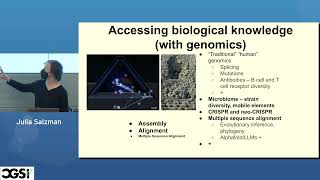
SPLASH: Statistical Signal Extraction for Unified Genomic Discovery
Explore SPLASH, a statistical algorithm for efficient genomic discovery. Learn about its applications in microbial sequencing, transcriptomics, and scientific research.
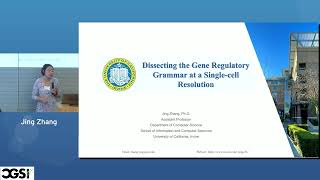
Dissecting the Gene Regulatory Grammar at a Single Cell Resolution
Explore gene regulatory mechanisms at single-cell resolution. Discover cutting-edge techniques for analyzing multimodal data and constructing regulatory networks in genomics research.
Measuring Gene Expression in Tissues for Autoimmune Disease Detection - Lecture 2
Dive into advanced techniques for measuring gene expression in tissues, focusing on spatial transcriptomics and its application in inflammatory bowel disease diagnosis and cancer detection.
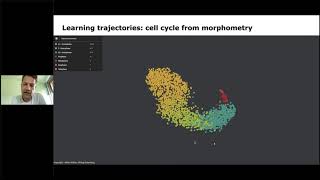
Interpretable Machine Learning to Model Drug Perturbations in Single Cell Genomics
Explore interpretable machine learning for modeling drug effects on single-cell genomics. Learn about deep autoencoders, manifold identification, and predicting novel perturbations in cellular states.