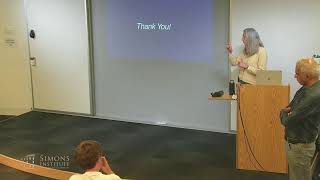
Quantum Constraint Satisfaction - Richard M. Karp Distinguished Lecture
Explore quantum Hamiltonian complexity, comparing it to classical constraint satisfaction. Learn about QMA-completeness, search-to-decision, dichotomy theorems, and coping with QMA-hardness in quantum applications.
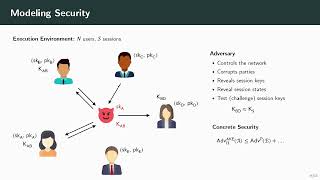
Provable Security - Eurocrypt 2024
Explore cutting-edge cryptographic research on provable security at Eurocrypt 2024, featuring expert presentations and discussions on advanced theoretical concepts and practical applications.

The Complexity of Fermions in Quantum Information and Beyond
Exploring fermion simulation challenges in quantum computing, highlighting new data structures and complexity results for ground state problems in chemistry, physics, and computer science.
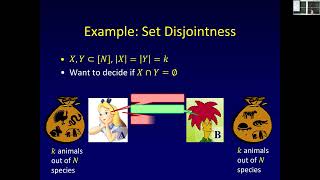
Communication and Information Complexity
Explore the intersection of communication and information complexity with Princeton's Mark Braverman, delving into cutting-edge research and theoretical advancements in this field.
Mathematical Games - Turing Machines and Turmites - Episode 19
Explore mathematical games and puzzles involving Turing machines and turmites with Ed Pegg Jr. Discover fascinating concepts in computational theory and cellular automata.
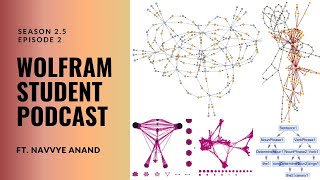
Exploring Formal-Language Syntax with Multiway Systems
Explore computational dynamics of formal-language syntax using multiway systems, focusing on substitution rules and visualization of various grammar types.

Logical Foundations - Session Preview
Explore logical foundations in programming languages with Emanuele D'Osualdo's preview of the POPL'24 session, offering insights into cutting-edge research and developments.
Conjectures, Results, and Myths in Interactive Computation - 2005 Lecture
Explore interactive computation paradigms, challenging traditional algorithmic models. Gain insights into Persistent Turing Machines and their implications for computational expressiveness and software engineering.
Weak and Strong Learning of Context-Free Grammars - 2012
Explore recent advancements in unsupervised learning of context-free grammars and the transition from weak to strong learning algorithms for accurate syntactic structure prediction.
Subgroup Tests and Tailored Non-local Games - Lecture on Interactive Proof Systems
Explore advanced concepts in interactive proof systems, refuting the Aldous-Lyons conjecture through subgroup tests and tailored non-local games.
New Directions in Property Testing
Explore recent advancements in property testing algorithms, including new problems and frameworks connected to machine learning theory and high-dimensional data analysis.
AI Consciousness is Inevitable - A Theoretical Computer Science Perspective
Explores the Conscious Turing Machine model for understanding consciousness from a theoretical computer science perspective, integrating insights from cognitive neuroscience and AI research.
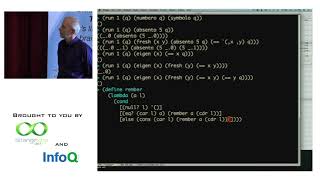
A Relational Exploration of the Chomsky Hierarchy
Explore encoding automata and Turing Machines in miniKanren for relational programming. Learn to generate strings and associated data structures, gaining insights into the Chomsky Hierarchy and automata workings.
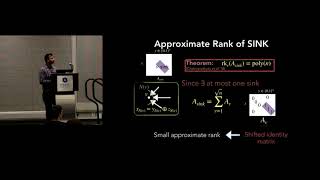
Exponential Separation between Quantum Communication and Logarithm of Approximate Rank
Explore quantum communication's exponential advantage over logarithmic approximate rank, focusing on the SINK function and its implications for communication complexity theory.
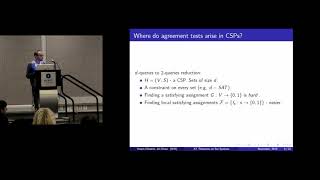
Agreement Testing Theorems on Layered Set Systems
Explore agreement testing theorems on layered set systems, their applications in CSPs, and recent advancements in this field of theoretical computer science.
Derandomization from Algebraic Hardness - Treading the Borders
Explore derandomization techniques in algebraic complexity, focusing on hitting set construction and generator design for improved bootstrapping in computational theory.
Efficient Construction of Rigid Matrices Using an NP Oracle
Explore matrix rigidity, its applications in communication complexity and circuit lower bounds, and innovative algorithmic approaches for constructing rigid matrices.
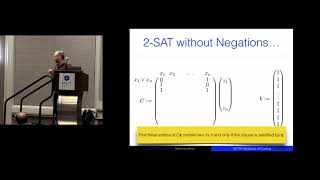
Hardness of Coding Problems
Explore SETH hardness in coding problems, focusing on linear codes, nearest codeword problem, and minimum distance problem. Learn about reductions and key concepts in computational complexity.
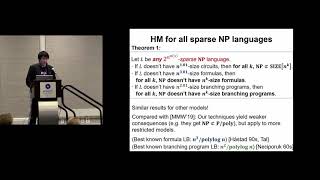
Hardness Magnification for All Sparse NP Languages
Explore hardness magnification in computational complexity, focusing on sparse NP languages and the Minimum Circuit Size Problem, with insights on algorithms and open challenges.
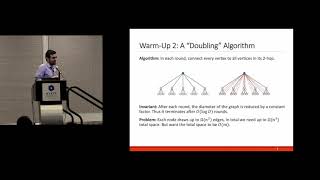
Near Optimal Massively Parallel Graph Connectivity
Explore efficient parallel algorithms for graph connectivity, focusing on near-optimal solutions and innovative techniques for large-scale graph processing.
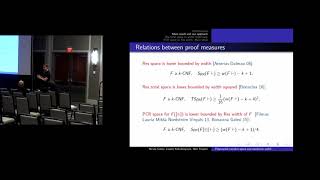
Polynomial Calculus Space and Resolution Width
Explore proof complexity, resolution systems, and space complexity in polynomial calculus, featuring combinatorial characterizations and discussions on total spaces and tight bounds.