An Introduction to Humanities Analytics in Three Examples
Explore humanities analytics through three examples, learning text analysis methods to extract meaning from digital sources and enable new scholarship in the humanities.
Sentiment Analysis in R with Sentimentr - Handling Negation and Valence Shifters
Explore sentiment analysis in R using {sentimentr}, handling negation and valence shifters for accurate text data analysis of emotions and profanity.
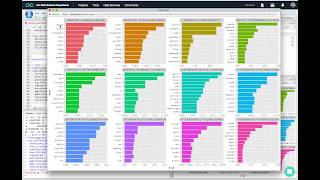
Topic Modeling with R and Tidy Data Principles
Explore topic modeling in R using tidytext and stm packages, applied to Sherlock Holmes stories. Learn data preparation, text tidying, and model implementation techniques.
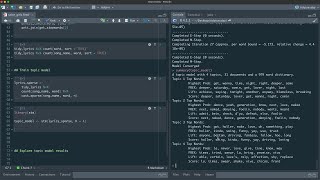
Topic Modeling for Spice Girls Lyrics
Explore topic modeling using R to analyze Spice Girls lyrics, uncovering hidden themes and patterns in their music through unsupervised machine learning techniques.
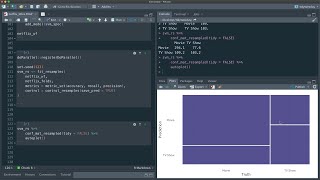
Build Features for Machine Learning from Netflix Description Text
Learn to build machine learning features from Netflix description text and train a support vector machine model using tidymodels, exploring data analysis, feature engineering, and model evaluation techniques.
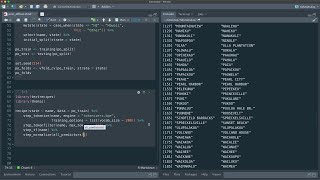
Subword Features in Machine Learning for Text
Explore machine learning techniques for text analysis using tidymodels to predict Hawaii post offices from their names, with practical code examples and performance evaluation.
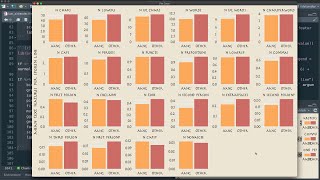
Build a Predictive Text Model for Avatar: The Last Airbender with Tidymodels
Predict Avatar: The Last Airbender speakers using text features and tidymodels in R. Learn model-agnostic variable importance and handle class imbalance in this data analysis tutorial.
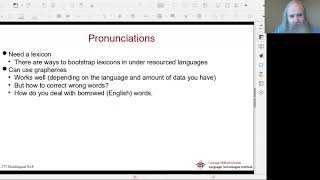
CMU Multilingual NLP 2020 - Text to Speech
Explore text-to-speech systems for low-resource languages, covering analysis, pronunciation, prosody, waveform generation, and cross-lingual models. Learn efficient TTS building and multilingual challenges.
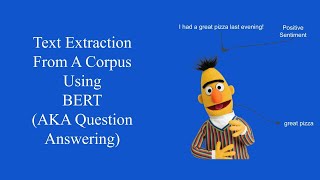
Text Extraction From a Corpus Using BERT - Question Answering
Learn to extract text from tweets using BERT for sentiment analysis. Hands-on tutorial covers data preparation, model implementation, and evaluation for Kaggle competition.
Sentiment Analysis on Any Length of Text With Transformers - Python
Learn to perform sentiment analysis on long texts using transformers in Python, overcoming token limitations through chunking and processing techniques for NLP tasks.
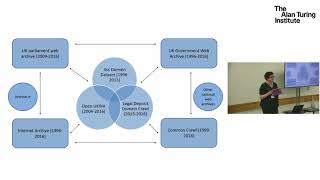
Small Data and Big Data - Web Archives and Research in the Humanities
Explore web archives' potential for humanities research, examining challenges and opportunities in using digital collections to study social and cultural phenomena.
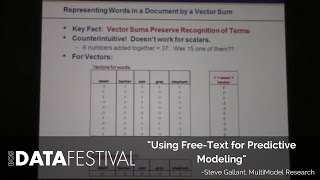
Using Free Text for Predictive Modeling
Explore efficient text representation for predictive analytics, covering techniques to transform varied-length text into fixed-length vectors for machine learning applications like sentiment analysis and news classification.

Building an Entity Extraction Model Using BERT
Learn to build an entity extraction model using BERT, transformers library, and PyTorch. Covers dataset preparation, configuration, training, and prediction for creating custom entity extraction solutions.
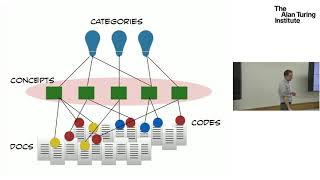
Grounded Theory and Topic Modelling- Extreme Divergence or Unlikely Convergence - Dr David Mimno
Exploring the intersection of grounded theory and topic modeling in text analysis, examining potential divergences and convergences between these methodologies for studying social and cultural phenomena.
Emotion Detection in Text: Latest Developments and Challenges
Explore latest developments in emotion detection from text, covering techniques, datasets, and challenges in building production-level systems for enhanced NLP applications.
Resolving Identities - The Nexus Between Entities and Knowledge
Explore advanced techniques in entity resolution, identity matching, and knowledge base enrichment using context-driven approaches for accurate named entity recognition across diverse sources.
Measurement and Operationalization in Humanities Analytics - FAHA Course
Explore measurement and operationalization in humanities analytics. Learn to extract meaning from digital sources, enabling new scholarship in cultural and textual analysis.

Vector Embeddings for Semantic Search Made Easy with Practical Tips
Explore vector embeddings for semantic search, learning techniques to create meaningful representations, efficient similarity search algorithms, and practical strategies for enhanced information retrieval.
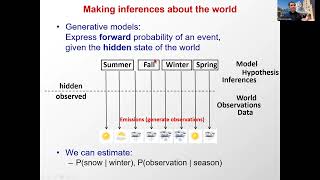
Expression Analysis, Clustering, and Classification in Machine Learning - Lecture 2
Comprehensive exploration of machine learning concepts, from basic principles to advanced techniques, with applications in gene expression analysis and text clustering.
Langchain and OpenAI Document Summarization with Machine Learning
Explore document summarization using LangChain and OpenAI. Learn to implement efficient text condensation techniques for machine learning and data science applications.

Get Started with AI - A Beginner's Guide to Automated Classification, Predictions and Computer Vision
Apply modern data science techniques for predictions, categorization, and relationship discovery using numeric, textual, and image data. Learn practical AI applications for beginners.