Capitalism and Democracy - Part 1
Explore capitalism and democracy through digital humanities analytics, focusing on text analysis, probability, and natural language processing to extract meaning from digital sources.
Usama Fayyad at ODSC Boston 2015 - From Big Data to Data Science
Explore the evolution from Big Data to Data Science with Usama Fayyad, focusing on predictive analytics in a changing data landscape and its impact on business growth and competitive advantage.
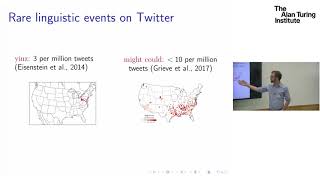
Finding More Needles by Building Bigger Haystacks - Dr. Jacob Eisenstein
Exploring large-scale text data for social and cultural insights, focusing on rare linguistic events, language change dynamics, and online hate speech detection using innovative computational methods.
Probability and Its Interpretation - Foundations of Humanities Analytics
Explore probability theory, its historical development, and interpretations in this humanities analytics lecture, focusing on frequency and subjective approaches to understanding uncertainty.
Asking Good Research Questions in Humanities Analytics
Explore effective research question formulation in humanities analytics, focusing on clarity, relevance, and avoiding common pitfalls. Learn to craft questions that drive meaningful digital humanities scholarship.
What is Feminist Data Science?
Explore feminist data science with Lauren Klein, examining how gender perspectives can reshape data analysis methods and interpretations in humanities research.
Segmentation, Indexing and Retrieval of Multilingual Sources - 2002
Explore techniques for segmenting, indexing, and retrieving multilingual sources, enhancing cross-language information access and processing capabilities.
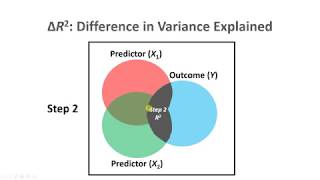
Conceptual Overviews of Statistical and Data-Analytic Tools and Techniques
Explore key statistical and data analysis methods, from hierarchical regression to survival analysis, with conceptual overviews of advanced techniques and tools.
Getting Started with Scientific Programming for Humanities Analytics
Introduction to scientific programming using Python, covering basics of language, shell, IDE, and Jupyter Notebooks. Learn to create lexicons, functions, and plots for text analysis in humanities research.
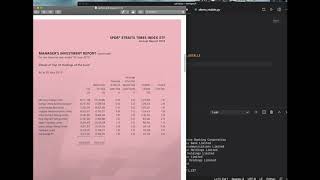
Automated Research: Extracting Companies from PDF and Googling Them Using PyPDF2 and Regex - Python Tutorial
Extract company names from PDFs and automate research using Python, regex, and web browsing. Ideal for beginners looking to streamline data extraction and analysis tasks.
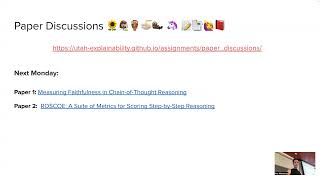
Prompting for Evaluation of Free-Text Explanations - Part 2
Dive into advanced techniques for evaluating free-text explanations in AI prompting, focusing on methodologies and practical applications for data science analysis.
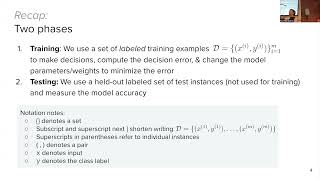
Tokenization and Morphology in Natural Language Processing
Master essential text processing concepts through tokenization and morphology analysis, exploring fundamental techniques for breaking down and understanding linguistic structures.
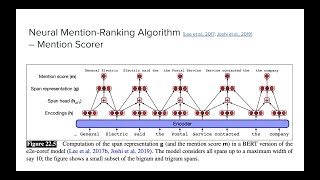
Coreference Resolution in Natural Language Processing
Master the fundamentals of coreference resolution in natural language processing, exploring key concepts, algorithms, and practical applications for improving text understanding and analysis.

Getting AI to Do Things I Can't - Automatically Searching and Explaining Patterns in Text
Explore techniques for leveraging AI in complex NLP tasks, including pattern searching and SQL labeling, while enabling effective human oversight and uncovering unexpected insights.

TensorFlow Tutorial - TensorFlow Datasets
Learn to use TensorFlow Datasets for loading, preprocessing, and modeling image and text data. Covers MNIST image classification and IMDB sentiment analysis with practical examples and code demonstrations.
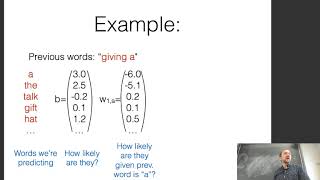
Neural Nets for NLP 2017 - A Simple Exercise - Predicting the Next Word in a Sentence
Explore word prediction techniques, including skip-grams, CBOW, and advanced word vector methods. Learn to describe, count, predict, evaluate, and visualize word relationships in natural language processing.
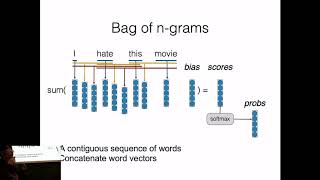
Neural Nets for NLP 2020 - Convolutional Neural Networks for Text
Comprehensive exploration of convolutional neural networks for text processing, covering key concepts, applications, and advanced techniques in natural language processing.

Understanding Embeddings in Large Language Models - LlamaIndex and Chroma DB
Explore embeddings in LLMs, their role in AI-powered tools, and practical applications using LlamaIndex and Chroma db. Gain insights into representing data for advanced language processing.
How Does a Pandemic Become a Story? - Analyzing COVID-19 Narratives
Explore how pandemic narratives form through digital humanities analysis of #COVID stories, examining patterns in social media content to understand cultural responses to global health crises.
Introduction to Patterns in Humanities Analytics
Explore patterns in humanities analytics: theory, practice, and meaning extraction from digital sources. Gain skills for innovative scholarship in cultural and textual analysis.
Arriving at an Understanding of Computational Linguistics' Virtues - Lecture 1
Explore computational linguistics' virtues in humanities research. Learn text analysis methods, content extraction, and meaning derivation from digital sources to enhance humanities scholarship.