
Introducing Gemma - Google's Family of Open AI Models
Explore Gemma, Google's open AI models, with Tris Warkentin. Learn about its capabilities, responsible AI measures, and potential impact on developers. Discover Tris's journey from tech writing to AI product management.

Google I/O Special: Latest AI Developments with Mat Velloso and Logan Kilpatrick
Explore the latest AI developments from Google I/O with industry leaders, discussing AI's impact, Google's new AI tools, and future predictions for the technology landscape.
ML Data Version Control and Reproducibility at Scale
Explore data version control techniques for efficient ML model development, addressing reproducibility challenges and enabling scalable cloud-based training using open-source tools like Langchain and TensorFlow.

Creating, Building, and Releasing Gemma - Google's Open Model Family
Explore Gemma, Google's open model family, with engineer Kathleen Kenealy. Discover the journey from concept to release, the importance of open technology, and the future of AI development.
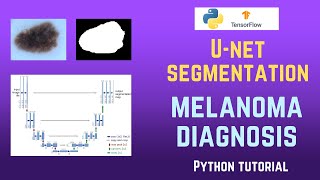
Medical Melanoma Detection - TensorFlow U-Net Tutorial
Step-by-step guide to implementing a U-Net model for melanoma detection using TensorFlow/Keras, covering data preparation, augmentation, model building, training, testing, and result visualization.
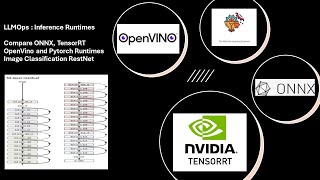
LLMOps: Comparison of OpenVino, ONNX, TensorRT, and PyTorch Inference
Explore model conversion to ONNX, OpenVino, and Tensor-RT formats for optimized CPU and GPU inference, comparing performance against native PyTorch.
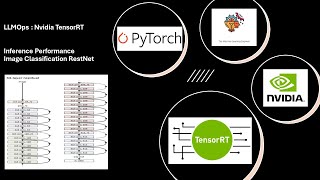
LLMOps: Using Nvidia TensorRT SDK for GPU Inference
Optimize GPU inference using Nvidia TensorRT SDK. Convert models, compare throughput, and explore batch sizes, data precision, and runtime options for enhanced performance.
Microsoft AI: ML.NET Framework in C# - Transfer Learning for Image Classification
Aprende a entrenar modelos de aprendizaje profundo personalizados utilizando transferencia de aprendizaje, TensorFlow y ML.NET para clasificar imágenes de superficies de concreto.
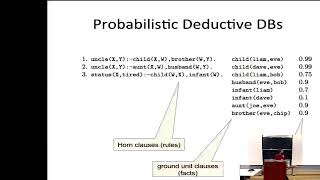
Deep Learning and Reasoning - 2018
Explore integrating logical reasoning with neural systems using TensorLog, a probabilistic first-order logic system for scalable symbolic reasoning and neural learning in AI tasks.
An Overview of Deep Learning Frameworks and Introduction to PyTorch
Explore deep learning frameworks, focusing on PyTorch. Learn about research workflows, data processing, and model building from Facebook AI researcher Soumith Chintala.
High Performance Machine Learning, Deep Learning, and Data Science - Principles and Practice
Master high-performance computing principles for machine learning and deep learning, focusing on practical implementation strategies and advanced techniques for optimizing data science workflows.
¡Escuincla Babosa! A Python Deep Learning Telenovela
Explora cómo crear guiones de telenovelas usando redes neuronales y aprendizaje profundo en Python, comparando frameworks como Keras, PyTorch y TensorFlow para generar drama y giros argumentales.
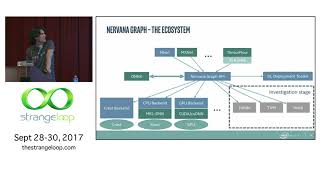
Towards New Deep Learning Abstractions on Top of Existing Frameworks
Explore Nervana Graph, a Python library for efficient neural network implementation across platforms. Learn about its modular design, computational efficiency, and hardware flexibility.
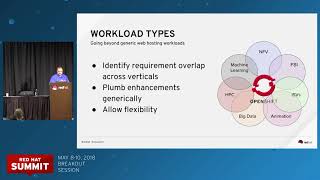
New High-Performance Features in Red Hat OpenShift
Explore advanced features in OpenShift for high-performance workloads, including hugepages, device plugins, extended resources, GPU acceleration, and CPU tuning. Gain insights into resource management and future developments.
Achieve AI-powered API Privacy Using Open Source
Explore AI-powered API privacy using open-source tools. Learn about Privacy-by-Design, threat modeling, and leveraging deep neural networks to protect customer data in software development.
The Future of Apache Mesos and DC/OS
Explore the future of Apache Mesos and DC/OS, covering container orchestration, stateful services, machine learning, and GPU-based scheduling. Gain insights into evolving ecosystem and upcoming developments.
Machine Learning Made Easy on Kubernetes - DevOps for Data Scientists
Explore DevOps for ML on Kubernetes: streamline data prep, model training, testing, and deployment using tools like Tensorflow, Kubeflow, and Pachyderm. Ideal for data scientists and SRE teams.
Develop ML Interactive GPU-Workflows with Visual Studio Code, Docker and Dockerhub
Learn to streamline GPU-enabled ML workflows using Visual Studio Code, Docker, and Dockerhub. Overcome CUDA errors and version conflicts while developing in containers with seamless GPU integration.
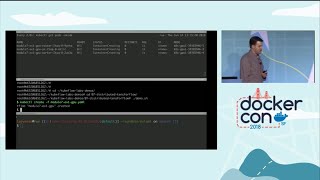
Democratizing Machine Learning on Kubernetes
Learn to scale machine learning on Kubernetes, exploring data and model parallelization, distributed training, and performance optimization techniques for large-scale AI projects.
F# as a Better Python
Explore how F# addresses Python's limitations in web development, data scripting, and machine learning while leveraging Python's ecosystem. Learn F#'s advantages in static typing, environment setup, and functional programming.
Natural Language Processing with Deep Learning and TensorFlow
Explore deep learning for NLP using TensorFlow. Learn to create embeddings, build neural networks, and apply them to classification tasks with hands-on labs and interactive learning.