MLflow Model Serving - Methods and Best Practices
Explore MLflow model serving techniques, including batch and real-time scoring, open-source and Databricks-managed options, with emphasis on new production-ready model serving features.
Deep Neural Network Autoencoders in TensorFlow and Keras - Part 1
Learn to create and implement autoencoders in Keras and TensorFlow, including denoising autoencoders, for deep neural network applications in image processing and function approximation.
Neural Networks with Ensembles for TensorFlow and Keras
Learn to create and evaluate ensemble models using random forests and deep neural networks with TensorFlow, Keras, and scikit-learn. Explore feature importance and perturbation ranking techniques.
Deep Learning Cross Validation for TensorFlow and Keras
Learn to implement cross-validation techniques for deep learning models using TensorFlow and Keras, enhancing model evaluation and performance in regression and classification tasks.
Introduction to TensorFlow and Keras with Anaconda Python
Learn to build neural networks using TensorFlow and Keras for classification and regression tasks. Covers key concepts, data handling, model creation, training, and evaluation.
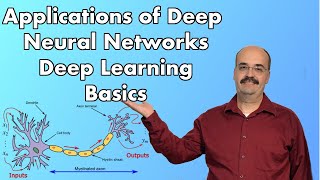
Deep Neural Network Basics for Keras and TensorFlow
Explore deep neural network fundamentals including activation functions, bias neurons, and output calculation for Keras and TensorFlow implementation.
Convolutional Neural Networks - Deep Learning Basics with Python, TensorFlow and Keras
Learn to build and train a convolutional neural network for chess piece image classification using Python, TensorFlow, and Keras. Covers dataset preparation, model creation, and prediction testing.
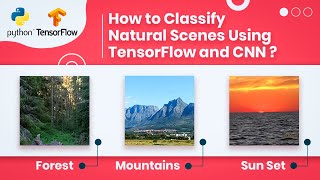
How to Classify Natural Scenes Using Tensorflow, Python, and CNN
Learn to classify natural scenes using TensorFlow and CNN. Build, train, and test a model for image classification with Python, covering dataset preparation, model creation, and prediction.
Transfer Learn in Weather Images
Learn to classify weather images using transfer learning with Python, TensorFlow, and VGG19. Covers dataset preparation, model implementation, and image prediction.
Deep Learning in Weather Images - Using TensorFlow and CNN
Learn to build a CNN model using TensorFlow and Keras to predict weather scenes from images. Covers dataset preparation, model creation, training, and testing.
Cancer Detection in Brain Using Deep Learning
Learn to detect brain tumors using deep learning, CNN, and TensorFlow. Build, train, and test a model for classifying brain images with hands-on coding and practical implementation.

How to Classify Flowers Using Deep Learning
Learn to build a convolutional neural network for flower image classification using TensorFlow and Keras, from dataset preparation to model testing and prediction.

Setting Up CUDA, CUDNN, Keras, and TensorFlow on Windows 11 for GPU Deep Learning
Comprehensive guide for setting up GPU-accelerated deep learning environment on Windows 11, covering CUDA, CUDNN, Keras, and TensorFlow installation with step-by-step instructions.
Installing Miniforge and Anaconda/Miniconda Side-by-Side on Mac M1 Monterey
Learn to install and run Anaconda and Miniforge simultaneously on Mac M1, including TensorFlow and Keras setup, with step-by-step guidance and troubleshooting tips.
Training a GAN from Your Own Images - StyleGAN2 ADA
Learn to create custom GANs using your own images, from setup to training. Covers image collection, Docker setup, TFRecord conversion, and understanding GAN outputs for various projects like FishGAN and MinecraftGAN.
Face Generation with NVIDIA StyleGAN2 and Python 3
Generate realistic faces using nVidia StyleGAN2 and Python. Learn to utilize pretrained weights, TensorFlow wrapper, and Google CoLab GPU for efficient face generation without extensive training.
TensorFlow 2.0 GPU, Keras, and Python 3.7 Installation Guide for Windows 10 - 2020 Update
Comprehensive guide for setting up TensorFlow 2.0 with GPU support on Windows 10, covering installation of necessary drivers, CUDA, cuDNN, and Anaconda environment configuration.
Generating Faces with a Generative Adversarial Networks - GAN in Keras-Tensorflow 2.0
Learn to implement a Generative Adversarial Network (GAN) from scratch using TensorFlow and Keras to generate realistic human faces, with step-by-step guidance and practical code examples.
Wio Terminal TinyML Weather Prediction with TensorFlow Lite and LVGL GUI - Course 4
Create an intelligent meteostation using Wio Terminal and TensorFlow Lite for Microcontrollers to predict weather and precipitation based on local environmental sensor data, with LVGL GUI integration.
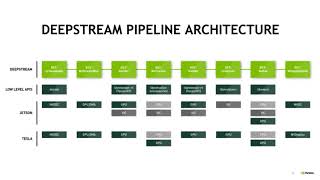
Streamline Deep Learning for Video Analytics with DeepStream SDK 2.0
Explore AI-based video analytics using DeepStream SDK 2.0 for Tesla, transforming video into insights for smart cities with a modular plugin architecture and scalable framework for multi-stream processing and application development.
TensorFlow Models Accelerated for NVIDIA Jetson
Accelerate TensorFlow models on NVIDIA Jetson: optimize training, integrate TensorFlow RT, enhance image classification, and format models for improved performance.