
Resilience in Action: Building Adaptive Socio-Technical Systems
Explore strategies for building resilient socio-technical systems, focusing on everyday tasks and cross-disciplinary research to enhance organizational adaptability and preparedness for unexpected incidents.
Engineering a Safer World - Inaugural Lecture on Transport Risk and Safety
Explore strategies for enhancing global safety through engineering innovations and risk management techniques in transportation and beyond.
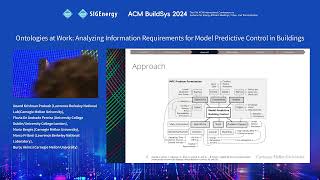
Ontologies at Work - Analyzing Information Requirements for Model Predictive Control in Buildings
Discover how ontologies can analyze and optimize building control systems through Model Predictive Control, enhancing energy efficiency and operational performance.
To the Moon - From Apollo Missions to Software Development Innovation
Explore the Apollo moon missions' remarkable journey and its parallels to software development, from initial challenges to leadership lessons that drive innovation and ambitious achievements.
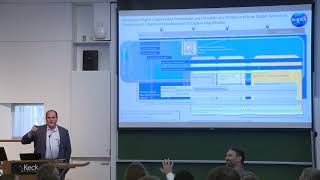
End-to-End Example of a Digital Twin for Space Exploration
Discover NASA's practical implementation of Digital Twin technology through a comprehensive exploration of real-world applications in space exploration and systems engineering.
Optimizing IT Performance in Complex Systems
Explore advanced strategies for managing and optimizing IT system performance while navigating complex infrastructures, user demands, and resource constraints.

The Invisible Networks Shaping Your Everyday Life | Deb Chachra | TED
Engineering professor Deb Chachra explains how basic infrastructure systems like plumbing and electricity shape our lives and are vital to individual agency. She offers insights on improving these systems for long-term, sustainable energy access for everyone.

Engineering the Future of Meals | Andrew Zhu | TEDxHQIS Youth
Engineering the Future of Meals Andrew is a thoughtful and curious learner, and a middle school student at HQIS who enjoys digging deeper into how things work, whether in science, technology, or the world around him. He's passionate about expressing his thoughts through writing, speaking, and teamwo

Designing for Density, Chaos, and Diversity | Anmay Shahlot | TEDxBHIS Kanpur Youth
Most technology is designed for order: predictable users, stable infrastructure, and uniform conditions. Indian cities offer the opposite with extreme density, constant unpredictability, and deep diversity in behavior, language, and access. Yet, some systems don’t just survive here, they scale. Thi

From Healing Steps to Cosmic Leaps | Dr. Yogesh Pratap Singh | TEDxBITD
What connects a patient’s first healed step to humanity’s reach for the cosmos? This talk reveals how the same precision technologies used to correct human movement also power space missions like the James Webb Telescope. By mastering the smallest, most exact steps whether in engineering or in life

Sosyal Sistemlerde Otomasyon:Performans Ölçümü | Yağmur Denizhan | TEDxBeşiktaş Atatürk Anatolian HS
Doğadaki kararlı tüm süreçlerin işleyişinde başrol oynayan negatif geri-besleme prensibinden yararlanan otomatik kontrol yaklaşımı, uygun komutlar vererek teknolojik sistemlerin hedeflenen davranışı gerçekleştirmesini sağlar. Çağımızın teknolojik başarılarına damgasını vuran bu işleyişin temel mantı

Planning the Resilient City | Jon Hale | TEDxCharles University
This talk examines how cities can be designed to withstand social, environmental, and technological challenges. The speaker highlights resilient urban planning as a key strategy for building sustainable, adaptable communities for the future. Jon is a British architect who, in 1991, "got on his bike"