
How Microsoft Shifted Left: Improving Certificate Outages and Resilience - Chaos Engineering 2023
Explore Microsoft's shift-left approach to enhance certificate management and prevent outages in distributed systems. Learn strategies for building resilient infrastructure.

Building Resilience through Chaos Engineering
Explore chaos engineering principles to build resilient systems, enhance fault tolerance, and improve system reliability in complex distributed environments.
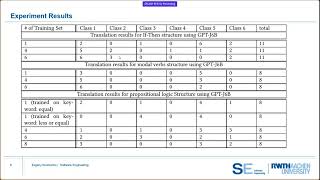
Neural Language Models and Few-Shot Learning for Systematic Requirements Processing in Model-Driven Software Engineering
Explore neural language models and few-shot learning for efficient processing of automotive engineering requirements in model-driven software engineering.
Architecting for Resilience: Strategies for Fault-Tolerant Systems - DevOps 2024
Explore strategies for building fault-tolerant systems, covering failure types, design requirements, architecture, and redundancy in DevOps environments.

Introduction to Chaos Engineering With LitmusChaos
Explore Chaos Engineering fundamentals, its open-source landscape, and LitmusChaos features. Learn implementation strategies, differences from testing, and ways to contribute to this emerging field.
Building a Kubernetes Experimentation Platform with OpenFeature - Enabling Organizations to Put Theory Into Practice
Explore OpenFeature for Kubernetes: implement feature flagging, enable experimentation, and enhance decision-making in infrastructure. Learn practical applications for resilience and cost reduction.
Functional Safety Basics for Open Source Software Developers
Learn essential functional safety principles for open-source software development, focusing on risk assessment, safety requirements, and industry standards to enhance software reliability and safety.
Safety, Security, Quality - Artificial Intelligence versus Common Sense
Explore AI's impact on safety, security, and quality in infrastructure, comparing it with traditional approaches and discussing community collaboration and effort estimation.
Failure and Change: Principles of Reliable Systems - YOW! 2018
Explore principles for building reliable systems that withstand failure and change. Learn strategies to implement, understand, and verify robust software in complex environments.
Architecting Resilience: Lessons from Managing 7000+ Kubernetes Clusters at Scale
Insights on designing highly available Kubernetes clusters, addressing challenges in managing 7K+ clusters and 100K+ nodes, and lessons learned from a data center fire incident.

Look Ma, No OS! - Unikernels and Their Applications
Explore unikernels as the next step in application deployment, their benefits over Linux containers, and their potential to solve current production environment challenges.

Designing Verifiable Health Solutions for Global Pandemic
Exploration of verifiable health solutions for pandemic response, addressing public safety and privacy concerns through attestation, test results, and vaccination history tracking.
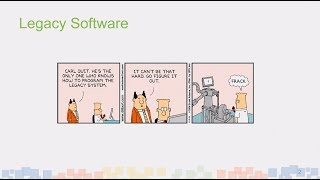
Reverse Engineering a Legacy Software in a Complex System - A Systems Engineering Approach
Explore a systems engineering approach to reverse engineer legacy software in complex systems, focusing on understanding development reasoning and creating roadmaps for incremental improvements.
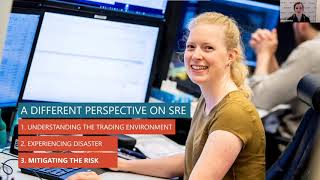
How Our SREs Safeguard Nanosecond Performance - at Scale - in an Environment Built to Fail
Explore SRE principles in high-frequency trading, balancing innovation with risk management. Learn strategies for safeguarding nanosecond performance in a regulated, failure-prone environment at scale.
Refining Systems Data without Losing Fidelity
Explore strategies for efficient systems data management, including sampling and aggregation techniques, to maintain crucial information while reducing data volume and costs.

When -bin-sh Attacks - Revisiting "Automate All the Things"
Explores human factors in automation, challenges for system administrators, and strategies for coping with complex socio-technical systems. Discusses resilience, expertise development, and the ironies of automation.

Identifying Hidden Dependencies
Discover how Honeycomb improved system reliability through intentional node termination, uncovering bugs and progressing towards continuous experimentation for enhanced resilience and scalability.
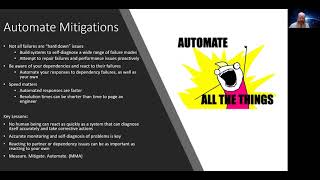
Confessions of a Systems Engineer - Learning from My 20+ Years of Failure
Veteran systems engineer shares invaluable lessons from two decades of failures, offering insights on designing, running, and troubleshooting large-scale online services to help others avoid costly mistakes.
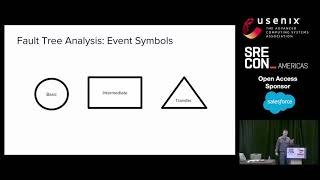
Fault Tree Analysis Applied to Apache Kafka
Explore fault tree analysis techniques to enhance Apache Kafka cluster resilience, drawing insights from Lyft's experience in bulletproofing their deployments.

From Availability and Reliability to Chaos Engineering - Why Breaking Things on Purpose is a Good Idea
Explore availability, reliability, and chaos engineering in complex distributed systems. Learn to design resilient architectures, predict failures, and implement strategies for robust software systems.
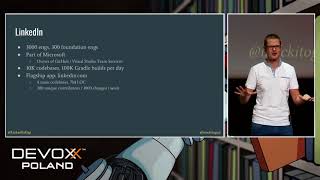
Testing in Production at LinkedIn
Explore LinkedIn's robust testing strategies for confident production releases, covering canaries, microservices, ML models, and resilience engineering.